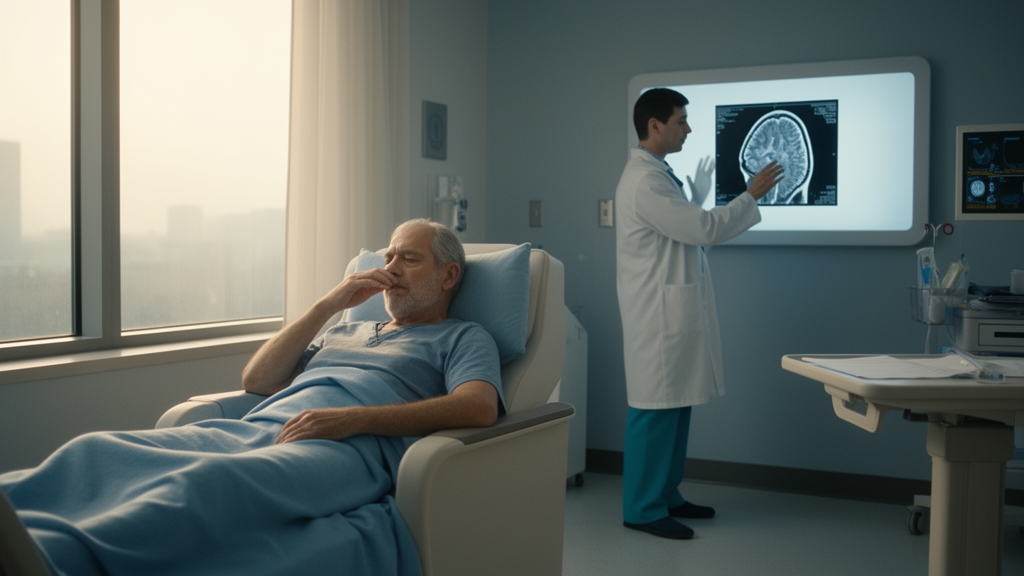
A prospective observational study conducted at Fujian Heart Medical Center has found that persistent, severe fatigue following surgery for acute type A aortic dissection is significantly associated with an increased risk of postoperative cerebral dysfunction. Among 383 surgical patients evaluated during the acute recovery period, 174 individuals, or 45.4 percent of the cohort, developed postoperative cerebral dysfunction.
The research team sought to track how patient fatigue evolves across the immediate postoperative phase and to evaluate specific clinical variables that correlate independently with the onset of postoperative brain dysfunction.
To investigate these recovery patterns, investigators utilized latent class growth modelling to categorize the distinct longitudinal pathways of fatigue experienced by patients. The analysis identified three distinct trajectories among the 383 participants. The largest cohort was the increasing-fatigue group, comprising 259 patients, which served as the reference control in subsequent comparative analyses. A smaller group of 85 patients followed a low-fatigue trajectory, while 39 individuals, representing 10.2 percent of the overall study population, fell into a severe-fatigue trajectory characterized by persistent, high-level exhaustion throughout the acute surgical aftermath.
Unconditional multivariable regression analysis demonstrated that patients categorized within the severe-fatigue trajectory faced more than double the odds of postoperative cerebral dysfunction compared to those with increasing fatigue, with an odds ratio of 2.454 and a p-value below 0.05.
Patients with a cumulative duration of rcSO2 below 50 percent lasting more than 15 seconds also had an increased risk of postoperative cerebral dysfunction, with an odds ratio of 3.595 (p < 0.05).
Older age was also identified as an independent risk factor for postoperative cerebral dysfunction (odds ratio of 1.063, p < 0.001). Elevated body mass index was likewise independently associated with heightened risk (odds ratio of 1.138, p < 0.05), pointing to excess body weight as an important factor in adverse post-surgical outcomes following acute type A aortic dissection repair.
Pre-existing hypertension was one of the strongest independent risk factors identified, increasing the odds of postoperative cerebral dysfunction more than threefold (odds ratio of 3.697, p < 0.05).
The study authors concluded that persistent abnormal fatigue patterns correlate with postoperative cerebral dysfunction in acute type A aortic dissection patients. In clinical practice, healthcare providers should direct close attention toward older individuals, patients with obesity, those with elevated arterial blood lactate concentrations, and those displaying continuous high-level fatigue. The authors emphasized providing preventative medical and nursing interventions as soon as possible for these patients.
Subject of Research: Fatigue trajectories and risk factors for postoperative cerebral dysfunction in acute type A aortic dissection
Article Title: Analysis of fatigue change trajsectories and postoperative cerebral dysfunction factors in acute type A aortic dissection patients
Article References: Lin, J.-L., Li, S.-L., Xie, Y.-H., Peng, Y.-C., Chen, L.-W., & Lin, Y.-J. (2026). Analysis of fatigue change trajsectories and postoperative cerebral dysfunction factors in acute type A aortic dissection patients. BMC Cardiovascular Disorders. https://doi.org/10.1186/s12872-026-06743-3
Image Credits: AI Generated
DOI: 10.1186/s12872-026-06743-3
Keywords: acute type A aortic dissection, postoperative cerebral dysfunction, fatigue trajectories, latent class growth modelling, regional cerebral oxygen saturation, aortic surgery, postoperative complications, arterial lactate, hypertension, cardiovascular surgery, cerebral desaturation, body mass index, surgical recovery, cognitive dysfunction, prospective study, Fujian Heart Medical Center
News Source: Ophelia Keating. (November 13, 2026). Severe Postoperative Fatigue Linked to Brain Dysfunction After Acute Aortic Surgery. Scienmag.