• HOME
  • NEWS
  • EXPLORE
    • CAREER
      • Companies
      • Jobs
    • EVENTS
    • iGEM
      • News
      • Team
    • PHOTOS
    • VIDEO
    • WIKI
  • BLOG
  • COMMUNITY
    • FACEBOOK
    • INSTAGRAM
    • TWITTER
Saturday, July 4, 2026
BIOENGINEER.ORG
No Result
View All Result
  • Login
  • HOME
  • NEWS
  • EXPLORE
    • CAREER
      • Companies
      • Jobs
        • Lecturer
        • PhD Studentship
        • Postdoc
        • Research Assistant
    • EVENTS
    • iGEM
      • News
      • Team
    • PHOTOS
    • VIDEO
    • WIKI
  • BLOG
  • COMMUNITY
    • FACEBOOK
    • INSTAGRAM
    • TWITTER
  • HOME
  • NEWS
  • EXPLORE
    • CAREER
      • Companies
      • Jobs
        • Lecturer
        • PhD Studentship
        • Postdoc
        • Research Assistant
    • EVENTS
    • iGEM
      • News
      • Team
    • PHOTOS
    • VIDEO
    • WIKI
  • BLOG
  • COMMUNITY
    • FACEBOOK
    • INSTAGRAM
    • TWITTER
No Result
View All Result
Bioengineer.org
No Result
View All Result
Home NEWS Science News Biology

Naturally regrowing forests are helping to protect the remaining old forests in the Amazon

Bioengineer by Bioengineer
November 13, 2023
in Biology
Reading Time: 3 mins read
0
Canopy of old-growth forest in the Peruvian Amazon
Share on FacebookShare on TwitterShare on LinkedinShare on RedditShare on Telegram

The climate crisis and UN Decade on Ecosystem Restoration have generated great interest in the value of secondary forests. These are forests that have regrown naturally on land abandoned from agriculture.

Collaborative research between Lancaster University, Bangor University and the University of British Columbia has produced new evidence of just how important they are in counteracting the effects of forest fragmentation across the Amazon basin. This has just been published in a paper in the journal Environmental Research Letters. It is an output of the PhD research of Charlotte Smith, in the Envision Doctoral Training Partnership, in which Bangor University is a partner.
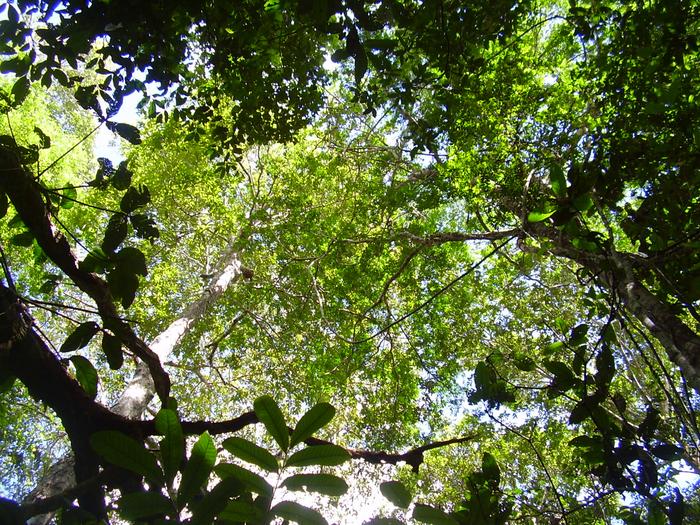
Canopy of old-growth forest in the Peruvian Amazon

Credit: John Healey

The climate crisis and UN Decade on Ecosystem Restoration have generated great interest in the value of secondary forests. These are forests that have regrown naturally on land abandoned from agriculture.

Collaborative research between Lancaster University, Bangor University and the University of British Columbia has produced new evidence of just how important they are in counteracting the effects of forest fragmentation across the Amazon basin. This has just been published in a paper in the journal Environmental Research Letters. It is an output of the PhD research of Charlotte Smith, in the Envision Doctoral Training Partnership, in which Bangor University is a partner.

Co-author of the paper, John Healey, Professor of Forest Sciences at Bangor University, described how it shows “that secondary forests cover just 190,000 km2 of the Amazon but connect more than 2 million isolated fragments of old-growth forest, prominent amongst the world’s most important habitats for biodiversity conservation. The secondary forests are helping maintain connectivity for patches of old-growth forest that are too small to support long-term viable populations of rare species.”

Charlotte Smith reported “secondary forests are buffering as much as 41% of old-growth forest edges, potentially shielding them from negative edge effects such as hotter temperatures and wind. Proximity to old-growth forests can also help the rate of biodiversity and biomass recovery in secondary forests. It is positive that 94% of secondary forests were connected to old-growth forest. However, may old-growth forest remnants are small and degraded patches, so only 57% of secondary forest was connected to an area of extensive, structurally-intact old-growth.”

Professor Healey pointed out the importance of this research,

“It provides powerful new evidence of the importance of managing forests at the landscape scale. Promoting forest restoration through secondary forests located next to old-growth forest remnants can play a vital role in both conserving biodiversity in these remnants and the rate of biodiversity recovery in the secondary forests themselves.”

He then explained “there are interesting parallels with the findings of Bangor’s recent research on the “Climate Smart Woodlands” project about the best spatial location of new woodlands in Wales, at a landscape scale.”


Journal

Environmental Research Letters

DOI

10.1088/1748-9326/ad039e

Method of Research

Imaging analysis

Article Title

Amazonian secondary forests are greatly reducing fragmentation and edge exposure in old-growth forests

Article Publication Date

9-Nov-2023

COI Statement

none

Share12Tweet8Share2ShareShareShare2

Related Posts

Evolution-Inspired Biosensors Revolutionize Lipid Tracking in Real Time — Biology

Evolution-Inspired Biosensors Revolutionize Lipid Tracking in Real Time

July 2, 2026
New Study Reveals How to Reduce Risk of Dangerous Wildlife Encounters This Summer — Biology

New Study Reveals How to Reduce Risk of Dangerous Wildlife Encounters This Summer

July 2, 2026

Hepatic IFRD1 Alleviates Metabolic Dysfunction-Linked Steatohepatitis Through the GLUD1/α-KG Pathway

July 2, 2026

Intricate Food Webs Support Ecosystem Health and Stability

July 2, 2026

POPULAR NEWS

  • Detection of EDCs in Breast Milk and Infant Urine Up to Six Months Highlights Early Exposure Risks

    77 shares
    Share 31 Tweet 19
  • Saying Goodbye to PGY-6: Pediatric Fellowship Realities

    103 shares
    Share 41 Tweet 26
  • New Drug Candidate Developed at McMaster Shows Potential for Treating Brain Cancer

    58 shares
    Share 23 Tweet 15
  • KTU Researchers Explore Ultrasound’s Role in Enhancing Blood Flow Beyond Diagnostics

    53 shares
    Share 21 Tweet 13

About

BIOENGINEER.ORG

We bring you the latest biotechnology news from best research centers and universities around the world. Check our website.

Follow us

Recent News

Steatosis Drives Liver Metastasis Diversity in CRC

Unlocking the Mysteries of Alzheimer’s Disease

Pensoft Introduces New Peer-Reviewed Journal of Regeneration to Advance Restorative Biology Across Species

Subscribe to Blog via Email

Enter your email address to subscribe to this blog and receive notifications of new posts by email.

Join 83 other subscribers
  • Contact Us

Bioengineer.org © Copyright 2023 All Rights Reserved.

Welcome Back!

Login to your account below

Forgotten Password?

Retrieve your password

Please enter your username or email address to reset your password.

Log In
No Result
View All Result
  • Homepages
    • Home Page 1
    • Home Page 2
  • News
  • National
  • Business
  • Health
  • Lifestyle
  • Science

Bioengineer.org © Copyright 2023 All Rights Reserved.