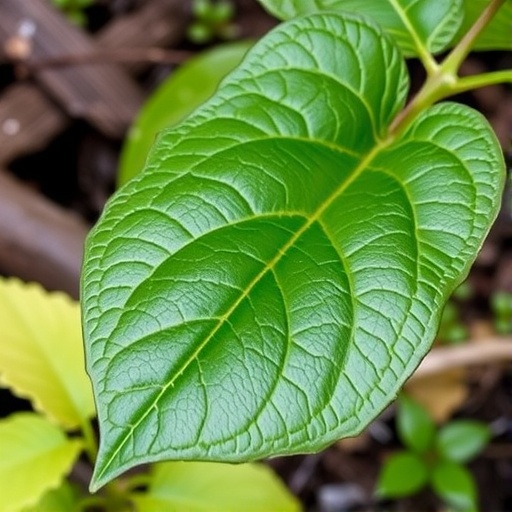
Hydrochar, a carbon-rich material made by processing wet plant biomass in hot, pressurized water, may have a hidden defense system that helps it resist chemical breakdown in soil. A new study has found that a naturally formed, water-repellent coating on hydrochar surfaces can shield carbon from oxidation, potentially allowing more of it to remain stored in soils for longer periods. The discovery draws attention to a feature that is easy to overlook when hydrochar is evaluated mainly through its bulk chemical composition. Rather than depending only on how aromatic or carbon-rich the material is internally, its long-term stability may also be controlled by a thin layer of hydrophobic compounds inherited from the original plant tissue.
Hydrochar is produced through hydrothermal carbonization, a process in which biomass is heated in water at elevated temperature and pressure. Unlike many thermal conversion technologies, the process can treat wet agricultural and plant residues without energy-intensive drying. This makes hydrochar attractive for converting organic waste into materials that could be used in soil improvement, pollution control, and carbon sequestration. Yet the environmental value of hydrochar depends on whether its carbon remains intact after being placed in soil. Microbial activity, dissolved oxidants, and other chemical reactions can gradually transform carbon-rich materials, releasing part of their carbon back into the environment. Identifying the structural features that slow this degradation is therefore critical for predicting hydrochar performance.
Researchers Jianping Fan, Fangfang Li, and colleagues investigated hydrochar made from four common plant materials: corn leaves, lotus leaves, palm leaves, and pine needles. Their experiments focused on the surface coating that forms during hydrothermal carbonization and on the possibility that this layer originates from the plant cuticle, the natural protective covering found on leaves and needles. The team analyzed the chemical composition and surface properties of the resulting hydrochars, examined their thermal behavior, and tested their resistance to chemical oxidation. They also treated samples with acetone to remove surface compounds and then compared the altered materials with hydrochar that retained its original coating.
The researchers found that the coating reflected the distinctive chemistry of each plant’s cuticle. Lotus leaf hydrochar possessed the most strongly hydrophobic surface and was dominated by nonacosane-4,10-diol, a long-chain compound associated mainly with leaf wax. The coatings formed on corn leaf, palm leaf, and pine needle hydrochars contained greater proportions of palmitic acid or 16-hydroxypalmitic acid, compounds linked to the breakdown of cutin. Cutin is a tough, wax-like polymer embedded in plant surfaces that helps limit water loss and protects tissues from environmental stress. During hydrothermal carbonization, portions of these waxes and cutin-related molecules appear to survive or reorganize, creating an alkyl-rich layer over the newly formed carbon material.
This surface chemistry had important consequences for how the hydrochar interacted with water and how much of its carbon was exposed to chemical attack. Higher hydrophobicity was associated with greater amounts of alkyl carbon, a class of carbon compounds characterized by chains of carbon and hydrogen. When the researchers extracted the coating with acetone, the alkyl carbon content decreased and pores that had previously been covered became accessible. The treatment therefore did more than remove a few molecules from the outside of the hydrochar. It changed the interface between the material and its surroundings, increasing the area available for water, dissolved chemicals, and oxidizing agents to reach reactive carbon sites.
The coating’s protective effect became most apparent during chemical oxidation tests. It appears to operate through two complementary mechanisms. Physically, the hydrophobic layer partially blocks pores and reduces direct contact between oxidants and the carbon underneath. Chemically, its long-chain compounds cover or surround reactive surface groups that would otherwise be vulnerable to oxidation. Once the coating was removed, carbon losses from lotus leaf, palm leaf, and pine needle hydrochars increased by between 10.13 and 16.01 percent. Lotus leaf hydrochar showed the greatest reduction in protection after extraction, consistent with its initially stronger hydrophobic coating and higher concentration of wax-derived alkyl carbon.
The findings also revealed that thermal stability and chemical stability do not necessarily change in parallel. Removing the surface coating produced little overall change in the hydrochars’ resistance to thermal decomposition. The researchers explain that two opposing effects may have balanced each other: the energy required to initiate decomposition increased, but the frequency of molecular reactions also increased. In other words, the altered material may have required more energy for individual decomposition events while simultaneously undergoing those events more readily. This result is important because thermal analysis is often used as a convenient indicator of carbon stability, even though it may not accurately reproduce the chemical conditions hydrochar encounters in soil.
Soil degradation is governed by a complicated mixture of processes, including oxidation, microbial metabolism, moisture movement, pore diffusion, and interactions with minerals. A coating that limits access to reactive carbon could therefore have a major influence even if it represents only a small fraction of the total material. The study suggests that two hydrochars with similar bulk carbon content or aromaticity might behave very differently in the environment if one retains a wax- and cutin-derived surface layer while the other does not. This challenges the assumption that measurements of bulk aromatic carbon alone are sufficient to forecast how long hydrochar will persist. Surface composition, pore accessibility, and water repellency may be equally important indicators.
The results could influence how researchers select feedstocks and design hydrochars for long-term soil carbon storage. Plant residues with naturally waxy or cutin-rich surfaces may produce hydrochar with stronger protective coatings, although the final properties will also depend on processing temperature, pressure, residence time, and the chemistry of the surrounding water. Preserving the coating during washing, transport, and application may become an additional consideration. At the same time, the coating could affect other functions, such as water absorption, nutrient exchange, contaminant binding, and interactions with soil microorganisms. More research will be needed to determine how these properties evolve over months or years in real soils, where physical abrasion and microbial activity may gradually remove or transform the hydrophobic layer.
By showing that plant-derived surface chemistry can persist into hydrothermal carbon products and influence their resistance to oxidation, the study adds a new layer to the science of carbon sequestration. Hydrochar is not simply an inert block of carbon produced from biomass; it is a chemically structured material whose environmental behavior may preserve clues about the plant from which it originated. The authors’ results indicate that alkyl carbon in a hydrophobic coating can act as a protective barrier, helping hydrochar resist chemical degradation and potentially retain more carbon after soil application. If confirmed under field conditions, this overlooked surface effect could help scientists develop more reliable methods for producing stable hydrochar from wet biomass and turning agricultural residues into longer-lasting carbon stores.
Subject of Research: Hydrophobic surface coatings, alkyl carbon, and the chemical stability of hydrochar produced from plant biomass
Article Title: Alkyl carbon in a hydrophobic coating enhances the chemical stability of hydrochar
News Publication Date: 17-Aug-2026
Web References: https://doi.org/10.48130/ebp-0026-0012
References: Fan J, Li F, Chen Q, Zeng P, Li Y, et al. 2026. “Alkyl carbon in a hydrophobic coating enhances the chemical stability of hydrochar.” Environmental and Biogeochemical Processes 2: e016. DOI: 10.48130/ebp-0026-0012
Image Credits: Jianping Fan, Fangfang Li, Qingkong Chen, Peiwen Zeng, Yanlin Li, Wei Chen, Qiangbin Yang and Hong Yang
Keywords
Hydrochar, hydrothermal carbonization, carbon sequestration, soil carbon, hydrophobic coating, alkyl carbon, plant waxes, cutin, chemical oxidation, environmental stability, biomass conversion, lotus leaves, carbon storage
Tags: biodegradable hydrochar coatingsenvironmental benefits of hydrocharhydrochar soil carbon sequestrationhydrophobic plant-derived coatingshydrothermal carbonization processlong-term carbon storage in soilsmicrobial resistance to hydrochar oxidationnatural leaf coatings on hydrocharorganic waste to soil amendmentsplant biomass conversion to hydrocharplant tissue impacts on hydrochar stabilitysoil chemical stability of hydrochar