

• HOME
  • NEWS
  • EXPLORE
    • CAREER
      • Companies
      • Jobs
    • EVENTS
    • iGEM
      • News
      • Team
    • PHOTOS
    • VIDEO
    • WIKI
  • BLOG
  • COMMUNITY
    • FACEBOOK
    • INSTAGRAM
    • TWITTER
Tuesday, July 7, 2026
BIOENGINEER.ORG
No Result
View All Result
  • Login
  • HOME
  • NEWS
  • EXPLORE
    • CAREER
      • Companies
      • Jobs
        • Lecturer
        • PhD Studentship
        • Postdoc
        • Research Assistant
    • EVENTS
    • iGEM
      • News
      • Team
    • PHOTOS
    • VIDEO
    • WIKI
  • BLOG
  • COMMUNITY
    • FACEBOOK
    • INSTAGRAM
    • TWITTER
  • HOME
  • NEWS
  • EXPLORE
    • CAREER
      • Companies
      • Jobs
        • Lecturer
        • PhD Studentship
        • Postdoc
        • Research Assistant
    • EVENTS
    • iGEM
      • News
      • Team
    • PHOTOS
    • VIDEO
    • WIKI
  • BLOG
  • COMMUNITY
    • FACEBOOK
    • INSTAGRAM
    • TWITTER
No Result
View All Result
Bioengineer.org
No Result
View All Result
Home NEWS Science News Biology

Native leech preys on invasive slug?

Bioengineer by Bioengineer
July 21, 2017
in Biology
Reading Time: 2 mins read
0
Share on FacebookShare on TwitterShare on LinkedinShare on RedditShare on Telegram
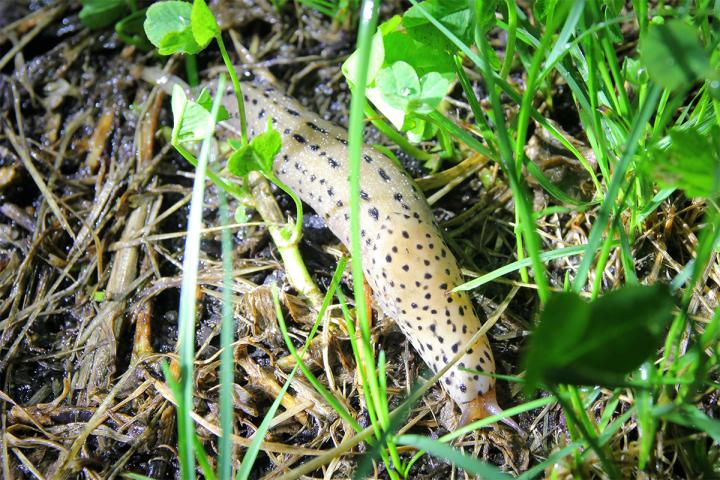
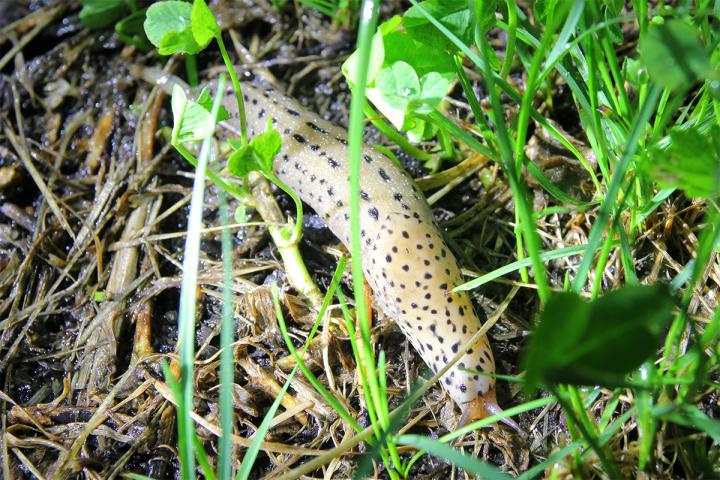
IMAGE

Credit: Ryusei Yamakami

The giant slug Limax maximus is native to Europe and Asia Minor but has spread widely, being found in North America, South America, North Africa, South Africa, Australia, New Zealand and other regions. The slug is recognized as a notorious pest because it eats agricultural and garden crops.

In Japan, L. maximus was first found in Ibaraki Prefecture in 2006 and its population has rapidly spread throughout the country, making it difficult for scientists and local governments to monitor the slug's occurrence and behavior.

Yuta Morii of Hokkaido University and Takafumi Nakano of Hiroshima University investigated the habitat range of L. maximus in Hokkaido, Japan, by recruiting ordinary citizens as "citizen scientists" through a local newspaper and a television program.

A total of 38 observations were reported by the citizen scientists from February 8 to October 18 in 2016, including 29 reports accompanied by a photograph, the exact location and the date of the observation. The team analyzed these 29 records along with previously published records about the species.

At least 16 naturalized populations of L. maximus were found in Hokkaido, 14 of which were previously unknown. Four sites were more than 30 kilometers from Sapporo, where the species was first detected in 2012, and were distant from each other.

Notably, one observer submitted a photo of an L. maximus individual being preyed on by a microphagous leech, Orobdella kawakatsuorum. Orobdella leeches are known to inhabit Japan and adjacent regions, and were thought to feed on only earthworms, not slugs. "It was a surprise to see this specialist predator might have changed its prey to include the newly appeared resource," says Morii.

"Citizen science has proven to be a powerful tool for revealing the spread of recently introduced species, and could even provide significant data to better understand predator-prey dynamics. This study also revealed that L. maximus feeds on cucumber, sweet potato, lettuce and Chinese cabbage, which emphasizes the importance of controlling their populations," Morii said.

###

Media Contact

Naoki Namba
[email protected]
81-117-062-185
@hokkaido_uni

https://www.global.hokudai.ac.jp/

Original Source

https://www.global.hokudai.ac.jp/blog/native-leech-preys-on-invasive-slug/ http://dx.doi.org/10.3391/bir.2017.6.3.01


Share13Tweet8Share2ShareShareShare2

Related Posts

Here are a few rewritten headlines for a science magazine post, each with a slightly different tone: Intriguing & poetic: How do organs sculpt themselves? Sea stars hold the secret Direct & research-focused: Sea stars reveal the hidden rules of organ formation Metaphorical & inviting: Tiny architects beneath the waves: What sea stars teach us about building organs Short & punchy: Star-shaped clues to how our organs take shape Question-led: Could a sea star show us how organs form? Elegant & feature-style: The body’s blueprint, glimpsed in a sea star’s arm

July 6, 2026
Bacteria evolve faster with unconventional gene copies — Biology

Bacteria evolve faster with unconventional gene copies

July 6, 2026

Neighbours rewire soil feedback via root microbiome shifts

July 6, 2026

Evolution-Inspired Biosensors Revolutionize Lipid Tracking in Real Time

July 2, 2026
Please login to join discussion

POPULAR NEWS

  • Detection of EDCs in Breast Milk and Infant Urine Up to Six Months Highlights Early Exposure Risks

    77 shares
    Share 31 Tweet 19
  • New Drug Candidate Developed at McMaster Shows Potential for Treating Brain Cancer

    58 shares
    Share 23 Tweet 15
  • Saying Goodbye to PGY-6: Pediatric Fellowship Realities

    103 shares
    Share 41 Tweet 26
  • KTU Researchers Explore Ultrasound’s Role in Enhancing Blood Flow Beyond Diagnostics

    53 shares
    Share 21 Tweet 13

About

We bring you the latest biotechnology news from best research centers and universities around the world. Check our website.

Follow us

Recent News

Flame retardant BDE-209 targets molecularly linked to ulcerative colitis

Ultra-high frequency particle impacts mimic rockbursts to shatter hard rock

Kidney transplant outcomes in older adults studied by German researchers

Subscribe to Blog via Email

Enter your email address to subscribe to this blog and receive notifications of new posts by email.

Join 83 other subscribers
  • Contact Us

Bioengineer.org © Copyright 2023 All Rights Reserved.

Welcome Back!

Login to your account below

Forgotten Password?

Retrieve your password

Please enter your username or email address to reset your password.

Log In
No Result
View All Result
  • Homepages
    • Home Page 1
    • Home Page 2
  • News
  • National
  • Business
  • Health
  • Lifestyle
  • Science

Bioengineer.org © Copyright 2023 All Rights Reserved.
