• HOME
  • NEWS
  • EXPLORE
    • CAREER
      • Companies
      • Jobs
    • EVENTS
    • iGEM
      • News
      • Team
    • PHOTOS
    • VIDEO
    • WIKI
  • BLOG
  • COMMUNITY
    • FACEBOOK
    • INSTAGRAM
    • TWITTER
Wednesday, November 11, 2026
BIOENGINEER.ORG
No Result
View All Result
  • Login
  • HOME
  • NEWS
  • EXPLORE
    • CAREER
      • Companies
      • Jobs
        • Lecturer
        • PhD Studentship
        • Postdoc
        • Research Assistant
    • EVENTS
    • iGEM
      • News
      • Team
    • PHOTOS
    • VIDEO
    • WIKI
  • BLOG
  • COMMUNITY
    • FACEBOOK
    • INSTAGRAM
    • TWITTER
No Result
View All Result
Bioengineer.org
No Result
View All Result
Home NEWS Science News Health

Native bushland’s fertility secret

Bioengineer by Bioengineer
July 20, 2020
in Health
Reading Time: 3 mins read
0
IMAGE
Share on FacebookShare on TwitterShare on LinkedinShare on RedditShare on Telegram

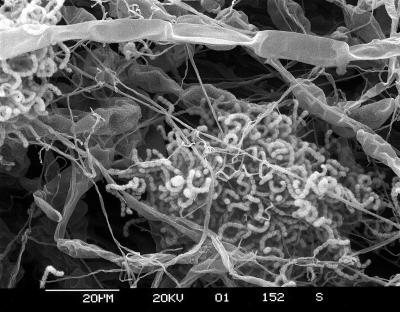
Soil microbes could promote better farm outputs
IMAGE

Credit: CSIRO

In hotter, dryer conditions with climate change, a secret agent for more sustainable agricultural production could lie in harvesting the diverse beneficial soil microbiome in native bushland settings, scientists say.

New research from CSIRO, Flinders University and La Trobe University highlights the importance of soil biological health and further potential to use organic rather than chemical farm inputs for crop production.

“We know antibiotics are very useful in pharmaceuticals, and actinobacteria found plentifully and in balance in various natural environments play a vital role in the plant world,” says lead author Dr Ricardo Araujo, a visiting Flinders University researcher from the University of Porto in Portugal.

“These actinobacterial communities contribute to global carbon cycling by helping to decompose soil nutrients, increase plant productivity, regulate climate support ecosystems – and are found in abundance in warm, dry soil conditions common in Australia.”

A new article in Soil Biology and Biochemistry is one of the first dedicated studies of Australian actino-bacterial diversity in different areas of the Southern Hemisphere – using the bacterial gene sequence dataset generated through the ‘Biomes of Australian Soil Environments’ project with soil samples from across the nation, including mainland, the island state of Tasmania as well as King Island, Christmas Island and the Northern Antarctica for comparative soil profiles.

Other researchers from the La Trobe University AgriBio Centre contributed to the analysis of 2211 actinobacterial operational taxonomic units (OTUs) mapped in mainland Australia, and 490 OTUs from Tasmania, King Island, Christmas Island and Northern Antarctica.

CSIRO Agriculture and Food senior principal research scientist, Associate Professor Gupta Vadakattu, says the dfferences we found between mainland Australia and more remote locations showed how agriculture has had an impact on the diversity of actinobacterial.

“Our study shows how native vegetation is a reservoir for these important soil microorganisms, and this could be used to enrich adjoining agricultural soils,” says Associate Professor Vadakattu, adding an intriguing finding was the similarity in actinobacteria profiles of King Island and areas of Antarctica where these continents were once connected.

“Patterns of actinobacteria dispersal suggest only a small fraction of them had the capability of spreading throughout the Southern Hemisphere, especially across oceans.”

Flinders University colleague Professor Chris Franco, says biotechnology has long benefited from actinobacteria for human and animal health products, and increasingly in sustainable agriculture.

“The diversity and structure of soil antinobacterial communities are influenced by multiple factors, representing one of the most abundant soil bacterial taxa across a diverse range of ecological regions – from deserts to Antarctica,” Professor Franco says.

“There is much more we need to learn about their potential in primary production and retaining and incorporating native plants in our ecosystems.”

###

The new article, ‘ Biogeography and emerging significance of Actinobacteria in Australia and Northern Antarctica soils’ (August 2020) by R Araujo, VVSR Gupta, F Reith, A Bissett, P Mele, CMM Franco has been published in Soil Biology and Biochemistry (Elsevier) DOI: 10.1016/j.soilbio.2020.107805

Media Contact
Professor Chris Franco
Gupta.Vadakattu@csiro.au

Related Journal Article

http://dx.doi.org/10.1016/j.soilbio.2020.107805

Tags: Agricultural Production/EconomicsAgricultureBiotechnologyClimate ChangeFood/Food ScienceGeology/SoilMicrobiologyNutrition/NutrientsPlant Sciences
Share12Tweet8Share2ShareShareShare2

Related Posts

Emergency Clinicians Face Systemic Barriers Delivering Supportive Care to Older Patients

Emergency Clinicians Face Systemic Barriers Delivering Supportive Care to Older Patients

November 11, 2026
Continued Glove Use Increases Bacterial Accumulation Over Disinfection in Nursing Simulation

Continued Glove Use Increases Bacterial Accumulation Over Disinfection in Nursing Simulation

November 11, 2026

Review Links Lichen Sclerosus to Genital Dysbiosis and Immune Activation Pathways

November 11, 2026

Lumbar Sympathetic Ganglion Block Reduces Swelling in Rat Lymphedema Model

November 11, 2026
Please login to join discussion

POPULAR NEWS

  • Advanced Cardiac CT Fails to Establish Vasomotor Mechanisms or Clinical Benefits

    Advanced Cardiac CT Fails to Establish Vasomotor Mechanisms or Clinical Benefits

    29 shares
    Share 12 Tweet 7
  • Experts Address Challenges in Respiratory Virus Surveillance Dashboards

    29 shares
    Share 12 Tweet 7
  • Scientometric Analysis Unveils Rapid Growth in Quantum Machine Learning and Cybersecurity

    29 shares
    Share 12 Tweet 7
  • Appreciative Inquiry Refines Leadership Resilience Framework for South African Nurse Managers

    29 shares
    Share 12 Tweet 7

About

We bring you the latest biotechnology news from best research centers and universities around the world. Check our website.

Follow us

Recent News

Emergency Clinicians Face Systemic Barriers Delivering Supportive Care to Older Patients

Continued Glove Use Increases Bacterial Accumulation Over Disinfection in Nursing Simulation

Review Links Lichen Sclerosus to Genital Dysbiosis and Immune Activation Pathways

Subscribe to Blog via Email

Enter your email address to subscribe to this blog and receive notifications of new posts by email.

Join 87 other subscribers
  • Contact Us

Bioengineer.org © Copyright 2023 All Rights Reserved.

Welcome Back!

Login to your account below

Forgotten Password?

Retrieve your password

Please enter your username or email address to reset your password.

Log In
No Result
View All Result
  • Homepages
    • Home Page 1
    • Home Page 2
  • News
  • National
  • Business
  • Health
  • Lifestyle
  • Science

Bioengineer.org © Copyright 2023 All Rights Reserved.