• HOME
  • NEWS
  • EXPLORE
    • CAREER
      • Companies
      • Jobs
    • EVENTS
    • iGEM
      • News
      • Team
    • PHOTOS
    • VIDEO
    • WIKI
  • BLOG
  • COMMUNITY
    • FACEBOOK
    • INSTAGRAM
    • TWITTER
Sunday, July 12, 2026
BIOENGINEER.ORG
No Result
View All Result
  • Login
  • HOME
  • NEWS
  • EXPLORE
    • CAREER
      • Companies
      • Jobs
        • Lecturer
        • PhD Studentship
        • Postdoc
        • Research Assistant
    • EVENTS
    • iGEM
      • News
      • Team
    • PHOTOS
    • VIDEO
    • WIKI
  • BLOG
  • COMMUNITY
    • FACEBOOK
    • INSTAGRAM
    • TWITTER
  • HOME
  • NEWS
  • EXPLORE
    • CAREER
      • Companies
      • Jobs
        • Lecturer
        • PhD Studentship
        • Postdoc
        • Research Assistant
    • EVENTS
    • iGEM
      • News
      • Team
    • PHOTOS
    • VIDEO
    • WIKI
  • BLOG
  • COMMUNITY
    • FACEBOOK
    • INSTAGRAM
    • TWITTER
No Result
View All Result
Bioengineer.org
No Result
View All Result
Home NEWS Science News

NASA’s spots Tropical Cyclone Carlos’ night-time stretch

Bioengineer by Bioengineer
February 10, 2017
in Science News
Reading Time: 2 mins read
0
Share on FacebookShare on TwitterShare on LinkedinShare on RedditShare on Telegram
IMAGE

Credit: Credits: NOAA/NASA Goddard MODIS Rapid Response Team

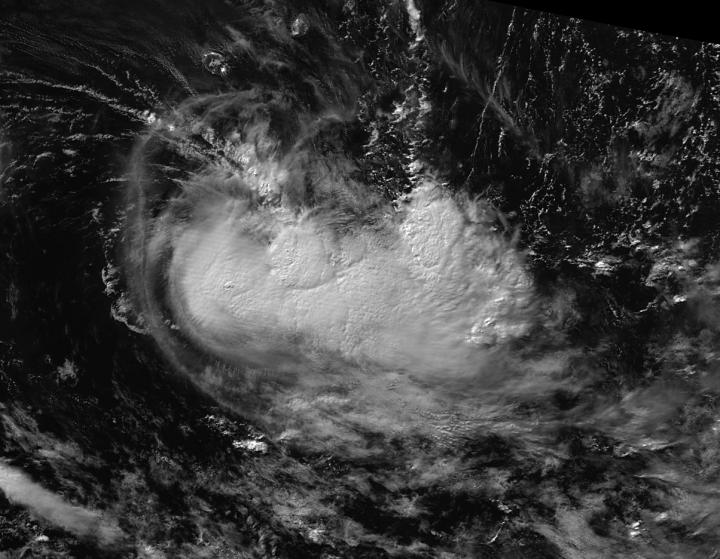
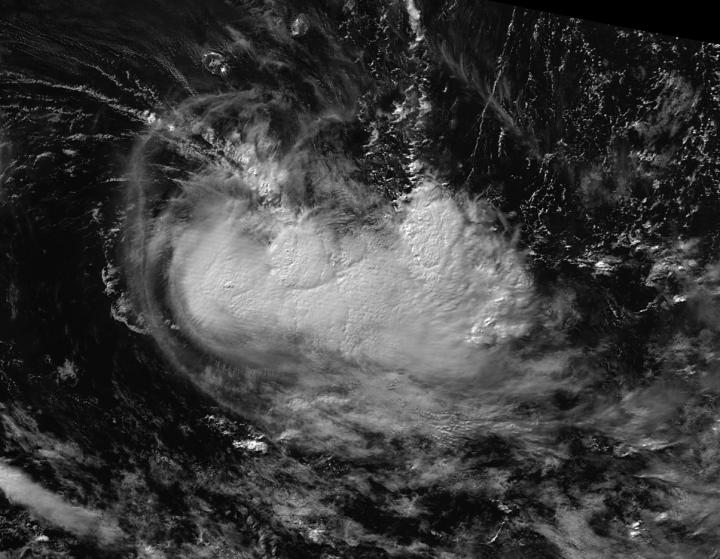
NASA-NOAA's Suomi NPP satellite captured a night-time image of Tropical Cyclone Carlos using infrared light that showed the storm was being stretched out. Carlos is being adversely affected by the Westerlies.

The Westerlies are a semi-permanent belt of prevailing westerly winds in the mid-latitudes that are found in both the temperate zones of the northern and southern hemispheres.

On February 9 the Visible Infrared Imaging Radiometer Suite (VIIRS) instrument aboard the NASA-NOAA Suomi NPP satellite captured an infrared image of Tropical Cyclone Carlos in the Southern Indian Ocean. Infrared imagery detects heat. The VIIRS image showed the thunderstorms around the center of circulation has become more elongated from east to west. Carlos has now moved further into the Westerlies, which have caused the elongation. The winds affecting Carlos are battering the tropical cyclone at a speed between 34.5 mph (30 knots /55.5 kph) and 46 mph (40 knots/74 kph).

On Feb. 10 at 1500 UTC (10 a.m. EST) Tropical Storm Carlos' maximum sustained winds were near 51.7 mph (45 knots/83.3 kph). Carlos' winds peaked on February 9. The Joint Typhoon Warning Center (JTWC) expects Carlos to continue weakening. Carlos was centered near 28.5 degrees south latitude and 60.8 degrees east longitude, about 502 nautical miles southeast of Port Louis, Mauritius. Carlos was moving to the southeast at 17 mph (15 knots/28 kph).

JTWC forecasters expect Carlos to rapidly erode, then dissipate by Sunday, February 12 because of increasing vertical wind shear and movement over cooler sea surface temperatures.

###

Media Contact

Rob Gutro
[email protected]
@NASAGoddard

http://www.nasa.gov/goddard

############

Story Source: Materials provided by Scienmag

Share12Tweet8Share2ShareShareShare2

Related Posts

YEARS Algorithm Enhances Pulmonary Embolism Diagnosis in Cancer Patients

July 12, 2026

Diverse Symptom Burdens and Care Needs in Older Ischemic Stroke Patients

July 12, 2026

KAIST Creates AI to Detect Early Cerebrovascular Disease Signs at Home

July 12, 2026

Anthropometric Traits and Metabolic Biomarkers Linked to Pancreatic Cancer Risk

July 12, 2026
Please login to join discussion

POPULAR NEWS

  • Detection of EDCs in Breast Milk and Infant Urine Up to Six Months Highlights Early Exposure Risks

    77 shares
    Share 31 Tweet 19
  • New Drug Candidate Developed at McMaster Shows Potential for Treating Brain Cancer

    58 shares
    Share 23 Tweet 15
  • KTU Researchers Explore Ultrasound’s Role in Enhancing Blood Flow Beyond Diagnostics

    53 shares
    Share 21 Tweet 13
  • 高齢者の骨粗鬆症治療の持続性比較

    51 shares
    Share 20 Tweet 13

About

We bring you the latest biotechnology news from best research centers and universities around the world. Check our website.

Follow us

Recent News

YEARS Algorithm Enhances Pulmonary Embolism Diagnosis in Cancer Patients

Diverse Symptom Burdens and Care Needs in Older Ischemic Stroke Patients

KAIST Creates AI to Detect Early Cerebrovascular Disease Signs at Home

Subscribe to Blog via Email

Enter your email address to subscribe to this blog and receive notifications of new posts by email.

Join 85 other subscribers
  • Contact Us

Bioengineer.org © Copyright 2023 All Rights Reserved.

Welcome Back!

Login to your account below

Forgotten Password?

Retrieve your password

Please enter your username or email address to reset your password.

Log In
No Result
View All Result
  • Homepages
    • Home Page 1
    • Home Page 2
  • News
  • National
  • Business
  • Health
  • Lifestyle
  • Science

Bioengineer.org © Copyright 2023 All Rights Reserved.