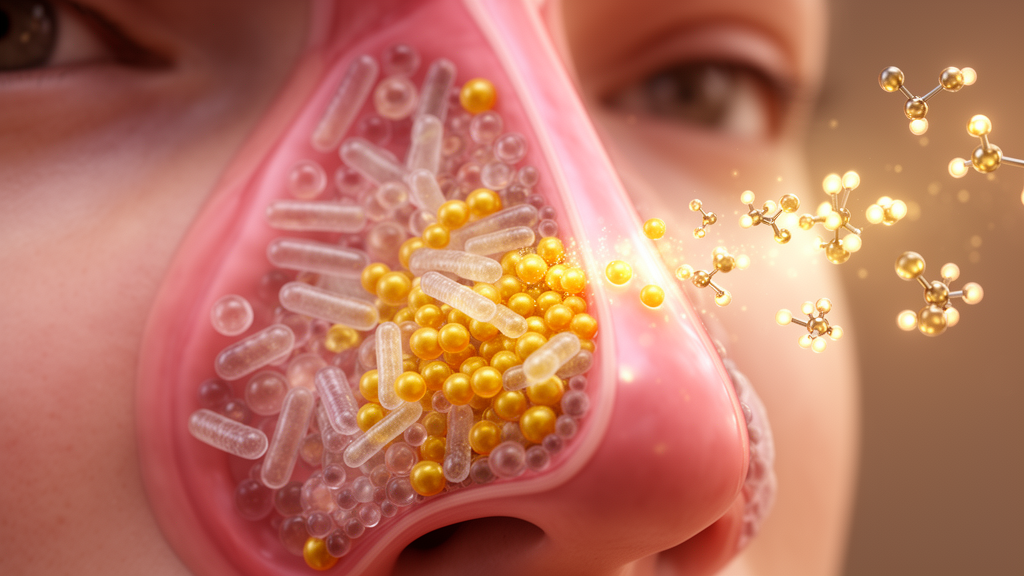
Only some people carry Staphylococcus aureus in their nose, a trait that predisposes carriers to endogenous infections when the bacterium breaches the skin barrier. A new study suggests that whether S. aureus can establish itself in the nasal niche depends not just on the pathogen itself, but on the metabolic offerings of the surrounding bacterial community.
Researchers assembled a newly curated collection of nasal bacterial strains and carried out systematic pairwise interaction analyses, testing how diverse S. aureus strains compete or cooperate with other members of the nasal microbiota. The experiments revealed that nasal species strongly modulate S. aureus growth, and that these effects are both strain-specific and community-specific.
The modulation was observed in vitro and confirmed in gnotobiotic mice, germ-free animals colonized with defined bacterial communities. This dual approach allowed the team to link laboratory-measured interactions to colonization outcomes in a living host, strengthening the case that nutrient exchange shapes who carries the pathogen.
Nutrient-dependent interactions emerged as key drivers of these relationships. In one striking example, synthetic bacterial communities supplied tyrosine, an amino acid that a particular S. aureus strain could not make for itself. With tyrosine provided by its neighbors, the auxotrophic strain proliferated; without supportive communities, its growth was compromised.
To gauge how widespread this dependency might be, the researchers screened a large collection of S. aureus strains. Roughly 8 percent showed tyrosine dependency, and colonization by these strains was impaired in the absence of communities able to provide the amino acid, indicating that the interaction has broader relevance beyond a single laboratory isolate.
The findings reveal distinct metabolic adaptations that allow S. aureus to exploit specific features of resident nasal communities. Rather than acting as a lone invader, the pathogen appears embedded in complex interspecies networks of cooperation and competition that influence whether colonization succeeds in the human nose.
While microbial cooperation and competition are well documented in environmental and intestinal microbial communities, their impact on pathogen colonization within the nasal microbiome had remained largely unknown. This study addresses that gap by applying the same ecological principles to the anterior nares, the nasal niche where S. aureus carriage occurs.
The authors suggest that these insights may inform microbiome-editing strategies aimed at displacing S. aureus from the nasal niche, since supportive communities can enable auxotrophic strains to persist in that environment.
The work, published open access in Microbiome, underscores that a pathogen’s success in a host niche can hinge on the metabolic generosity of its microbial neighbors, a factor that varies from strain to strain and from community to community.
Subject of Research: How amino acid availability shapes strain- and community-specific interactions between Staphylococcus aureus and the nasal microbiota
Article Title: Amino acid availability influences Staphylococcus aureus interaction with the nasal microbiota in a strain- and community-specific manner
Article References: Camus, L., Franz, J., Gerlach, D., Lange, A., Power, J. J., Navarro-Díaz, M., Stahl, J., Krismer, B., Rapp, J., Bilici, K., Otto, M., Klages, L. J., Starostin, V., Ham, S., Kalinowski, J., Angenent, L. T., Link, H., & Heilbronner, S. (2026). Amino acid availability influences Staphylococcus aureus interaction with the nasal microbiota in a strain- and community-specific manner. Microbiome, 14(1), Article 237. https://doi.org/10.1186/s40168-026-02563-x
Image Credits: AI Generated
DOI: 10.1186/s40168-026-02563-x
Keywords: Staphylococcus aureus, nasal microbiota, amino acids, tyrosine, auxotrophy, microbiome, bacterial interactions, colonization, gnotobiotic mice, metabolism, Amino, acid
News Source: Morgan Morrow. (October 23, 2026). Nasal Bacteria Feed or Starve Staphylococcus aureus Depending on Amino Acid Supply. Scienmag.