• HOME
  • NEWS
  • EXPLORE
    • CAREER
      • Companies
      • Jobs
    • EVENTS
    • iGEM
      • News
      • Team
    • PHOTOS
    • VIDEO
    • WIKI
  • BLOG
  • COMMUNITY
    • FACEBOOK
    • INSTAGRAM
    • TWITTER
Tuesday, October 6, 2026
BIOENGINEER.ORG
No Result
View All Result
  • Login
  • HOME
  • NEWS
  • EXPLORE
    • CAREER
      • Companies
      • Jobs
        • Lecturer
        • PhD Studentship
        • Postdoc
        • Research Assistant
    • EVENTS
    • iGEM
      • News
      • Team
    • PHOTOS
    • VIDEO
    • WIKI
  • BLOG
  • COMMUNITY
    • FACEBOOK
    • INSTAGRAM
    • TWITTER
No Result
View All Result
Bioengineer.org
No Result
View All Result
Home NEWS Science News

NASA sees formation of Tropical Depression Two-E in Eastern Pacific Ocean

Bioengineer by Bioengineer
May 31, 2017
in Science News
Reading Time: 2 mins read
0
Share on FacebookShare on TwitterShare on LinkedinShare on RedditShare on Telegram
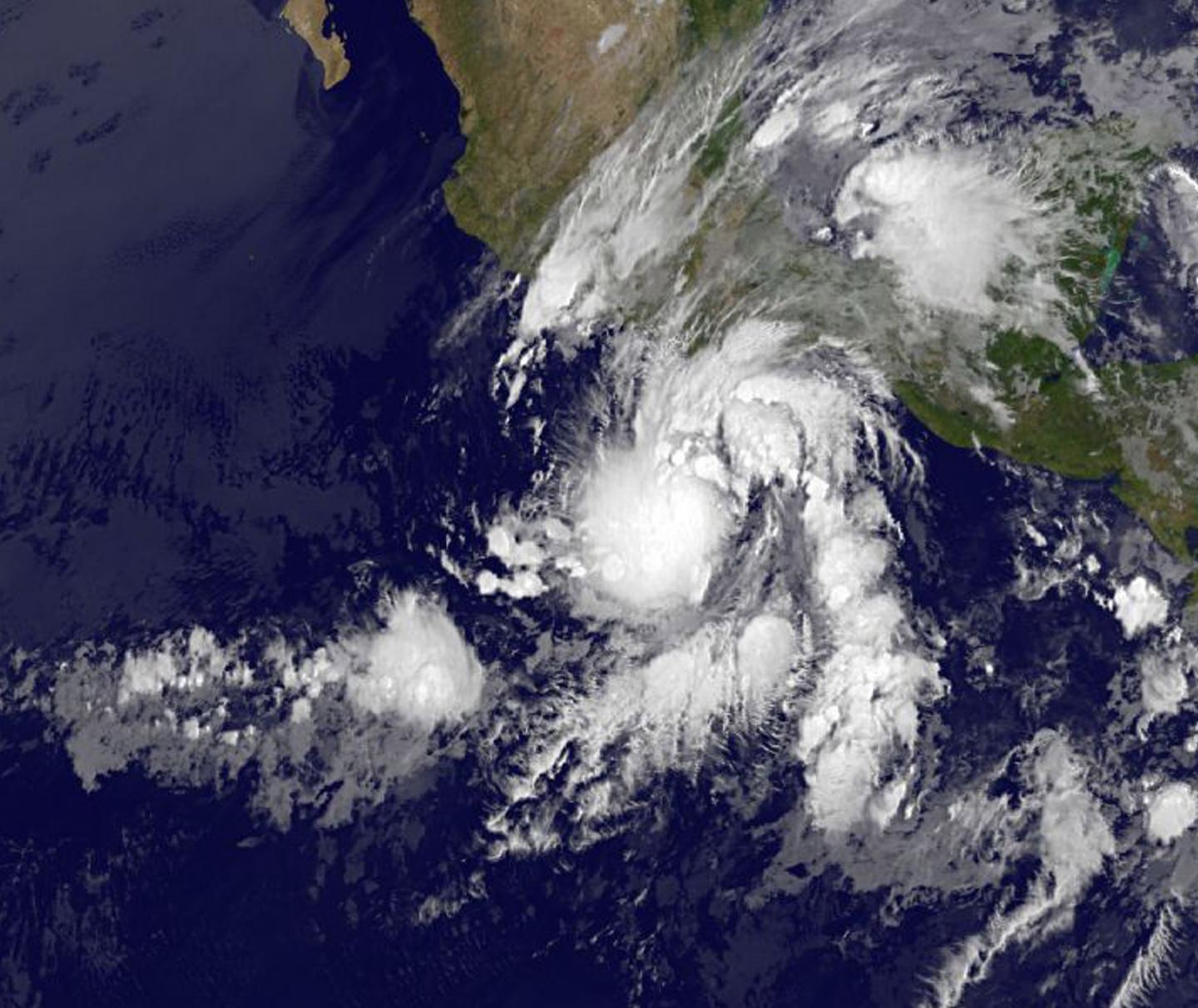
IMAGE

Credit: Credit: NASA/NOAA GOES Project

The second tropical depression of the Eastern Pacific Ocean hurricane season formed near southwestern Mexico. NASA and NOAA satellites provided infrared and visible imagery of the strengthening storm.

At 11 a.m. EDT (1500 UTC) on May 31, the National Hurricane Center in Miami, Florida noted the development of Tropical Depression 2E (TD2E). The formation of the storm has already generated a tropical storm watch for portions of the coast of Mexico. The government of Mexico has issued a Tropical Storm Watch from Salina Cruz to Puerto Escondido.

The center of tropical depression two-e was located near latitude 13.9 degrees north and longitude 97.8 degrees west. That's about 150 miles (245 km) southwest of Puerto Angel, Mexico and about 250 miles (400 km) southeast of Acapulco. NHC noted that maximum sustained winds were near 30 mph (45 kph) with higher gusts. Some strengthening is forecast during the next 48 hours, and the depression could become a tropical storm on Thursday, June 1.

Infrared imagery captured before the storm was officially designated a depression provided a look at the temperatures of TD2E's clouds. The infrared data was taken on May 31 at 0841 UTC (4:41 a.m. EDT) by the Atmospheric Infrared Sounder or AIRS instrument that flies aboard NASA's Aqua satellite. That data was false colored and made into an image at NASA's Jet Propulsion Laboratory in Pasadena, California to highlight cloud top temperatures. The coldest cloud tops indicate towering thunderstorms high into the troposphere. The colder the clouds, the stronger the storms. AIRS data showed that some cloud tops were as cold as minus 63 degrees Fahrenheit or minus 53 degrees Celsius and cloud top temperatures that cold have been shown to generate heavy rainfall.

NOAA's GOES-East satellite captured a visible image of TD2E at 1145 UTC (7:45 a.m. EDT) as it lingered in the Eastern Pacific Ocean near southwestern Mexico. The visible GOES-East image showed thunderstorms wrapped around the low-level center of circulation and extending in a fragmented band east of the center to the south.

The depression was moving toward the northeast near 3 mph (6 kph) and the NHC expects a slow motion toward the northeast during the next couple of days. On the forecast track, the center of the depression should approach the pacific coast of Mexico on Friday.

For updated forecasts, visit the NHC website at: http://www.nhc.noaa.gov.

###

Media Contact

Rob Gutro
[email protected]
@NASAGoddard

http://www.nasa.gov/goddard

############

Story Source: Materials provided by Scienmag

Share12Tweet8Share2ShareShareShare2

Related Posts

Konjac and Carrageenan Team Up to Shield Beta-Carotene in Novel Emulsion Gels

Konjac and Carrageenan Team Up to Shield Beta-Carotene in Novel Emulsion Gels

October 6, 2026
New Knowledge-Enhanced AI Model Makes Multi-Turn Conversations Far More Accurate

New Knowledge-Enhanced AI Model Makes Multi-Turn Conversations Far More Accurate

October 6, 2026

Computational Study Flags Benzimidazole Compounds That May Fight Inflammation and Allergy at Once

October 6, 2026

Rare Dripping Candle Wax Bone Disease Diagnosed Without a Single Biopsy

October 6, 2026
Please login to join discussion

POPULAR NEWS

  • Alloys That Shrink Their Own Grains: New PIX Mechanism Refines Metals With Heat Alone

    Alloys That Shrink Their Own Grains: New PIX Mechanism Refines Metals With Heat Alone

    29 shares
    Share 12 Tweet 7
  • Endurance Exercise Reshapes the Liver in Males and Females Through Distinct Molecular Routes

    29 shares
    Share 12 Tweet 7
  • Single Transcription Factor PU.1 Rapidly Converts Fibroblasts into Macrophage-Lineage Cells

    29 shares
    Share 12 Tweet 7
  • New Scale Measures How Ready Nurse Educators Really Are for the AI Era

    29 shares
    Share 12 Tweet 7

About

We bring you the latest biotechnology news from best research centers and universities around the world. Check our website.

Follow us

Recent News

Alloys That Shrink Their Own Grains: New PIX Mechanism Refines Metals With Heat Alone

Endurance Exercise Reshapes the Liver in Males and Females Through Distinct Molecular Routes

Single Transcription Factor PU.1 Rapidly Converts Fibroblasts into Macrophage-Lineage Cells

Subscribe to Blog via Email

Success! An email was just sent to confirm your subscription. Please find the email now and click 'Confirm' to start subscribing.

Join 85 other subscribers
  • Contact Us

Bioengineer.org © Copyright 2023 All Rights Reserved.

Welcome Back!

Login to your account below

Forgotten Password?

Retrieve your password

Please enter your username or email address to reset your password.

Log In
No Result
View All Result
  • Homepages
    • Home Page 1
    • Home Page 2
  • News
  • National
  • Business
  • Health
  • Lifestyle
  • Science

Bioengineer.org © Copyright 2023 All Rights Reserved.