• HOME
  • NEWS
  • EXPLORE
    • CAREER
      • Companies
      • Jobs
    • EVENTS
    • iGEM
      • News
      • Team
    • PHOTOS
    • VIDEO
    • WIKI
  • BLOG
  • COMMUNITY
    • FACEBOOK
    • INSTAGRAM
    • TWITTER
Monday, December 22, 2025
BIOENGINEER.ORG
No Result
View All Result
  • Login
  • HOME
  • NEWS
  • EXPLORE
    • CAREER
      • Companies
      • Jobs
        • Lecturer
        • PhD Studentship
        • Postdoc
        • Research Assistant
    • EVENTS
    • iGEM
      • News
      • Team
    • PHOTOS
    • VIDEO
    • WIKI
  • BLOG
  • COMMUNITY
    • FACEBOOK
    • INSTAGRAM
    • TWITTER
  • HOME
  • NEWS
  • EXPLORE
    • CAREER
      • Companies
      • Jobs
        • Lecturer
        • PhD Studentship
        • Postdoc
        • Research Assistant
    • EVENTS
    • iGEM
      • News
      • Team
    • PHOTOS
    • VIDEO
    • WIKI
  • BLOG
  • COMMUNITY
    • FACEBOOK
    • INSTAGRAM
    • TWITTER
No Result
View All Result
Bioengineer.org
No Result
View All Result
Home NEWS Science News

NASA finds an elongated Phanfone now a tropical storm

Bioengineer by Bioengineer
December 27, 2019
in Science News
Reading Time: 2 mins read
0
IMAGE
Share on FacebookShare on TwitterShare on LinkedinShare on RedditShare on Telegram

IMAGE

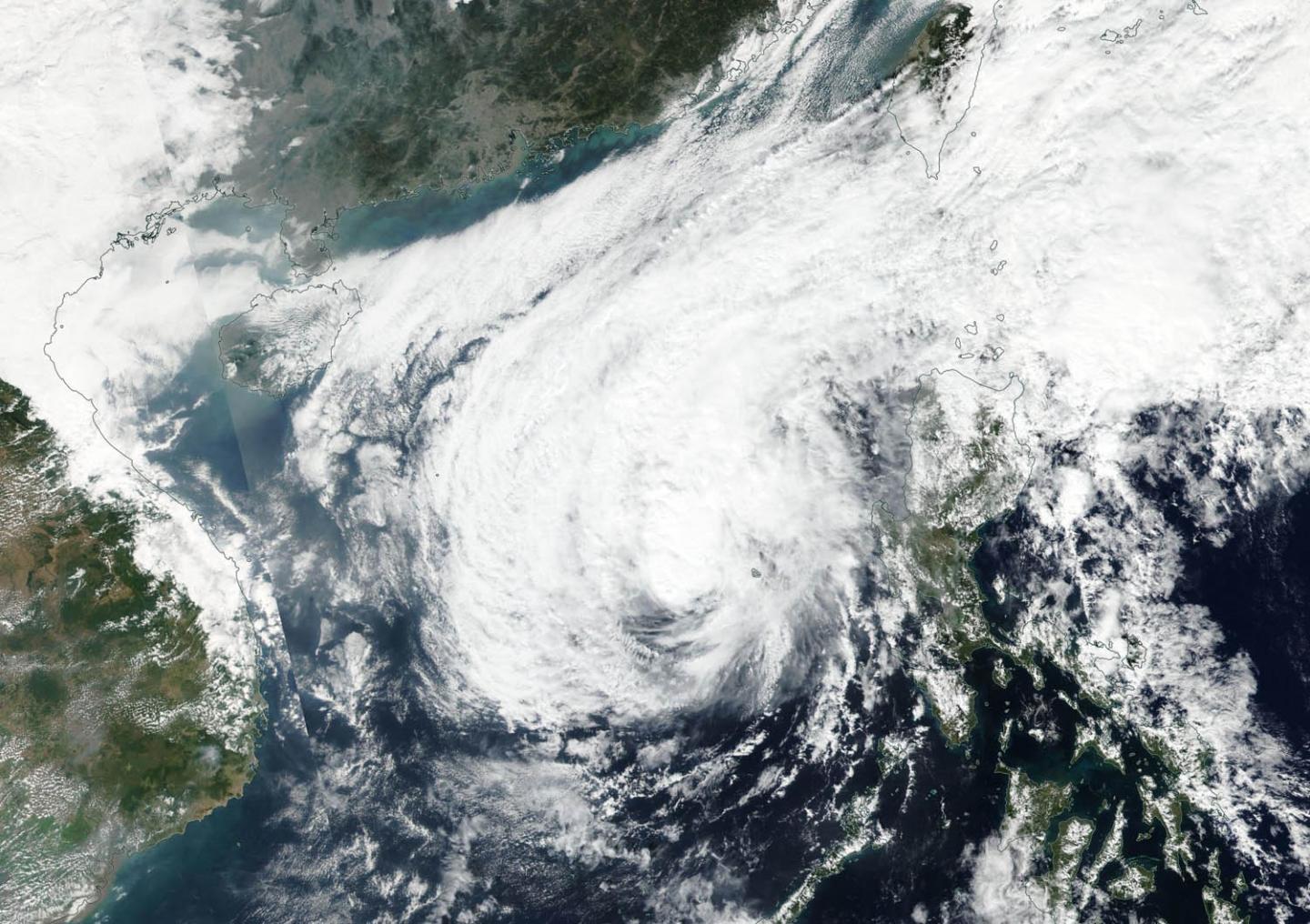
Credit: Credit: NASA Worldview, Earth Observing System Data and Information System (EOSDIS)


NASA-NOAA’s Suomi NPP satellite provided a visible image of Phanfone as it continues moving through the South China Sea. Visible imagery showed that the storm is less organized and elongated as the storm weakened from a typhoon to a tropical storm.

Satellite imagery gives forecasters a look at the structure and strength of tropical cyclones. Visible imagery helps forecasters understand if a storm is organizing or weakening. If a storm appears more circular in nature it is an indication the storm is consolidating and strengthening. If a storm appears more elongated or asymmetrical, it is a sign that the storm is weakening.
In the visible image captured by Suomi NPP’s Visible Infrared Imaging Radiometer Suite (VIIRS) instrument, Phanfone appeared more asymmetrical.

Forecasters at the Joint Typhoon Warning Center in Pearl Harbor, Hawaii noted that Phanfone is being affected by vertical wind shear, which is a factor in elongating the storm. Wind shear are winds around the storm that blow against it at different levels in the atmosphere. The storm is also being weakened by dry air moving into it from the west. Dry air saps the ability for thunderstorms to form, and thunderstorms make up a tropical cyclone.

At 10 a.m. EST (1500 UTC) on Dec. 27, Phanfone’s maximum sustained winds had dropped to 50 knots. It was located in the South China Sea, near 15.0 degrees north latitude and 115.9 degrees east longitude. That is approximately 461 nautical miles east of Da Nang, Vietnam.

Phanfone is moving across the South China Sea in a westerly direction and is continuing to weaken. The forecasters at the Joint Typhoon Warning Center expect the storm to dissipate by Dec. 29, just off the coast of Vietnam.

Tropical cyclones are the most powerful weather event on Earth. NASA’s expertise in space and scientific exploration contributes to essential services provided to the American people by other federal agencies, such as hurricane weather forecasting.

###

Media Contact
Rob Gutro
[email protected]

Original Source

https://blogs.nasa.gov/hurricanes/2019/12/27/phanfone-northwestern-pacific-ocean-4/

Tags: Atmospheric ChemistryAtmospheric ScienceClimate ChangeClimate ScienceEarth ScienceMeteorologyTechnology/Engineering/Computer ScienceTemperature-Dependent PhenomenaWeather/Storms
Share12Tweet8Share2ShareShareShare2

Related Posts

Neutrophil-Driven Hybrid Nanovesicles Combat Bacterial Infections

December 22, 2025
Measuring Pain During Surfactant Treatment via Skin Conductance

Measuring Pain During Surfactant Treatment via Skin Conductance

December 22, 2025

Advancing Secure Federated Learning with Neural Cryptography

December 22, 2025

Thickened Liquids Boost Oral Nutrition in Preterm Infants

December 22, 2025
Please login to join discussion

POPULAR NEWS

  • Nurses’ Views on Online Learning: Effects on Performance

    Nurses’ Views on Online Learning: Effects on Performance

    70 shares
    Share 28 Tweet 18
  • NSF funds machine-learning research at UNO and UNL to study energy requirements of walking in older adults

    71 shares
    Share 28 Tweet 18
  • Unraveling Levofloxacin’s Impact on Brain Function

    54 shares
    Share 22 Tweet 14
  • Exploring Audiology Accessibility in Johannesburg, South Africa

    51 shares
    Share 20 Tweet 13

About

We bring you the latest biotechnology news from best research centers and universities around the world. Check our website.

Follow us

Recent News

Neutrophil-Driven Hybrid Nanovesicles Combat Bacterial Infections

Measuring Pain During Surfactant Treatment via Skin Conductance

Advancing Secure Federated Learning with Neural Cryptography

Subscribe to Blog via Email

Enter your email address to subscribe to this blog and receive notifications of new posts by email.

Join 70 other subscribers
  • Contact Us

Bioengineer.org © Copyright 2023 All Rights Reserved.

Welcome Back!

Login to your account below

Forgotten Password?

Retrieve your password

Please enter your username or email address to reset your password.

Log In
No Result
View All Result
  • Homepages
    • Home Page 1
    • Home Page 2
  • News
  • National
  • Business
  • Health
  • Lifestyle
  • Science

Bioengineer.org © Copyright 2023 All Rights Reserved.