• HOME
  • NEWS
  • EXPLORE
    • CAREER
      • Companies
      • Jobs
    • EVENTS
    • iGEM
      • News
      • Team
    • PHOTOS
    • VIDEO
    • WIKI
  • BLOG
  • COMMUNITY
    • FACEBOOK
    • INSTAGRAM
    • TWITTER
Monday, October 26, 2026
BIOENGINEER.ORG
No Result
View All Result
  • Login
  • HOME
  • NEWS
  • EXPLORE
    • CAREER
      • Companies
      • Jobs
        • Lecturer
        • PhD Studentship
        • Postdoc
        • Research Assistant
    • EVENTS
    • iGEM
      • News
      • Team
    • PHOTOS
    • VIDEO
    • WIKI
  • BLOG
  • COMMUNITY
    • FACEBOOK
    • INSTAGRAM
    • TWITTER
No Result
View All Result
Bioengineer.org
No Result
View All Result
Home NEWS Science News Technology

Nanoparticle-Infused Cutting Fluids Cut Heat and Force in Stainless Steel Turning

by
October 26, 2026
in Technology
Reading Time: 2 mins read
0
Nanoparticle-Infused Cutting Fluids Cut Heat and Force in Stainless Steel Turning

Nanoparticle-Infused Cutting Fluids Cut Heat and Force in Stainless Steel Turning

Share on FacebookShare on TwitterShare on LinkedinShare on RedditShare on Telegram

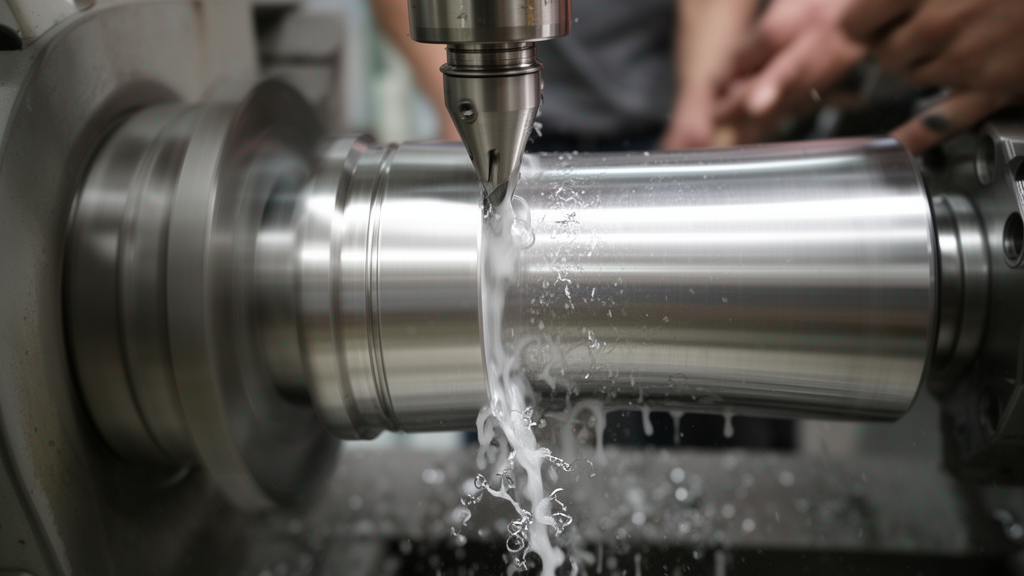
Turning AISI 304 stainless steel generates intense heat at the point where the cutting tool meets the workpiece, a problem that can shorten tool life and degrade the finished surface. A new experimental study in Scientific Reports examines whether adding metal oxide nanoparticles to a conventional cutting fluid can ease that thermal and mechanical burden. Researchers dispersed titanium dioxide (TiO₂) and zinc oxide (ZnO) nanoparticles into SAE30 emulsifier oil, testing concentrations of 1.5% and an optimized 2.25% by weight, and evaluated how each mixture altered the thermal and tribological behavior of the base fluid during precision turning operations.

The experiments were carried out on a production-grade CNC lathe using a DCMT-120,404 cutting insert. Two measurement systems quantified machining performance: a lathe tool dynamometer recorded the cutting forces acting on the tool, while a pyrometer monitored the temperature at the tool-workpiece interface. This combination allowed the team to compare how each nanoparticle-infused fluid affected both the mechanical load on the tool and the heat generated during cutting.

Among the fluids tested, the formulation containing 2.25% by weight of TiO₂ and ZnO nanoparticles delivered the strongest results, significantly reducing both cutting force and interface temperature relative to the other mixtures. The authors attribute this improvement to enhanced heat dissipation and lubrication within the cutting zone. In their interpretation, the nanoparticle-laden fluid reduces frictional interaction at the tool-chip interface, which in turn is expected to yield better surface roughness characteristics on the machined steel.

The study frames nanoparticle-dispersed cutting fluids as a means of improving machining quality in precision turning of AISI 304 stainless steel, linking the observed force and temperature reductions to the fluid’s modified thermal and tribological behavior. The reported benefits are tied to the specific formulations evaluated, with the 2.25% by weight concentration outperforming the 1.5% mixtures for both nanoparticle types.

As with any controlled machining study, the reported gains apply to the conditions tested: defined nanoparticle concentrations, a single insert geometry, and turning of one stainless steel grade on a CNC lathe. The published version is an accepted, peer-reviewed article released early for faster access, and it remains subject to further editorial edits before the final Version of Record replaces it. Readers should therefore treat the reported force and temperature reductions as experimental results tied to this particular setup rather than as universal performance figures for all cutting fluids or steel grades.

Subject of Research: Experimental analysis of TiO₂ and ZnO nanoparticle-infused cutting fluids in CNC turning of AISI 304 stainless steel

Article Title: Experimental analysis of AISI 304 stainless steel machinability utilizing TiO₂ and ZnO nanoparticle-infused emulsifier oil-based cutting fluids

Article References: Shanmugam, T., Kandasamy, V. K., Janakiraman, R., & Subramanian, R. (2026). Experimental analysis of AISI 304 stainless steel machinability utilizing TiO₂ and ZnO nanoparticle-infused emulsifier oil-based cutting fluids. Scientific Reports. https://doi.org/10.1038/s41598-026-71116-x

Image Credits: AI Generated

DOI: 10.1038/s41598-026-71116-x

Keywords: AISI 304 stainless steel, cutting fluids, nanoparticles, TiO2, ZnO, machining, CNC turning, cutting force, interface temperature, surface roughness, Experimental, analysis

News Source: Denise Maddox. (October 26, 2026). Nanoparticle-Infused Cutting Fluids Cut Heat and Force in Stainless Steel Turning. Scienmag.


Tags: AISI 304 stainless steelanalysisCNC turningcutting fluidscutting forceexperimentalinterface temperaturemachiningnanoparticlessurface roughnessTiO2ZnO
Share12Tweet7Share2ShareShareShare1

Related Posts

Drop Tests in Liquid Oxygen Reveal Which Ship Materials Could Ignite on Hydrogen Vessels

Drop Tests in Liquid Oxygen Reveal Which Ship Materials Could Ignite on Hydrogen Vessels

October 26, 2026
Porous adhesive layer roughly doubles bonding strength between dissimilar materials

Porous adhesive layer roughly doubles bonding strength between dissimilar materials

October 26, 2026

Al2O3 Buffer Layer Separates Strain from Interface Effects in Crystallized Ge Films

October 26, 2026

Underground CO2 storage reaches record 43.6 million tonnes in a single year

October 26, 2026

POPULAR NEWS

  • Drop Tests in Liquid Oxygen Reveal Which Ship Materials Could Ignite on Hydrogen Vessels

    Drop Tests in Liquid Oxygen Reveal Which Ship Materials Could Ignite on Hydrogen Vessels

    29 shares
    Share 12 Tweet 7
  • Porous adhesive layer roughly doubles bonding strength between dissimilar materials

    29 shares
    Share 12 Tweet 7
  • MicroRNA miR-183-3p emerges as candidate regulator of ESR1 in colorectal cancer

    29 shares
    Share 12 Tweet 7
  • Al2O3 Buffer Layer Separates Strain from Interface Effects in Crystallized Ge Films

    29 shares
    Share 12 Tweet 7

About

We bring you the latest biotechnology news from best research centers and universities around the world. Check our website.

Follow us

Recent News

Drop Tests in Liquid Oxygen Reveal Which Ship Materials Could Ignite on Hydrogen Vessels

MicroRNA miR-183-3p emerges as candidate regulator of ESR1 in colorectal cancer

Porous adhesive layer roughly doubles bonding strength between dissimilar materials

Subscribe to Blog via Email

Enter your email address to subscribe to this blog and receive notifications of new posts by email.

Join 85 other subscribers
  • Contact Us

Bioengineer.org © Copyright 2023 All Rights Reserved.

Welcome Back!

Login to your account below

Forgotten Password?

Retrieve your password

Please enter your username or email address to reset your password.

Log In
No Result
View All Result
  • Homepages
    • Home Page 1
    • Home Page 2
  • News
  • National
  • Business
  • Health
  • Lifestyle
  • Science

Bioengineer.org © Copyright 2023 All Rights Reserved.