• HOME
  • NEWS
  • EXPLORE
    • CAREER
      • Companies
      • Jobs
    • EVENTS
    • iGEM
      • News
      • Team
    • PHOTOS
    • VIDEO
    • WIKI
  • BLOG
  • COMMUNITY
    • FACEBOOK
    • INSTAGRAM
    • TWITTER
Monday, October 26, 2026
BIOENGINEER.ORG
No Result
View All Result
  • Login
  • HOME
  • NEWS
  • EXPLORE
    • CAREER
      • Companies
      • Jobs
        • Lecturer
        • PhD Studentship
        • Postdoc
        • Research Assistant
    • EVENTS
    • iGEM
      • News
      • Team
    • PHOTOS
    • VIDEO
    • WIKI
  • BLOG
  • COMMUNITY
    • FACEBOOK
    • INSTAGRAM
    • TWITTER
No Result
View All Result
Bioengineer.org
No Result
View All Result
Home NEWS Science News Technology

Al2O3 Buffer Layer Separates Strain from Interface Effects in Crystallized Ge Films

by
October 26, 2026
in Technology
Reading Time: 2 mins read
0
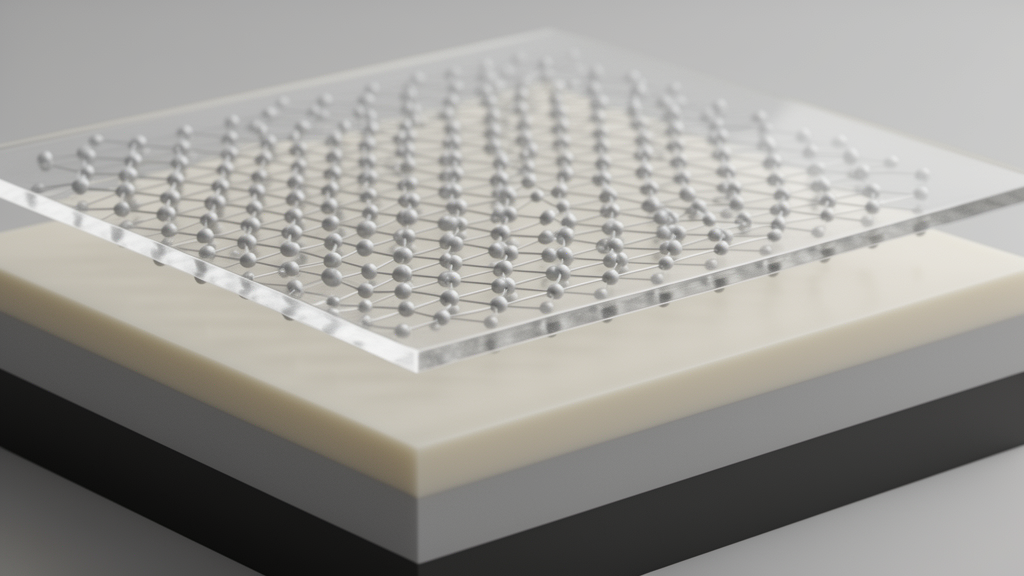
Al2O3 Buffer Layer Separates Strain from Interface Effects in Crystallized Ge Films

Al2O3 Buffer Layer Separates Strain from Interface Effects in Crystallized Ge Films

Share on FacebookShare on TwitterShare on LinkedinShare on RedditShare on Telegram

Germanium thin films made by solid-phase crystallization are attractive for electronics built on low-temperature budgets, but engineers have struggled to tell apart two influences that shape their quality: the mechanical stress a substrate imposes through thermal expansion mismatch, and the local chemical and structural environment right at the film’s lower boundary. A new study by Jae Hyeok Choi and Woong Choi, published in the Journal of Materials Science, reports a way to pull these effects apart using a thin aluminum oxide interlayer.

The researchers worked with 200-nanometer-thick germanium films crystallized on three very different substrates: sapphire, silicon, and fused quartz. On each, they compared films grown directly against the substrate with films separated from it by a 20-nanometer aluminum oxide buffer layer deposited by atomic layer deposition. Because the buffer inserts a chemically distinct, uniform interface while the underlying substrate still sets the thermal mismatch, any change in behavior could be traced to one influence or the other.

Raman spectroscopy and X-ray diffraction showed that the macroscopic residual strain baseline in the films is dictated by thermal expansion mismatch between germanium and the substrate. In other words, the large-scale mechanical state of the crystallized film follows the substrate’s thermal behavior, just as conventional models of stress in thin films would predict.

The interfacial picture was different. Electron backscatter diffraction revealed that the aluminum oxide buffer changed how grains nucleate at the interface during crystallization. On sapphire and quartz, the buffer promoted grain growth, while on silicon it suppressed substrate-templated crystallization, in which the underlying crystal would otherwise influence the orientation and development of the growing germanium grains.

Despite these substrate-dependent differences in microstructure, Hall effect measurements told a consistent story: inserting the aluminum oxide buffer layer enhanced hole mobility and reduced hole concentration on all three substrates. That uniformity across sapphire, silicon, and quartz indicates that the local interfacial environment exerts a governing influence on carrier transport that goes beyond the strain baseline and beyond the specific grain structures seen on each substrate.

The findings offer practical guidance for interface engineering of high-mobility polycrystalline semiconductor thin films. By decoupling substrate-induced strain from interfacial effects, the study suggests that designers of low-thermal-budget germanium devices can tune carrier transport through the choice of interlayer, independently of the mechanical constraints imposed by the substrate beneath it.

Subject of Research: Disentangling strain and interfacial effects in solid-phase-crystallized germanium thin films using an Al2O3 buffer layer

Article Title: Disentangling substrate-induced strain and interfacial environment in solid-phase-crystallized Ge thin films using an Al2O3 buffer layer

Article References: Choi, J. H., & Choi, W. (2026). Disentangling substrate-induced strain and interfacial environment in solid-phase-crystallized Ge thin films using an Al2O3 buffer layer. Journal of Materials Science. https://doi.org/10.1007/s10853-026-14017-8

Image Credits: AI Generated

DOI: 10.1007/s10853-026-14017-8

Keywords: germanium thin films, solid-phase crystallization, Al2O3 buffer layer, atomic layer deposition, residual strain, thermal expansion mismatch, electron backscatter diffraction, Raman spectroscopy, X-ray diffraction, Hall effect, hole mobility, interface engineering

News Source: Denise Maddox. (October 26, 2026). Al2O3 Buffer Layer Separates Strain from Interface Effects in Crystallized Ge Films. Scienmag.


Tags: Al2O3 buffer layeratomic layer depositionelectron backscatter diffractiongermanium thin filmsHall effecthole mobilityInterface engineeringRaman spectroscopyresidual strainsolid-phase crystallizationthermal expansion mismatchX-ray diffraction
Share12Tweet7Share2ShareShareShare1

Related Posts

Porous adhesive layer roughly doubles bonding strength between dissimilar materials

Porous adhesive layer roughly doubles bonding strength between dissimilar materials

October 26, 2026
Underground CO2 storage reaches record 43.6 million tonnes in a single year

Underground CO2 storage reaches record 43.6 million tonnes in a single year

October 26, 2026

Roads on the Brink: Mapping Compound Earthquake and Landslide Vulnerability in Ethiopia’s Rift

October 26, 2026

Simple Muscle Signal Pipeline Drives Robotic Arm, But Speed Remains a Hurdle

October 26, 2026

POPULAR NEWS

  • Porous adhesive layer roughly doubles bonding strength between dissimilar materials

    Porous adhesive layer roughly doubles bonding strength between dissimilar materials

    29 shares
    Share 12 Tweet 7
  • MicroRNA miR-183-3p emerges as candidate regulator of ESR1 in colorectal cancer

    29 shares
    Share 12 Tweet 7
  • Al2O3 Buffer Layer Separates Strain from Interface Effects in Crystallized Ge Films

    29 shares
    Share 12 Tweet 7
  • Ecuador’s Trauma Hospitals Face Gaps Between Equipment and Real-World Capacity

    29 shares
    Share 12 Tweet 7

About

We bring you the latest biotechnology news from best research centers and universities around the world. Check our website.

Follow us

Recent News

MicroRNA miR-183-3p emerges as candidate regulator of ESR1 in colorectal cancer

Porous adhesive layer roughly doubles bonding strength between dissimilar materials

Scoping review maps multi-level barriers and fixes in healthcare access for autistic children

Subscribe to Blog via Email

Enter your email address to subscribe to this blog and receive notifications of new posts by email.

Join 85 other subscribers
  • Contact Us

Bioengineer.org © Copyright 2023 All Rights Reserved.

Welcome Back!

Login to your account below

Forgotten Password?

Retrieve your password

Please enter your username or email address to reset your password.

Log In
No Result
View All Result
  • Homepages
    • Home Page 1
    • Home Page 2
  • News
  • National
  • Business
  • Health
  • Lifestyle
  • Science

Bioengineer.org © Copyright 2023 All Rights Reserved.