• HOME
  • NEWS
  • EXPLORE
    • CAREER
      • Companies
      • Jobs
    • EVENTS
    • iGEM
      • News
      • Team
    • PHOTOS
    • VIDEO
    • WIKI
  • BLOG
  • COMMUNITY
    • FACEBOOK
    • INSTAGRAM
    • TWITTER
Sunday, May 10, 2026
BIOENGINEER.ORG
No Result
View All Result
  • Login
  • HOME
  • NEWS
  • EXPLORE
    • CAREER
      • Companies
      • Jobs
        • Lecturer
        • PhD Studentship
        • Postdoc
        • Research Assistant
    • EVENTS
    • iGEM
      • News
      • Team
    • PHOTOS
    • VIDEO
    • WIKI
  • BLOG
  • COMMUNITY
    • FACEBOOK
    • INSTAGRAM
    • TWITTER
  • HOME
  • NEWS
  • EXPLORE
    • CAREER
      • Companies
      • Jobs
        • Lecturer
        • PhD Studentship
        • Postdoc
        • Research Assistant
    • EVENTS
    • iGEM
      • News
      • Team
    • PHOTOS
    • VIDEO
    • WIKI
  • BLOG
  • COMMUNITY
    • FACEBOOK
    • INSTAGRAM
    • TWITTER
No Result
View All Result
Bioengineer.org
No Result
View All Result
Home NEWS Science News Health

Nanomesh drug delivery provides hope against global antibiotic resistance

Bioengineer by Bioengineer
October 16, 2019
in Health
Reading Time: 2 mins read
0
IMAGE
Share on FacebookShare on TwitterShare on LinkedinShare on RedditShare on Telegram

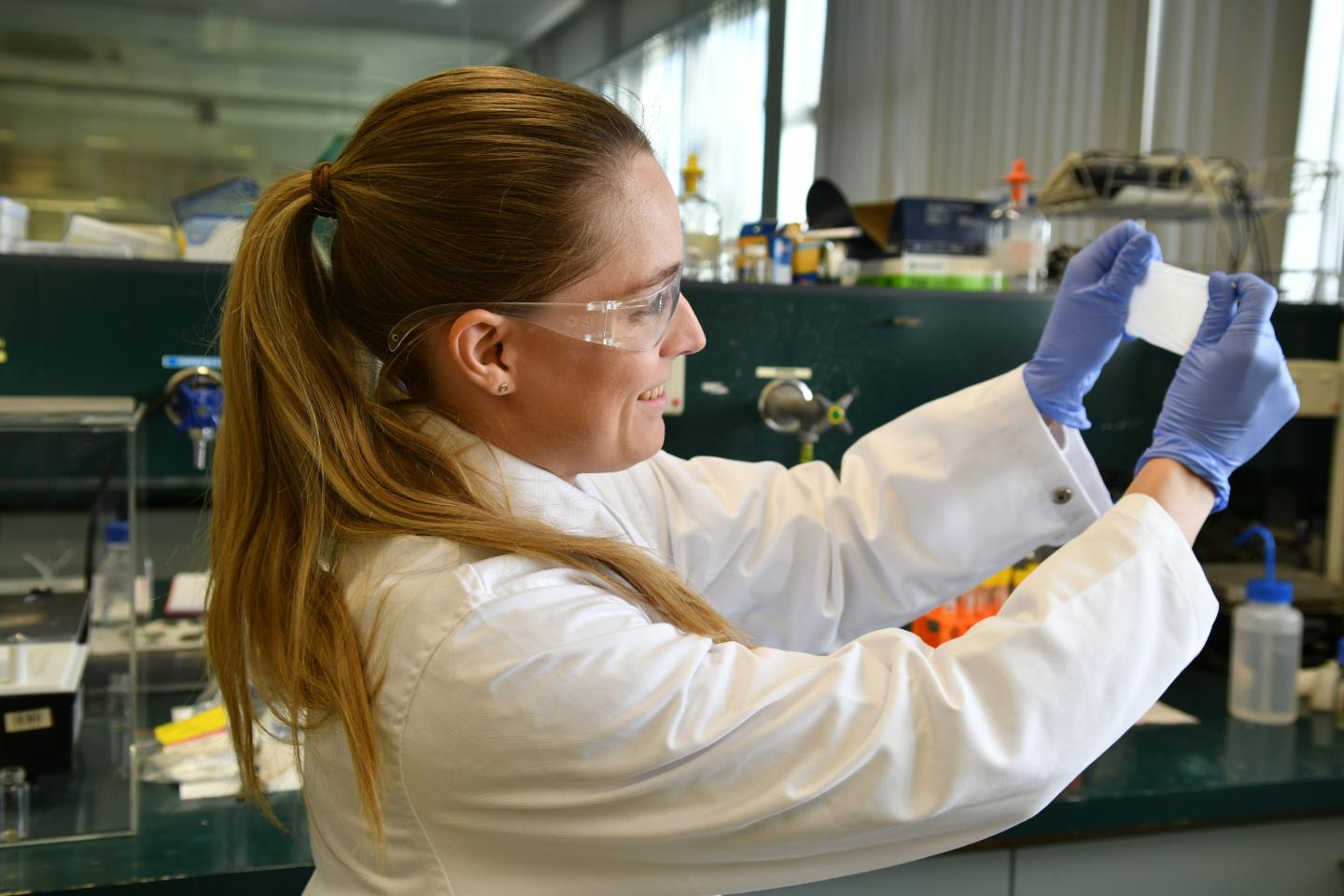
The fight against antibiotic resistance takes a major step forward with scientists discovering a concept for fabricating nanomeshes as drug delivery system
IMAGE

Credit: Flinders University

The fight against global antibiotic resistance has taken a major step forward with scientists discovering a concept for fabricating nanomeshes as an effective drug delivery system for antibiotics.

Health experts are increasingly concerned about the rise in medication resistant bacteria.

Flinders University researchers and collaborators in Japan have produced a nanomesh that is capable of delivering drug treatments.

In studying the effectiveness of the nanomesh, two antibiotics, Colistin and Vancomycin, were added together with gold nanoparticles to the mesh, before they were tested over a 14 day period by PHD student Melanie Fuller.

Flinders Institute for Nanoscience and Technology Associate Professor Ingo Koeper says 20cm by 15cm pieces of mesh were produced which contain fibres 200 nm in diameter. These meshes are produced using a process called electrospinning with parameters being optimised to ensure the mesh material was consistent.

“In order to deliver the antibiotics to a specific area, the antibiotics were embedded into the mesh produced using a technique called electrospinning, which has gained considerable interest in the biomedical community as it offers promise in many applications including wound management, drug delivery and antibiotic coatings,” says Assoc Prof. Koeper

“A high voltage is then applied between the needle connected to the syringe, and the collector plate which causes the polymer solution to form a cone as it leaves the syringe, at which point the electrostatic forces release a jet of liquid.”

“Small charged nanoparticles altered the release of the antibiotics from the nanomesh. The addition of gold nanoparticles likely neutralised charge, causing the antibiotic to migrate toward the centre of the fibre, prolonging its release.”

The results also suggest dosages could be reduced when compared to traditional drugs which can also diminish potential side effects and complications.

“Although the dosage is reduced compared to an oral dosage, the concentration of antibiotics delivered to the infection site can still be higher, ensuring the bacteria cannot survive which will reduce instances of resistance.”

“This research, as a proof of concept, suggests an opportunity for fabricating nanomeshes which contain gold nanoparticles as a drug treatment for antibiotics.”

Working with Dr. Harriet Whiley, a Flinders environmental health scientists, the researchers studied how the release of the drugs affected the growth of E. Coli. The in vitro study confirmed Colistin with negatively charged gold nanoparticles produced the most efficient nanomesh, significantly affecting bacterial growth.

“Further investigation is needed to determine if other small charged particles affect the release of drugs and how it affects the release over time. As it is a pharmaceutical application, the stability of the mesh under different storage conditions as well as the toxicological properties also need to be evaluated.”

###

Media Contact
Ingo Koeper
[email protected]
61-088-201-2451

Related Journal Article

http://dx.doi.org/10.1039/C9RA06398F

Tags: BiologyDeath/DyingInfectious/Emerging DiseasesNanotechnology/MicromachinesNeurochemistryPublic Health
Share12Tweet8Share2ShareShareShare2

Related Posts

Evaluating Digoxin Use in Patients with Symptomatic Rheumatic Heart Disease

May 10, 2026

Evaluating the Effectiveness and Safety of Digitalis Glycosides in Treating Heart Failure

May 10, 2026

Urdu Fall Risk Questionnaire Adapted for Elderly

May 10, 2026

Key Pharmacological Markers for HIV Prevention in MSM

May 10, 2026
Please login to join discussion

POPULAR NEWS

  • Research Indicates Potential Connection Between Prenatal Medication Exposure and Elevated Autism Risk

    840 shares
    Share 336 Tweet 210
  • New Study Reveals Plants Can Detect the Sound of Rain

    727 shares
    Share 290 Tweet 181
  • Scientists Investigate Possible Connection Between COVID-19 and Increased Lung Cancer Risk

    68 shares
    Share 27 Tweet 17
  • Salmonella Haem Blocks Macrophages, Boosts Infection

    61 shares
    Share 24 Tweet 15

About

We bring you the latest biotechnology news from best research centers and universities around the world. Check our website.

Follow us

Recent News

Evaluating Digoxin Use in Patients with Symptomatic Rheumatic Heart Disease

Evaluating the Effectiveness and Safety of Digitalis Glycosides in Treating Heart Failure

Urdu Fall Risk Questionnaire Adapted for Elderly

Subscribe to Blog via Email

Enter your email address to subscribe to this blog and receive notifications of new posts by email.

Join 82 other subscribers
  • Contact Us

Bioengineer.org © Copyright 2023 All Rights Reserved.

Welcome Back!

Login to your account below

Forgotten Password?

Retrieve your password

Please enter your username or email address to reset your password.

Log In
No Result
View All Result
  • Homepages
    • Home Page 1
    • Home Page 2
  • News
  • National
  • Business
  • Health
  • Lifestyle
  • Science

Bioengineer.org © Copyright 2023 All Rights Reserved.