


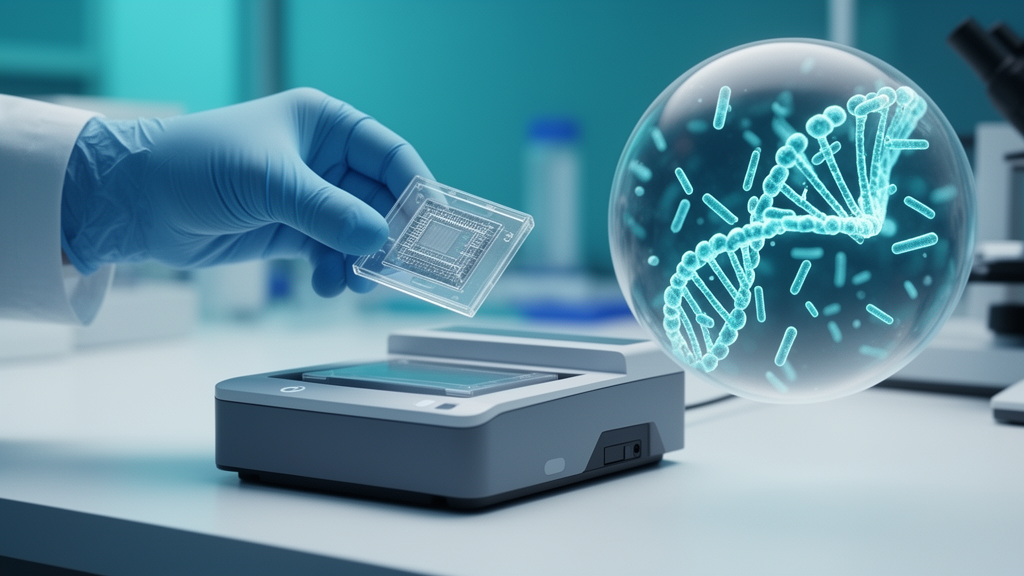
Detecting the faint molecular fingerprints that tumors shed into blood, saliva, and other body fluids has long been one of the most stubborn problems in cancer diagnostics. Circulating tumor DNA, microRNAs, and other non-coding RNAs carry rich information about a malignancy, but they float at extraordinarily low concentrations, especially in the earliest stages of disease when treatment is most effective. A newly published review in Bioscience Nanotechnology surveys the years from 2020 to 2025 and argues that a powerful convergence of two technologies, isothermal nucleic acid amplification and engineered nanomaterials, is steadily closing that sensitivity gap.
The review, authored by Maliana El Aamri, Hamza Moustakim, Ghita Yammouri, Hasna Mohammadi, and Aziz Amine, frames the challenge in stark numbers. Cancer was estimated to account for 18.5 million new cases and more than 10 million deaths worldwide in 2023, and survival depends critically on how early the disease is caught. Liquid biopsy, which reads nucleic acid fragments released continuously by tumor cells, offers a non-invasive route to earlier detection, but only if the analytical platform can reliably find femtomolar to attomolar traces of target molecules in serum, plasma, or saliva.
Isothermal amplification is the engine behind much of the recent progress. Unlike the polymerase chain reaction, which requires repeated heating and cooling cycles on expensive thermocycling equipment, isothermal methods amplify nucleic acids at a single fixed temperature, typically between 37 and 65 degrees Celsius depending on the technique. That removes a major barrier to point-of-care deployment in clinics, pharmacies, or resource-limited settings. The review organizes the field into enzyme-assisted methods, including loop-mediated isothermal amplification, rolling circle amplification, recombinase polymerase amplification, strand displacement amplification, and the exponential amplification reaction, and enzyme-free circuits such as hybridization chain reaction and catalytic hairpin assembly, which rely purely on programmed DNA hybridization.
Each approach carries distinct trade-offs. LAMP, with its multi-primer design recognizing several target regions simultaneously, delivers massive DNA accumulation within 30 to 60 minutes at 60 to 65 degrees Celsius and exceptional specificity, though primer design is technically demanding. RPA operates near physiological temperatures of 37 to 42 degrees Celsius using recombinase proteins to invade double-stranded DNA directly, making it attractive for portable devices, but enzyme instability can affect reproducibility. EXPAR achieves exponential gains of more than a million-fold within minutes at roughly 55 to 60 degrees Celsius, yet is prone to background amplification. Enzyme-free circuits trade speed for stability: they need no cold chain and no protein catalysts, but their slower kinetics and lower amplification efficiency mean they often need help from other signal-enhancing elements.
That help increasingly comes from nanomaterials. Because cancer biomarkers sit at such low abundance, the amplification reaction alone is not enough; the resulting molecular signal must also be converted into something a detector can measure. Nanomaterials serve as the bridge. Their high surface-to-volume ratios allow dense immobilization of capture probes and amplification components, while their tunable optical, electrochemical, and catalytic properties turn molecular recognition events into strong, readable signals. The review catalogs gold and silver nanoparticles, semiconductor quantum dots, carbon-based and two-dimensional materials such as graphene oxide and MXenes, metal-organic frameworks, and magnetic nanoparticles as the workhorses of this integration.
The concrete examples are striking. An electrochemical biosensor combining strand displacement amplification with catalytic hairpin assembly used tetrahedral DNA nanostructures mounted on gold nanoparticles as scaffolds, reaching a detection limit of 10 attomolar across a wide linear range while maintaining selectivity in human serum. A ratiometric electrochemical sensor for the p53 tumor suppressor gene, built on rolling circle amplification and methylene blue signaling, achieved 0.23 femtomolar detection. A catalytic hairpin assembly sensor paired with peptide nucleic acid junctions pushed miRNA-21 detection down to 0.15 femtomolar. On the optical side, a dual-mode platform combining surface plasmon resonance and surface-enhanced Raman scattering on gold nanoparticles reported limits of 42.5 femtomolar and 2.91 femtomolar respectively.
Emerging hybrid platforms are extending these capabilities toward multiplexing and portability. The Cas-Rainbow system integrates CRISPR/Cas12a with rolling circle amplification and hybridization chain reaction to detect multiple breast cancer-related microRNAs, including miR-155, miR-10b, and miR-21, at femtomolar levels in a single reaction while distinguishing breast cancer patients from healthy individuals in serum. A smartphone-read bioluminescent sensor for lung cancer-associated miR-21 and miR-148b uses DNA-guided reassembly of split luciferase fragments on rolling circle amplification products, reaching attomolar sensitivity with light captured directly by an ordinary phone camera. A microfluidic chip combining extracellular vesicle enrichment with on-chip EXPAR quantified up to eight exosomal miRNAs in roughly 1.5 hours using a low-cost IoT reader.
Paper-based and lateral flow formats show how far miniaturization has come. An HRCA-strip biosensor for salivary miRNA-31, a marker of oral squamous cell carcinoma, coupled hybridization chain reaction with rolling circle amplification to generate G-quadruplex DNAzymes that produce a visible color line on a lateral flow strip, reaching 3.21 femtomolar and agreeing with qRT-PCR in clinical saliva samples. A distance-based paper device for miR-221 and miR-222 in hepatocellular carcinoma exploited rolling circle amplification to increase solution viscosity, with zeolitic imidazolate frameworks grown in the paper channels modulating capillary flow so that the distance traveled by the fluid, readable by eye or smartphone, reflected target concentration at sub-picomolar sensitivity.
The review is candid about the obstacles standing between these laboratory demonstrations and routine clinical use. Enzyme-assisted methods depend on polymerases, nicking enzymes, and recombinases whose stability, storage requirements, and batch-to-batch variability can compromise robustness. Enzyme-free circuits suffer from slower kinetics and background leakage from nonspecific hybridization. Nanomaterial reproducibility remains a significant challenge, since variations in particle size, morphology, and surface chemistry directly affect signal generation and inter-laboratory consistency. Heavy-metal quantum dots such as CdS and CdTe raise toxicity and environmental concerns, and sophisticated photoelectrochemical and electrochemiluminescent platforms often require instrumentation that undercuts the point-of-care promise.
The authors also caution that the lowest reported detection limit does not define the best platform. The most clinically valuable systems, they argue, are those that balance sensitivity with low background, robust sample handling, standardized surface chemistry, reproducible fabrication, and compatibility with portable formats such as lateral flow assays, screen-printed electrodes, microfluidic chips, and smartphone readouts. Validation in large patient cohorts, standardized performance metrics, and scalable manufacturing remain prerequisites for translating these cascades from proof-of-concept papers into routine practice. If those hurdles are cleared, the convergence of constant-temperature amplification and rationally matched nanomaterials could make ultrasensitive, decentralized cancer diagnostics a practical reality rather than a laboratory curiosity.
Subject of Research: Isothermal amplification-integrated nanomaterial-based biosensing platforms for detecting cancer-related nucleic acids
Article Title: Recent advances in isothermal amplification-integrated nanomaterial-based biosensing platforms for sensitive detection of cancer-related nucleic acids
Article References: Aamri, M. E., Moustakim, H., Yammouri, G., Mohammadi, H., & Amine, A. (2026). Recent advances in isothermal amplification-integrated nanomaterial-based biosensing platforms for sensitive detection of cancer-related nucleic acids. Bioscience Nanotechnology, 2(1), Article 17. https://doi.org/10.1186/s44331-026-00024-8
Image Credits: AI Generated
DOI: 10.1186/s44331-026-00024-8
Keywords: isothermal amplification, nanomaterials, biosensors, liquid biopsy, circulating tumor DNA, microRNA, CRISPR/Cas, rolling circle amplification, lateral flow assay, point-of-care diagnostics, quantum dots, cancer biomarkers
News Source: Nathaniel Bowman. (October 29, 2026). Nanomaterials and Isothermal Amplification Push Cancer Biomarker Detection to Attomolar Limits. Scienmag.



