• HOME
  • NEWS
  • EXPLORE
    • CAREER
      • Companies
      • Jobs
    • EVENTS
    • iGEM
      • News
      • Team
    • PHOTOS
    • VIDEO
    • WIKI
  • BLOG
  • COMMUNITY
    • FACEBOOK
    • INSTAGRAM
    • TWITTER
Sunday, May 10, 2026
BIOENGINEER.ORG
No Result
View All Result
  • Login
  • HOME
  • NEWS
  • EXPLORE
    • CAREER
      • Companies
      • Jobs
        • Lecturer
        • PhD Studentship
        • Postdoc
        • Research Assistant
    • EVENTS
    • iGEM
      • News
      • Team
    • PHOTOS
    • VIDEO
    • WIKI
  • BLOG
  • COMMUNITY
    • FACEBOOK
    • INSTAGRAM
    • TWITTER
  • HOME
  • NEWS
  • EXPLORE
    • CAREER
      • Companies
      • Jobs
        • Lecturer
        • PhD Studentship
        • Postdoc
        • Research Assistant
    • EVENTS
    • iGEM
      • News
      • Team
    • PHOTOS
    • VIDEO
    • WIKI
  • BLOG
  • COMMUNITY
    • FACEBOOK
    • INSTAGRAM
    • TWITTER
No Result
View All Result
Bioengineer.org
No Result
View All Result
Home NEWS Science News Biology

Nanomaterial fabric destroys nerve agents in battlefield-relevant conditions

Bioengineer by Bioengineer
January 9, 2020
in Biology
Reading Time: 2 mins read
0
IMAGE
Share on FacebookShare on TwitterShare on LinkedinShare on RedditShare on Telegram

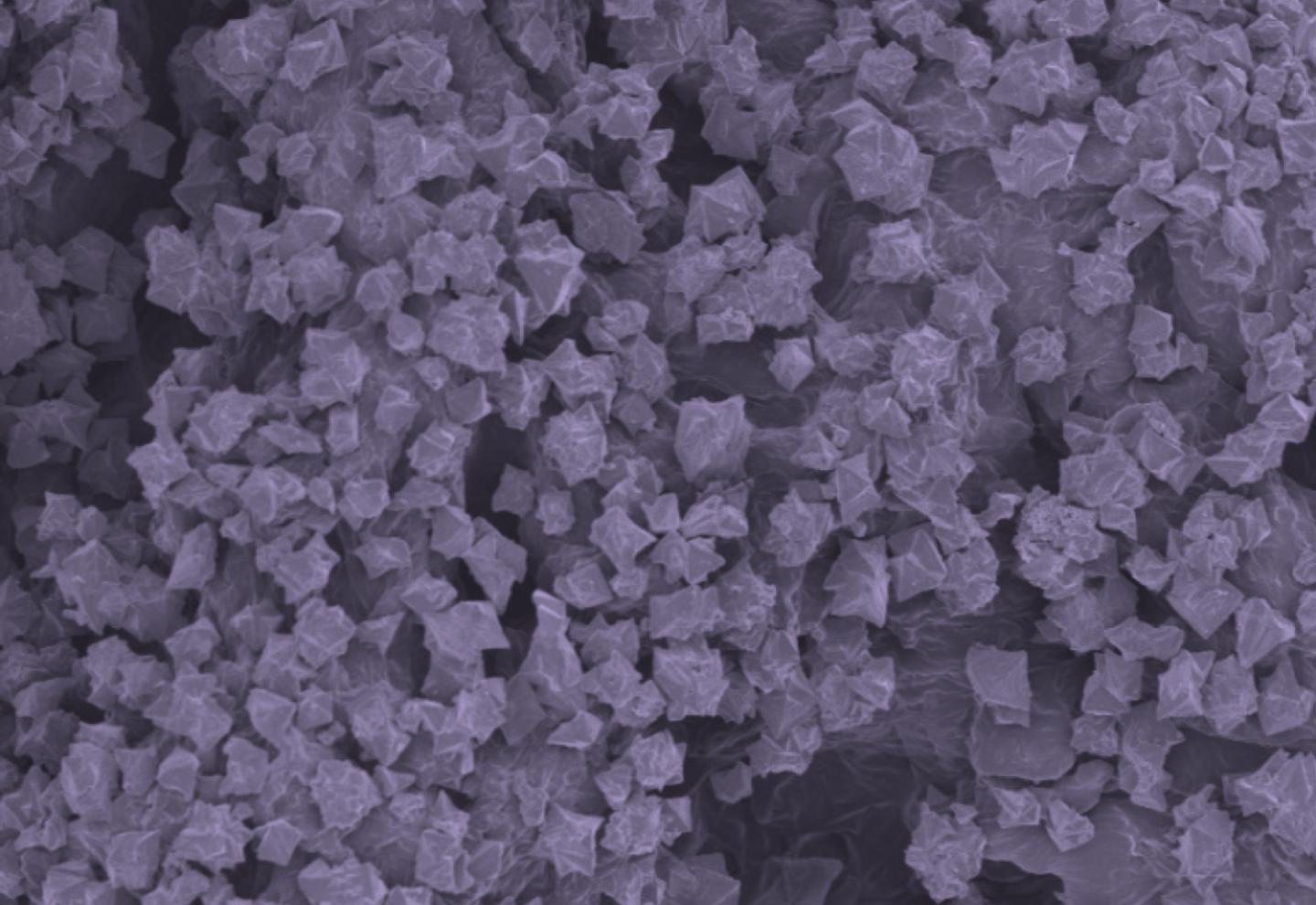
Metal-organic framework-based composites don’t need liquid water to work
IMAGE

Credit: Journal of the American Chemical Society


Northwestern University scientists have successfully combined a nanomaterial effective at destroying toxic nerve agents with textile fibers. This new composite material one day could be integrated into protective suits and face masks for use by people facing hazardous conditions, such as chemical warfare.

The material, a zirconium-based metal-organic framework (MOF), degrades in minutes some of the most toxic chemical agents known to mankind: VX and soman (GD), a more toxic relative of sarin.

“With the correct chemistry, we can render toxic gases nontoxic,” said Omar K. Farha, associate professor of chemistry in the Weinberg College of Arts and Sciences, who led the research. “The action takes place at the nanolevel.”

The study was published recently in the Journal of the American Chemical Society.

The authors write that their work represents, to the best of their knowledge, the first example of the use of MOF composites for the efficient catalytic hydrolysis of nerve agent simulants without using liquid water and toxic volatile bases — a major advantage.

The new composite material integrates MOFs and non-volatile polymeric bases onto textile fibers. The researchers found the MOF-coated textiles efficiently detoxify nerve agents under battlefield-relevant conditions using the gaseous water in the air. They also found the material stands up over a long period of time to degrading conditions, such as sweat, atmospheric carbon dioxide and pollutants.

These features bring the promising material closer to practical use in the field.

“MOFs can capture, store and destroy a lot of the nasty material, making them very attractive for defense-related applications,” said Farha, a member of the International Institute for Nanotechnology.

MOFs are well-ordered, lattice-like crystals. The nodes of the lattices are metals, and organic molecules connect the nodes. Within their very roomy pores, MOFs can effectively capture gases and vapors, such as nerve agents.

It is these roomy pores that also can pull enough water from the humidity in the air to drive the chemical reaction in which water is used to break down the bonds of the nerve agent.

The approach developed at Northwestern seeks to replace the technology currently in use: activated carbon and metal-oxide blends, which are slower to react to nerve agents. Because the MOFs are built from simple components, the new approach is scalable and economical.

The title of the paper is “Integration of Metal-Organic Frameworks on Protective Layers for Destruction of Nerve Agents under Relevant Conditions.” The first authors are Zhijie Chen and Kaikai Ma, postdoctoral fellows in Farha’s research group.

###

Media Contact
Megan Fellman
[email protected]
847-491-3115

Related Journal Article

http://dx.doi.org/10.1021/jacs.9b11172

Tags: Chemical/Biological WeaponsChemistry/Physics/Materials SciencesMaterialsNanotechnology/Micromachines
Share12Tweet8Share2ShareShareShare2

Related Posts

Ancient Plant Populations Reveal Fresh Insights into Climate Resilience — Biology

Ancient Plant Populations Reveal Fresh Insights into Climate Resilience

May 8, 2026
Rare Brain Disorders in Children Linked to Mutations in Lesser-Known Protein Complex — Biology

Rare Brain Disorders in Children Linked to Mutations in Lesser-Known Protein Complex

May 8, 2026

From Odd Insect to Underwater Predator: The Remarkable Evolution of a Bloodthirsty Fruit Fly

May 8, 2026

SNU Professor Sangwoo Seo’s Team Develops Next-Generation CRISPR Biocontainment Technology to Control Microbial Survival Without DNA Cleavage

May 8, 2026
Please login to join discussion

POPULAR NEWS

  • Research Indicates Potential Connection Between Prenatal Medication Exposure and Elevated Autism Risk

    840 shares
    Share 336 Tweet 210
  • New Study Reveals Plants Can Detect the Sound of Rain

    727 shares
    Share 290 Tweet 181
  • Scientists Investigate Possible Connection Between COVID-19 and Increased Lung Cancer Risk

    68 shares
    Share 27 Tweet 17
  • Salmonella Haem Blocks Macrophages, Boosts Infection

    61 shares
    Share 24 Tweet 15

About

We bring you the latest biotechnology news from best research centers and universities around the world. Check our website.

Follow us

Recent News

Evaluating Digoxin Use in Patients with Symptomatic Rheumatic Heart Disease

Evaluating the Effectiveness and Safety of Digitalis Glycosides in Treating Heart Failure

Urdu Fall Risk Questionnaire Adapted for Elderly

Subscribe to Blog via Email

Success! An email was just sent to confirm your subscription. Please find the email now and click 'Confirm' to start subscribing.

Join 82 other subscribers
  • Contact Us

Bioengineer.org © Copyright 2023 All Rights Reserved.

Welcome Back!

Login to your account below

Forgotten Password?

Retrieve your password

Please enter your username or email address to reset your password.

Log In
No Result
View All Result
  • Homepages
    • Home Page 1
    • Home Page 2
  • News
  • National
  • Business
  • Health
  • Lifestyle
  • Science

Bioengineer.org © Copyright 2023 All Rights Reserved.