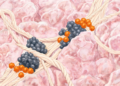
A groundbreaking advancement in cancer gene therapy has emerged from the laboratories of Nanjing University, introducing a revolutionary approach to overcoming one of the most formidable barriers in RNA interference-based treatments—the delivery of small interfering RNA (siRNA) to tumor sites beyond the liver. This newly developed system harnesses the power of in vivo self-assembly (IVSA) technology to transform the patient’s liver into a dynamic biopharmaceutical factory, enabling the precise and efficient delivery of EGFR-targeted siRNA to a wide range of EGFR-positive cancers.
Despite siRNA’s remarkable potential as a “universal key” capable of silencing deleterious genes implicated in various diseases, its clinical applications have been hampered due to delivery challenges. The fragile nature of siRNA molecules makes them vulnerable to enzymatic degradation, immune clearance, and off-target effects, especially when aiming to treat tumors located in tissues beyond the liver. Conventional methods, involving complex in vitro encapsulation and chemical modification, often result in suboptimal delivery profiles, high production costs, and adverse immune responses, limiting their translation into effective therapies.
The breakthrough reported in Science China Life Sciences offers an innovative paradigm shift by obviating the need for labor-intensive nanoparticle fabrication or ex vivo drug assembly. Instead, the IVSA platform ingeniously programs hepatocytes via the systemic injection of plasmid DNA constructs encoding specific genetic circuits that orchestrate the endogenous synthesis and targeting of therapeutic siRNAs. This bioengineering feat effectively delegates the drug manufacturing process to the liver, where the genetic elements guide cells to concurrently produce siRNAs aimed at EGFR and engineer their exosomal packaging with the tumor-homing GE11 peptide on the vesicular membrane.
This multifaceted gene circuit design comprises three intertwined components: the siRNA expression cassette that generates interfering RNAs against EGFR mRNA, the targeting module encoding GE11-tagged transmembrane proteins to decorate small extracellular vesicles (sEVs), and a co-driven promoter driving synchronized expression of both elements. Upon intracellular synthesis, these siRNA-loaded, GE11-adorned exosomes are secreted into the bloodstream and preferentially internalized by EGFR-overexpressing tumor cells. This results in tissue-specific siRNA delivery that circumvents the systemic toxicity and immune clearance issues plaguing traditional siRNA therapeutics.
One of the most compelling advantages of this system is its pan-cancer therapeutic capability and robustness against drug resistance mutations. Unlike small-molecule EGFR inhibitors, which commonly succumb to resistance via oncogenic mutations, siRNA-mediated knockdown occurs at the transcript level and is inherently mutation-agnostic. This translates to a versatile “pan-inhibitor” modality capable of stably suppressing oncogene expression across multiple tumor types—evidenced through efficacious treatment in murine models of lung, gastric, and breast cancers harboring diverse EGFR mutations.
Additionally, the specificity endowed by the GE11 peptide ensures that healthy tissues with low or absent EGFR expression are largely spared, preserving organ function and minimizing off-target effects. Detailed in vitro co-culture experiments with EGFR-positive lung cancer cells and EGFR-negative bronchial epithelial cells have demonstrated an impressive selectivity profile whereby GE11-tagged sEVs enriched siRNA payload delivery exclusively to cancer cells, underscoring the platform’s precision and safety for clinical considerations.
The implications of converting the liver into a genetic pharmaceutical factory extend beyond efficacy into the realms of cost-efficiency and biocompatibility. Employing the endogenous exosome biogenesis and secretion pathways harnesses the body’s innate vesicular trafficking system, facilitating siRNA transport under tightly controlled physiological concentrations. This naturalistic approach avoids the toxicity often associated with high-dose synthetic nanoparticles and reduces reliance on complex, labor-intensive production pipelines. The overarching streamlined production and delivery mechanism could drastically lower manufacturing costs and accelerate accessibility.
Moreover, this modular gene therapy platform exhibits extraordinary adaptability, described as “plug-and-play” by the research team. Future iterations could swiftly alter the siRNA sequences or targeting peptides to address alternative oncogenic drivers or tumor-specific markers, enabling personalized therapeutic regimens tailored to individual genotypes. The system’s intrinsic combinatorial potential may permit simultaneous silencing of multiple genetic targets, offering new possibilities for overcoming tumor heterogeneity and resistance mechanisms.
The technology also harbors promise as an adjuvant therapy following surgical tumor resections. By continuously delivering siRNA-loaded exosomes, the system might eliminate residual micrometastatic disease sites, reducing recurrence rates and improving long-term patient survival. This strategic post-operative deployment leveraged by IVSA technology presents a compelling complement to existing systemic therapies.
From a broader vantage, the integration of synthetic biology principles with precision medicine intrinsic to IVSA heralds a new era in biopharmaceutical development. By redefining the patient’s own body as a factory for life-saving therapeutics, this approach challenges long-standing paradigms surrounding drug manufacturing, distribution, and administration. It embodies the essence of next-generation personalized medicine by merging cellular engineering with therapeutic delivery, potentially revolutionizing treatment strategies for cancer and beyond.
The pioneering work was led by Professors Chen-Yu Zhang, Xi Chen, and Chao Yan, alongside Assistant Professor Zheng Fu at Nanjing University’s School of Life Sciences, with Dr. Hongyuan Guo as the principal first author. Funding support was provided by the National Natural Science Foundation of China and other prestigious scientific bodies, underscoring the significance and confidence vested in this innovative research endeavor.
The path forward will involve rigorous clinical translation efforts, including detailed toxicology assessments, scalability studies, and the exploration of additional tumor targets. Nonetheless, the IVSA platform establishes a versatile foundation for future gene therapy breakthroughs, promising safer, more effective, and customizable treatments for patients suffering from cancers driven by hard-to-target genetic abnormalities.
In conclusion, by harnessing the power of in vivo self-assembly and endogenous exosomal pathways, the IVSA technology offers a transformative and cost-effective avenue to surmount historical barriers in siRNA therapy. This ingenious reprogramming of the liver as an internal biopharmaceutical factory delivers targeted, mutation-resilient, and broadly applicable gene silencing across multiple cancer types, marking an unprecedented milestone in the fight against cancer.
Subject of Research:
Targeted delivery system for siRNA using in vivo self-assembly technology for cancer therapy.
Article Title:
A Synthetic Biology-Driven Liver Biopharmaceutical Factory for Precision siRNA Delivery in EGFR-Positive Tumors.
Web References:
http://dx.doi.org/10.1007/s11427-025-3213-9
Image Credits:
©Science China Press
Keywords:
siRNA delivery, in vivo self-assembly, EGFR targeting, cancer gene therapy, extracellular vesicles, synthetic biology, precision medicine, biopharmaceutical factory, tumor targeting, drug resistance, exosome-mediated delivery, liver bioreactor.
Tags: EGFR-targeted siRNA therapygene therapy for EGFR-driven tumorshepatocyte programming for drug deliveryin vivo self-assembly technologyinnovative cancer therapeutics developmentnanoparticle-free siRNA deliverynovel biopharmaceutical production methodsovercoming siRNA enzymatic degradationRNA interference cancer treatmentRNAi clinical application challengessiRNA delivery beyond livertargeted cancer gene silencing