None
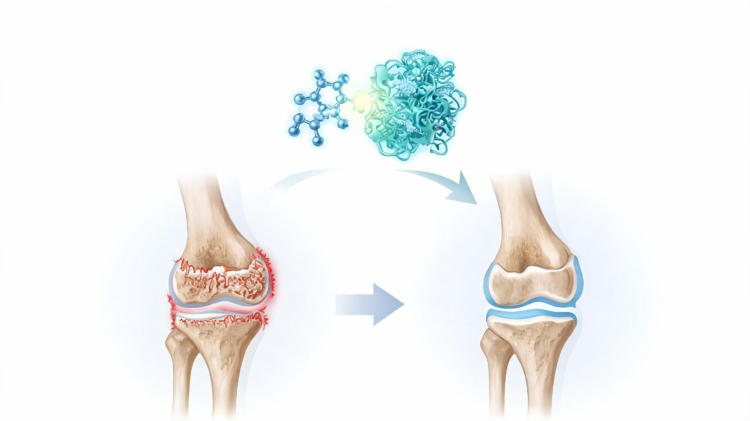
Osteoarthritis remains one of the most prevalent chronic joint disorders worldwide, affecting hundreds of millions of people and representing a leading cause of disability in aging populations. Despite its enormous clinical burden, available treatments remain largely palliative, consisting of analgesics, non-steroidal anti-inflammatory drugs, physical therapy, and, in advanced cases, joint replacement surgery. No approved disease-modifying osteoarthritis drug currently halts or reverses the progressive degradation of articular cartilage, which is why the identification of new molecular targets attracts considerable attention. The recent work implicating myeloid-derived growth factor (MYDGF) as an upstream regulator of telomerase activity in chondrocytes adds a potentially important piece to this puzzle, because it links a secreted, druggable protein to a cellular aging mechanism long associated with cartilage degeneration.
The connection between telomere biology and osteoarthritis has been building for more than two decades. Articular chondrocytes are largely post-mitotic but retain a limited capacity to divide during tissue maintenance and repair. Each round of cell division erodes the protective telomeric caps at chromosome ends, and when these caps become critically short, cells trigger replicative senescence through the p53-p21 and p16-Rb pathways. Studies of cartilage harvested from osteoarthritic joints have repeatedly shown that chondrocytes near the lesion display shorter telomeres and higher levels of senescence markers, including senescence-associated beta-galactosidase, than cells taken from regions farther from the damage. Senescent chondrocytes secrete a cocktail of matrix-degrading enzymes, inflammatory cytokines, and reactive oxygen species, a phenomenon often described as the senescence-associated secretory phenotype, which propagates tissue damage to neighboring cells and accelerates extracellular matrix breakdown.
Telomerase, the ribonucleoprotein reverse transcriptase composed of the TERT catalytic subunit and the TERC RNA template, is the principal enzyme counteracting this erosion. In most human somatic tissues telomerase is silenced after development, but certain stem cell compartments and specialized cells maintain low-level activity. The strict limitation of telomerase expression reflects an evolutionary trade-off: while telomerase permits extended replicative lifespan, inappropriate reactivation is a near-universal feature of cancer. Any therapeutic strategy that boosts telomerase in a degenerating tissue must therefore contend with the theoretical risk of promoting aberrant cell proliferation or tumorigenesis. This concern makes the discovery of a naturally occurring, locally acting telomerase regulator particularly interesting, because endogenous factors that modulate TERT expression within a defined tissue microenvironment may offer a more physiologically balanced approach than global pharmacological telomerase activation.
The identification of MYDGF in this context was enabled by an unbiased genome-wide CRISPR-Cas9 screening strategy coupled with a TERT reporter system. Such screens allow researchers to systematically perturb every gene in the genome and observe which disruptions raise or lower reporter output, thereby revealing previously unknown regulators of a pathway of interest. That MYDGF emerged as a strong positive regulator of telomerase was unexpected, since the protein had not previously been associated with telomere biology. Follow-up experiments in HeLa cells and in the ATDC5 chondrogenic cell line confirmed that MYDGF positively regulates TERT expression and telomerase enzymatic activity, establishing that the screening result reflected a genuine molecular relationship rather than a screening artifact.
MYDGF itself has an interesting history. First described in the early 2000s under alternative names including stromal cell-derived growth factor and interleukin-25, the protein is a 173-amino-acid secreted factor produced by diverse cell types, including bone marrow-derived macrophages, adipocytes, hepatocellular carcinoma cells, and human synovial cells. Nuclear magnetic resonance structural studies have shown that it adopts a fold built from alpha-helices and beta-sheets, with a predicted receptor-interacting interface that has yet to be fully characterized. Its best-established role came from cardiovascular research, where bone marrow-derived cells were shown to secrete MYDGF after myocardial infarction to promote cardiomyocyte survival and angiogenesis, likely through activation of MAPK and Akt signaling. The PI3K/Akt pathway is itself well known for supporting cartilage health, promoting expression of the matrix components collagen type II and aggrecan while suppressing the catabolic enzyme MMP13, which provides a plausible mechanistic bridge between MYDGF signaling and matrix homeostasis.
Beyond the heart, MYDGF has been implicated in several other disease settings. In diabetic nephropathy, expression of the factor is reduced, and supplementation appears to protect kidney function by modulating autophagy and limiting podocyte apoptosis. MYDGF expression has also been linked to the effectiveness of anti-fibrotic therapy, suggesting a role in restraining organ fibrosis. Because protein drugs often suffer from short circulating half-lives, protein engineering efforts have produced a fusion construct, MYDGF164, that appends a region of human CD164 to MYDGF, markedly prolonging its persistence while retaining biological activity; this engineered protein alleviated renal fibrosis in chronic kidney disease models. Such work demonstrates that MYDGF-based therapeutics are technically feasible and provides a template that could be adapted for joint-directed delivery.
The in vivo evidence in the osteoarthritis study strengthens the case that MYDGF is not merely correlated with cartilage health but functionally involved in it. In the surgically induced destabilization of the medial meniscus model, a widely used mouse paradigm in which joint instability accelerates cartilage wear, mice lacking MYDGF developed more severe cartilage damage than their wild-type counterparts. Conversely, adeno-associated virus-mediated delivery of MYDGF into the knee joint partially protected cartilage from injury. AAV vectors are attractive for intra-articular gene delivery because they can drive sustained local expression of a therapeutic gene within the joint with a relatively favorable safety profile, and several AAV-based programs are already in clinical development for musculoskeletal conditions. The partial rather than complete rescue observed is typical of complex degenerative diseases, where multiple parallel pathological processes operate simultaneously.
Transcriptome profiling of MYDGF-deficient chondrocytes revealed a coherent shift in cell state: pathways responsible for building and maintaining the extracellular matrix were downregulated, while inflammatory signaling programs were upregulated. This molecular signature mirrors what is observed in aged and osteoarthritic cartilage, reinforcing the idea that loss of MYDGF pushes chondrocytes toward a senescence-like, catabolic phenotype. In effect, the study positions MYDGF as a key upstream factor that simultaneously supports telomerase activity and cartilage matrix remodeling, thereby connecting two previously separate strands of osteoarthritis research: the telomere-senescence literature and the matrix-homeostasis literature.
Several important questions remain open. The receptor through which MYDGF signals in chondrocytes has not been definitively identified, and mapping the downstream signaling cascade from receptor binding to TERT transcription will be essential for rational drug design. It is also unclear whether MYDGF acts directly on TERT gene regulation or indirectly through intermediate survival pathways such as Akt, which has been linked to TERT phosphorylation and activation in other cell types. The dose, timing, and duration of MYDGF expression that maximize cartilage protection while minimizing any proliferative risk will need careful definition, particularly given the well-documented association between telomerase reactivation and malignancy. Long-term safety studies in larger animal models, ideally with spontaneous rather than surgically induced osteoarthritis, would help address these concerns.
Translation from mouse models to human patients faces additional hurdles. Human articular cartilage is thinner and less regenerative than rodent cartilage, and human osteoarthritis typically develops over decades of cumulative mechanical loading, inflammation, and metabolic stress rather than within weeks of surgical destabilization. Patient populations are heterogeneous, with age-related, post-traumatic, and obesity-associated disease subtypes that may differ in their underlying biology. It is plausible that MYDGF supplementation would benefit the subset of patients whose disease is driven by chondrocyte senescence, and biomarkers of telomere dysfunction or senescence could eventually help identify responders. The detection of MYDGF expression in human synovial tissue suggests that an endogenous joint-protective axis already exists, raising the possibility that therapies could amplify this axis rather than introduce a foreign factor.
The broader significance of this work lies in its contribution to the growing recognition that aging mechanisms are actionable therapeutic targets. Telomere attrition is one of the recognized hallmarks of aging, and interventions that preserve telomere integrity in specific tissues, from hematopoietic stem cells to cartilage, are being explored across regenerative medicine. By identifying a secreted protein that naturally regulates telomerase in a tissue-relevant context, the study offers a conceptual framework for tissue-selective telomerase modulation. If subsequent research confirms the safety and efficacy of MYDGF-based approaches in larger models and ultimately in clinical trials, this line of investigation could transform osteoarthritis from a managed symptom into a modifiable disease process, while also informing therapeutic strategies for other age-related degenerative conditions in which chondrocyte or stromal cell senescence plays a central role.
Subject of Research: MYDGF as a telomerase activator and therapeutic target for osteoarthritis
Article Title: MYDGF as a telomerase activator and therapeutic target for osteoarthritis
Article References: MYDGF as a telomerase activator and therapeutic target for osteoarthritis. (n.d.). https://doi.org/10.1007/s44307-026-00119-6
Image Credits: AI Generated
DOI: 10.1007/s44307-026-00119-6
Keywords: MYDGF, telomerase, activator, therapeutic, target, osteoarthritis, scientific research
Cite Scienmag News
APA
MLA
Chicago
Beatrice Stafford. (September 3, 2026). MYDGF as a telomerase activator and therapeutic target for osteoarthritis. Scienmag. https://scienmag.com/mydgf-as-a-telomerase-activator-and-therapeutic-target-for-osteoarthritis/
Beatrice Stafford. “MYDGF as a telomerase activator and therapeutic target for osteoarthritis.” Scienmag, 3 September 2026, https://scienmag.com/mydgf-as-a-telomerase-activator-and-therapeutic-target-for-osteoarthritis/. Accessed 3 September 2026.
Beatrice Stafford. “MYDGF as a telomerase activator and therapeutic target for osteoarthritis.” Scienmag. September 3, 2026. https://scienmag.com/mydgf-as-a-telomerase-activator-and-therapeutic-target-for-osteoarthritis/
Copy citation
Download RIS
Tags: activatoraging-related cartilage repaircartilage degenerationcellular senescence in osteoarthritischondrocyte agingdisease-modifying osteoarthritis treatmentsmolecular targets for osteoarthritisMYDGFMYDGF proteinosteoarthritisScientific Researchtargettelomerasetelomerase activationtelomerase as therapeutic targettelomere biology in joint diseasetelomere shortening in cartilagetherapeutic