


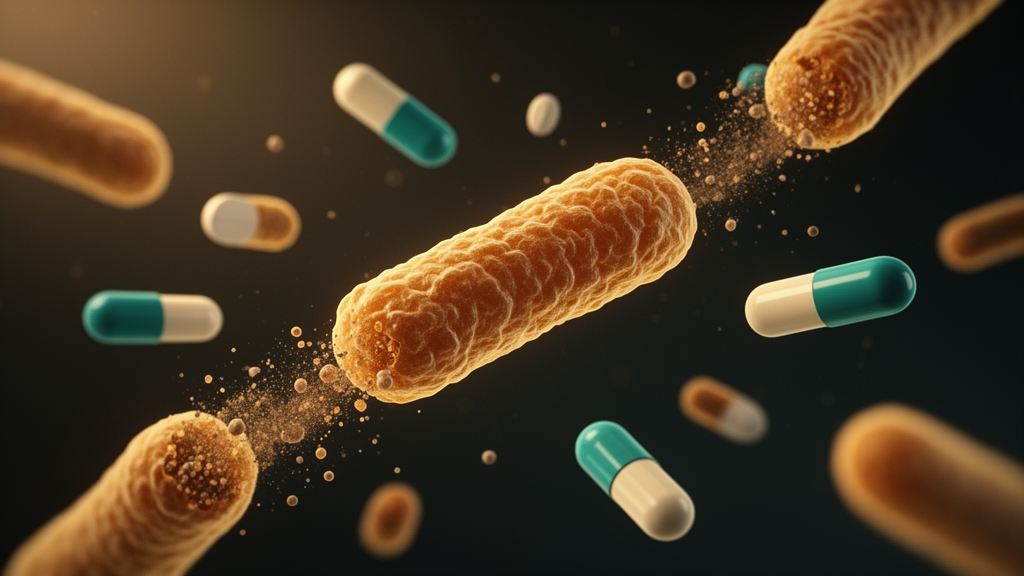
The study, led by Nont Oudomying and colleagues, pooled in vitro susceptibility data from clinical isolates collected worldwide and found that resistance to most drugs used in standard treatment regimens is widespread, with some agents showing resistance rates above ninety percent.
The research team systematically searched PubMed, Scopus, and Embase for studies reporting antimicrobial susceptibility data according to Clinical and Laboratory Standards Institute guidelines, with the search covering publications up to 31 May 2025. In total, 114 studies met the inclusion criteria. Of these, 47 were eligible only for the systematic review, 38 only for the meta-analysis, and 29 contributed to both. The pooled resistance rates were estimated using a random-effects model, and publication bias was assessed with Egger’s test.
The species is divided into subspecies, and among isolates with subspecies identification in the review, M. abscessus subsp. abscessus and M. abscessus subsp. massiliense were identified more frequently than M. abscessus subsp. bolletii.
The meta-analysis found that several drugs commonly included in current treatment regimens retained substantial in vitro activity. Amikacin showed the lowest pooled resistance rate among the commonly used agents, at 2.8 percent (95% CI 2.1–3.5%), followed by clarithromycin at 9.9 percent (95% CI 7.4–12.5%), cefoxitin at 14.6 percent (95% CI 9.3–19.9%), linezolid at 24.2 percent (95% CI 18.2–30.2%), and imipenem at 34.5 percent (95% CI 26.1–43.0%). These figures describe how often laboratory isolates were resistant to each drug, not how well patients responded to treatment.
For other antimicrobial agents, the picture was far bleaker. Pooled resistance rates ranged from 67.7 percent for tobramycin to 94.5 percent for doxycycline, meaning that the vast majority of clinical isolates tested were resistant to these drugs in the laboratory. The authors note that overall, MAB demonstrated resistance to most drugs commonly used in treatment regimens, underscoring how narrow the effective therapeutic options remain for clinicians managing these infections.
The analysis also revealed substantial statistical heterogeneity across the included studies, with I2 values ranging from 65.51 to 99.65 percent. Publication bias was detected for most drugs, with Egger’s test reaching statistical significance, although no bias was detected for inducible clarithromycin resistance, imipenem, meropenem, or tobramycin.
Beyond the older agents, the systematic review examined minimum inhibitory concentration data for novel agents proposed for the treatment of MAB. Comparing MIC50 and MIC90 values, the review found that clofazimine, bedaquiline, tedizolid, eravacycline, and omadacycline consistently exhibited lower MIC50 and MIC90 values than sarecycline.
The authors conclude that the study provides a comprehensive overview of global antimicrobial susceptibility patterns of MAB and indicates that several agents included in current treatment regimens retain in vitro activity against the organism. They stress that strengthened global laboratory-based surveillance is essential to inform antimicrobial stewardship and to optimize clinical management of MAB infections. Because the analysis is based on laboratory susceptibility testing rather than patient outcomes, the findings describe the microbiological landscape that clinicians face rather than directly measuring treatment success.
The open-access review, published on 13 September 2026, offers researchers and clinicians a pooled global baseline against which future susceptibility data and new drug candidates can be compared.
Subject of Research: In vitro antimicrobial susceptibility of Mycobacterium abscessus clinical isolates worldwide
Article Title: Global in vitro antimicrobial susceptibility profiles of Mycobacterium abscessus: a systematic review and meta-analysis
Article References: Oudomying, N., Wongjarit, K., Udomkarnjananun, S., Leelayuwatanakul, N., & Rotcheewaphan, S. (2026). Global in vitro antimicrobial susceptibility profiles of Mycobacterium abscessus: a systematic review and meta-analysis. Annals of Clinical Microbiology and Antimicrobials. https://doi.org/10.1186/s12941-026-00886-z
Image Credits: AI Generated
DOI: 10.1186/s12941-026-00886-z
Keywords: Mycobacterium abscessus, antimicrobial resistance, systematic review, meta-analysis, nontuberculous mycobacteria, antibiotic susceptibility, minimum inhibitory concentration, clarithromycin, amikacin, drug-resistant infections, lung infection, CLSI guidelines
News Source: Kristina Jarvis. (October 29, 2026). Mycobacterium abscessus resists most first-line drugs, global analysis finds. Scienmag.



