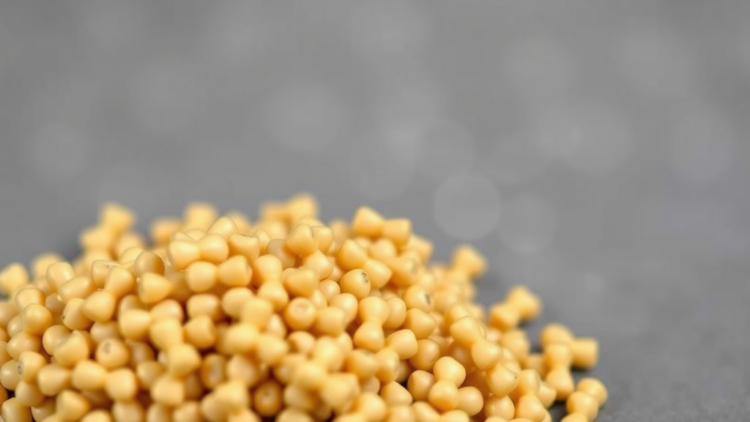
Every year, the global food industry discards enormous quantities of protein-rich byproducts, and one of the most overlooked among them is mung bean meal, the residue left behind after starch and protein extraction from mung beans. A new study published in Food Science and Biotechnology shows that this humble waste stream can be transformed into a powerful natural weapon against foodborne bacteria, one that works just as effectively as the synthetic preservatives currently lining ingredient lists on supermarket shelves.
Researchers Chaichawin Chavapradit and Anil Kumar Anal of the Asian Institute of Technology in Thailand set out to extract antibacterial peptides from mung bean meal using controlled enzymatic hydrolysis. Rather than relying on harsh chemical treatments, the team employed trypsin, a well-characterized proteolytic enzyme, to systematically cleave the mung bean storage proteins into shorter amino acid chains. The process was carefully optimized, and the researchers identified the most effective conditions as an enzyme concentration of 0.75 percent by weight combined with a hydrolysis time of 16 hours. Under these parameters, the resulting protein hydrolysates displayed significant antimicrobial activity, demonstrating that the technique of waste valorization can unlock hidden functional value locked inside agricultural byproducts.
Once the hydrolysates were produced, the team purified the active peptides and subjected them to standard antimicrobial susceptibility testing to determine their minimum inhibitory concentrations against a panel of bacterial strains. The purified peptides proved effective against both Gram-positive and Gram-negative bacteria, but with a striking difference in potency: the peptides were markedly more effective against Gram-negative species. This asymmetry is notable because Gram-negative bacteria, which include many notorious foodborne pathogens, are typically protected by an additional outer membrane that makes them inherently more resistant to many antimicrobial agents, including several synthetic preservatives.
The mechanism behind antibacterial peptide activity is well studied but still fascinating. These short cationic and amphiphilic molecules are drawn electrostatically to the negatively charged surfaces of bacterial membranes. Once they reach the membrane, they insert themselves into the lipid bilayer, disrupting its integrity and forming pores or causing outright membrane lysis. Because this mode of action physically destroys the bacterial envelope rather than targeting a single metabolic enzyme, it is much harder for bacteria to develop resistance, a property that has made antimicrobial peptides a subject of intense interest in both medicine and food science.
However, free peptides face practical limitations in real food systems. They can diffuse away, degrade, interact with food components, or lose activity before they reach their targets. To overcome these challenges, the researchers took an elegant engineering step: they self-assembled the peptides into nanoparticles using ionic gelation with chitosan, a naturally derived polysaccharide obtained from crustacean shells that is itself known for antimicrobial properties. Ionic gelation is a mild, solvent-free technique in which oppositely charged polymers and molecules spontaneously organize into nanoscale structures, and it has become one of the most popular methods for preparing chitosan-based delivery systems in food and pharmaceutical applications.
The resulting chitosan-peptide nanoparticles outperformed both components individually. When tested against the same bacterial panels, the nanoparticle formulation exhibited antibacterial potency that exceeded that of the unmodified peptides alone and of chitosan alone. This synergistic enhancement likely arises from several factors: the nanoparticles concentrate the antimicrobial peptides at the bacterial surface, the chitosan matrix provides sustained release and protects the peptides from degradation, and the combined cationic charge density of both chitosan and the peptides intensifies membrane disruption. Nanoparticle sizing and characterization techniques, which are essential for confirming the uniformity and stability of such formulations, underpinned the team’s verification of the assembled structures.
Perhaps the most compelling results came from the challenge tests conducted in real food models. The researchers inoculated samples of pork, fish, and strawberry with bacteria and then treated them with the peptide nanoparticles. In all three food matrices, the nanoparticles effectively reduced bacterial counts, demonstrating that the formulation remains active in complex environments containing fats, proteins, sugars, and moisture that might otherwise interfere with antimicrobial action. The choice of foods was deliberate, spanning animal products that are common vectors of foodborne illness and a delicate fresh fruit with a short shelf life, suggesting broad applicability across food categories.
The benchmark comparison is what elevates this study from interesting chemistry to genuine industrial relevance. When applied at equal concentrations, the bio-based nanoparticle preservative achieved antimicrobial efficiency that was competitive with commercial chemical preservatives. This finding matters because consumer pressure against artificial additives such as sulfites, benzoates, and synthetic antioxidants continues to mount, driven by studies linking certain artificial preservatives to adverse health effects. At the same time, foodborne illness remains a major public health burden worldwide, and multidrug-resistant bacteria complicate traditional preservation and decontamination strategies. A natural preservative derived from food waste that matches synthetic performance addresses both concerns simultaneously.
The broader significance of this research lies in its circular economy logic. Mung bean meal is generated in large volumes during starch noodle and protein isolate production, particularly in Asia, and is typically sold as low-value animal feed or simply discarded. By converting this residue into high-value antibacterial peptides and then upgrading them into functional nanoparticles, the study exemplifies the waste-to-wealth paradigm in food biotechnology. The work was supported by the Thailand Graduate Institute of Science and Technology, reflecting growing regional investment in biopreservation and sustainable food technologies.
Challenges remain before such nanoparticles reach commercial food products, including scaling up production, confirming long-term stability and sensory neutrality, and navigating regulatory approval for novel food ingredients. Yet the study provides a complete proof of concept, from waste stream to optimized enzyme process to purified peptide to self-assembled nanoparticle to validated performance in real foods. As the food industry searches for clean-label alternatives to synthetic preservatives, the answer may be hiding in materials it currently throws away, assembled with nothing more sophisticated than an enzyme and a biopolymer.
Subject of Research: Antibacterial peptides extracted from mung bean meal waste and self-assembled with chitosan into nanoparticles for food biopreservation
Article Title: Antibacterial peptides from mung bean meal waste and their self-assembly with chitosan into nanoparticles for food biopreservation
Article References: Chavapradit, C., & Anal, A. K. (2026). Antibacterial peptides from mung bean meal waste and their self-assembly with chitosan into nanoparticles for food biopreservation. Food Science and Biotechnology. https://doi.org/10.1007/s10068-026-02308-4
Image Credits: AI Generated
DOI: 10.1007/s10068-026-02308-4
Keywords: mung bean meal, antibacterial peptides, chitosan nanoparticles, food biopreservation, waste valorization, enzymatic hydrolysis, ionic gelation, natural preservatives, food nanotechnology, foodborne bacteria, bioactive peptides, circular economy
Cite Scienmag News
APA MLA Chicago
Drew Townsend. (September 23, 2026). Mung Bean Waste Turned Into Antibacterial Peptide Nanoparticles That Rival Chemical Food Preservatives. Scienmag. https://scienmag.com/mung-bean-waste-turned-into-antibacterial-peptide-nanoparticles-that-rival-chemical-food-preservatives/
Drew Townsend. “Mung Bean Waste Turned Into Antibacterial Peptide Nanoparticles That Rival Chemical Food Preservatives.” Scienmag, 23 September 2026, https://scienmag.com/mung-bean-waste-turned-into-antibacterial-peptide-nanoparticles-that-rival-chemical-food-preservatives/. Accessed 23 September 2026.
Drew Townsend. “Mung Bean Waste Turned Into Antibacterial Peptide Nanoparticles That Rival Chemical Food Preservatives.” Scienmag. September 23, 2026. https://scienmag.com/mung-bean-waste-turned-into-antibacterial-peptide-nanoparticles-that-rival-chemical-food-preservatives/
Copy citation Download RIS
Tags: antibacterial peptidesantibacterial peptides from agricultural wastebioactive peptidesChitosan nanoparticlesCircular economycomparison of natural and synthetic preservativeseco-friendly food preservation technologiesenzymatic extraction of bioactive compoundsEnzymatic hydrolysisenzymatic hydrolysis of mung bean proteinsfood biopreservationfood nanotechnologyfood safety and antimicrobial agentsfoodborne bacteriaionic gelationmung bean antibacterial peptide nanoparticlesmung bean mealnatural food preservative alternativesnatural preservativespeptide nanoparticle synthesisprotein hydrolysates with antimicrobial activitysustainable food preservation methodsvalorization of mung bean wastewaste valorization