

• HOME
  • NEWS
  • EXPLORE
    • CAREER
      • Companies
      • Jobs
    • EVENTS
    • iGEM
      • News
      • Team
    • PHOTOS
    • VIDEO
    • WIKI
  • BLOG
  • COMMUNITY
    • FACEBOOK
    • INSTAGRAM
    • TWITTER
Wednesday, December 17, 2025
BIOENGINEER.ORG
No Result
View All Result
  • Login
  • HOME
  • NEWS
  • EXPLORE
    • CAREER
      • Companies
      • Jobs
        • Lecturer
        • PhD Studentship
        • Postdoc
        • Research Assistant
    • EVENTS
    • iGEM
      • News
      • Team
    • PHOTOS
    • VIDEO
    • WIKI
  • BLOG
  • COMMUNITY
    • FACEBOOK
    • INSTAGRAM
    • TWITTER
  • HOME
  • NEWS
  • EXPLORE
    • CAREER
      • Companies
      • Jobs
        • Lecturer
        • PhD Studentship
        • Postdoc
        • Research Assistant
    • EVENTS
    • iGEM
      • News
      • Team
    • PHOTOS
    • VIDEO
    • WIKI
  • BLOG
  • COMMUNITY
    • FACEBOOK
    • INSTAGRAM
    • TWITTER
No Result
View All Result
Bioengineer.org
No Result
View All Result
Home NEWS Science News Cancer

MRI technology quantifies liver response in nonalcoholic steatohepatitis patients

Bioengineer by Bioengineer
August 20, 2016
in Cancer
Reading Time: 2 mins read
0
Share on FacebookShare on TwitterShare on LinkedinShare on RedditShare on Telegram

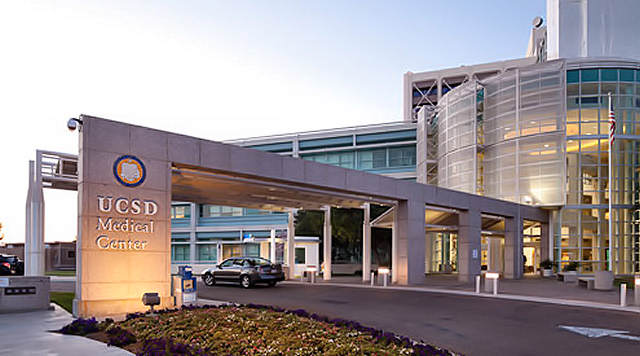
ucsd

Researchers at the University of California San Diego School of Medicine have found that a form of magnetic resonance imaging (MRI) that non-invasively measures fat density in the liver corresponds with histological (microscopic tissue analyses) responses in patients with nonalcoholic steatohepatitis (NASH).

The finding, published in the journal Therapeutic Advances in Gastroenterology, suggests the imaging technique can be useful in future NASH clinical trials and in treatment.

NASH is an advanced form of nonalcoholic fatty liver disease (NAFLD), which occurs when fat accumulates in liver cells due to causes other than excessive alcohol use. The precise cause is not known, but diet and genetics play substantial roles. The condition is relatively common. NAFLD occurs in roughly 20 percent of non-obese persons and in more than 60 percent of obese persons.

NAFLD often has no symptoms, but can progress to NASH and, ultimately, to cirrhosis or liver cancer.

“NAFLD and NASH are invisible diseases. In most cases, adverse effects are not noticeable until the disease is well-advanced,” said senior author Rohit Loomba, MD, professor of medicine at UC San Diego School of Medicine and director of the Nonalcoholic Fatty Liver Disease Research Center at UC San Diego Health. “The ability to accurately quantify liver fat content, without resorting to needle biopsies, represents a significant advance, in the lab and in the clinic.”

Loomba and colleagues in the NAFLD Translational Research Unit and Liver Imaging Group looked at how a form of MRI, called magnetic resonance imaging-estimated proton-density-fat-fraction (MRI-PDFF), compared to liver biopsies in 35 patients with confirmed NASH diagnoses. Some patients received treatment for their condition, some received a placebo. All were assessed with both techniques before and after the treatment period.

The researchers found that a 29 percent reduction in liver fat, as measured by MRI-PDFF, translated to a clinically important improvement in liver histology. “MRI-PDFF has the potential to be a cost-effective and convenient method for liver fat quantification. It requires only a single, 20-second breath hold and an estimated time of about five minutes in an MRI scanner,” said Loomba.

Study authors noted that further external validation by independent research groups is needed.

###

Co-authors include: Janki Patel, Rikki Bettencourt, Jeffrey Cui, Joanie Salotti, Jonathan Hooker, Archana Bhatt, Carolyn Hernandez, Phirum Nguyen, Hamed Aryafar, Mark Valasek, William Haufe, Catherine Hooker, Lisa Richards, and Claude B. Sirlin, all at UC San Diego.

Media Contact

Scott LaFee
[email protected]
858-249-0456
@UCSanDiego

http://www.ucsd.edu

The post MRI technology quantifies liver response in nonalcoholic steatohepatitis patients appeared first on Scienmag.
Share23Tweet8Share2ShareShareShare2

Related Posts

Predicting Thyroid Cancer Recurrence with Explainable AI

December 17, 2025

Multi-Omics Identifies CYP2B6 as Key in Lung Cancer

December 17, 2025

Blood Markers’ Role in Oral Cancer Prognosis

December 17, 2025

AI Model Predicts Survival, Prioritizes Therapy in RCC

December 16, 2025
Please login to join discussion

POPULAR NEWS

  • Nurses’ Views on Online Learning: Effects on Performance

    Nurses’ Views on Online Learning: Effects on Performance

    70 shares
    Share 28 Tweet 18
  • NSF funds machine-learning research at UNO and UNL to study energy requirements of walking in older adults

    70 shares
    Share 28 Tweet 18
  • MoCK2 Kinase Shapes Mitochondrial Dynamics in Rice Fungal Pathogen

    72 shares
    Share 29 Tweet 18
  • Unraveling Levofloxacin’s Impact on Brain Function

    52 shares
    Share 21 Tweet 13

About

We bring you the latest biotechnology news from best research centers and universities around the world. Check our website.

Follow us

Recent News

COVID-19 Surge Increases Alcohol-Related Hospitalizations

B-Learning Model Reduces Stress for Nursing Students

Unveiling Quantum Hall Edge State Transformations

Subscribe to Blog via Email

Enter your email address to subscribe to this blog and receive notifications of new posts by email.

Join 70 other subscribers
  • Contact Us

Bioengineer.org © Copyright 2023 All Rights Reserved.

Welcome Back!

Login to your account below

Forgotten Password?

Retrieve your password

Please enter your username or email address to reset your password.

Log In
No Result
View All Result
  • Homepages
    • Home Page 1
    • Home Page 2
  • News
  • National
  • Business
  • Health
  • Lifestyle
  • Science

Bioengineer.org © Copyright 2023 All Rights Reserved.
