A retrospective study of 353 people with acute ischemic stroke found that clinical scores and multiparametric MRI measurements were associated with mortality, disability, hemorrhagic transformation and recurrent stroke, with several thresholds showing high predictive accuracy within the study cohort. The analysis included diffusion-weighted imaging, perfusion measurements and susceptibility-weighted imaging obtained within 24 hours of symptom onset. Its most striking internal results were 95% accuracy for mortality at selected clinical and MRI thresholds and 94% accuracy for hemorrhagic transformation at another pair of thresholds. Because the performance estimates came from retrospective, within-cohort analysis rather than independent testing in new patients, the study does not establish clinical benefit or guaranteed performance in routine practice.
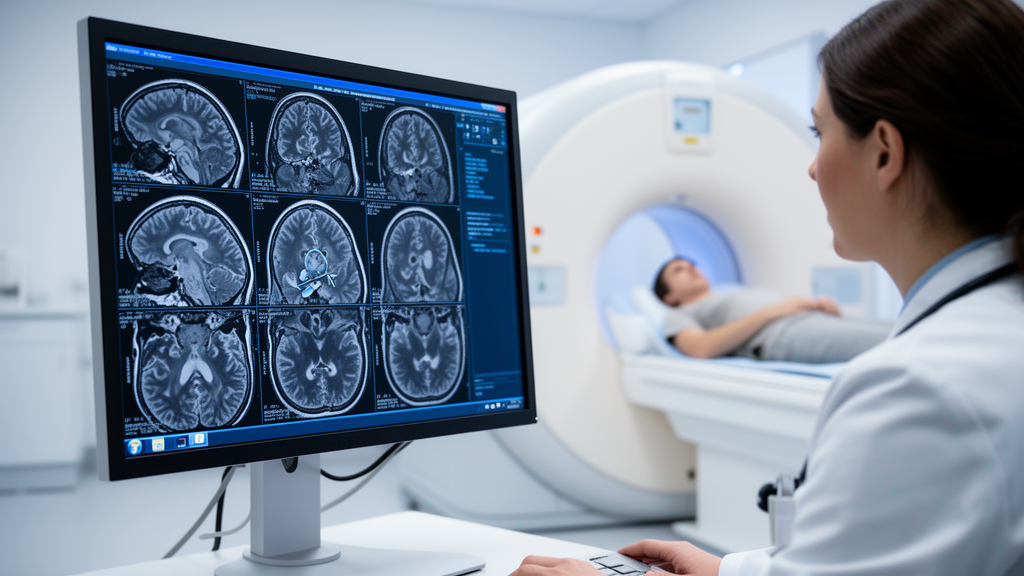
Patients had a mean door-to-imaging time of 27 minutes, with a standard deviation of 10 minutes. Researchers examined MRI variables including diffusion-weighted imaging lesion volume, minimum apparent diffusion coefficient, perfusion parameters and microbleeds detected with susceptibility-weighted imaging. These imaging features were evaluated alongside National Institutes of Health Stroke Scale and modified Rankin Scale scores recorded at hospital discharge and 90 days, as well as clinical factors such as hypertension, diabetes and prior stroke. Receiver-operating characteristic analysis was used to assess the predictive performance of the clinical and imaging measures for the study outcomes.
Several variables were significantly correlated with mortality and disability. Higher National Institutes of Health Stroke Scale scores, larger diffusion-weighted imaging lesion volumes, longer mean transit time and Tmax, and increased microbleeds were associated with worse clinical outcomes. Lower apparent diffusion coefficient, cerebral blood flow and cerebral blood volume were inversely associated with outcomes. For mortality, the reported thresholds were a National Institutes of Health Stroke Scale score of at least 10.5, a diffusion-weighted imaging lesion volume of at least 52.5 milliliters and cerebral blood flow of no more than 20.5. The authors reported 95% accuracy for mortality prediction using the selected thresholds. These results describe discrimination within the analyzed cohort; they do not show that the same thresholds would retain that accuracy in an independent population.
Hemorrhagic transformation was most strongly predicted by a National Institutes of Health Stroke Scale threshold of 8.5 and a mean transit time threshold of 8.5 seconds, which together achieved 94% accuracy in the study. Perfusion measures provided more modest prediction of recurrence within 90 days, with the best reported area under the receiver-operating characteristic curve of 0.70. Hypertension, diabetes and prior stroke were also significant clinical predictors of poor outcome. Overall, the results show that quantitative MRI features and bedside scores jointly carried prognostic information in this acute ischemic stroke cohort. They also underline the study’s principal limitation: the retrospective design, sample of 353 patients and absence of independent external validation mean that the proposed thresholds remain investigational and require evaluation in separate cohorts before clinical application.
Subject of Research: Internal prognostic accuracy of multiparametric MRI and clinical scores after acute ischemic stroke
Article Title: Multiparametric MRI radiomics and machine learning for outcome prediction in acute ischemic stroke: a retrospective study of 353 patients
Article References: Peng, X., Guo, J., Zhou, Q., Wang, S., & Li, T. (2026). Multiparametric MRI radiomics and machine learning for outcome prediction in acute ischemic stroke: a retrospective study of 353 patients. Frontiers in Neuroscience, 20, 1843917. https://doi.org/10.3389/fnins.2026.1843917
Image Credits: AI Generated
DOI: 10.3389/fnins.2026.1843917
Keywords: acute ischemic stroke, multiparametric MRI, outcome prediction, radiomics, perfusion imaging, diffusion-weighted imaging, hemorrhagic transformation, mortality prediction, stroke recurrence, Multiparametric, machine, learning
News Source: Cassandra Pierce. (October 22, 2026). MRI metrics predicted stroke outcomes with internal accuracy in 353-patient study. Scienmag.