

• HOME
  • NEWS
  • EXPLORE
    • CAREER
      • Companies
      • Jobs
    • EVENTS
    • iGEM
      • News
      • Team
    • PHOTOS
    • VIDEO
    • WIKI
  • BLOG
  • COMMUNITY
    • FACEBOOK
    • INSTAGRAM
    • TWITTER
Thursday, October 29, 2026
BIOENGINEER.ORG
No Result
View All Result
  • Login
  • HOME
  • NEWS
  • EXPLORE
    • CAREER
      • Companies
      • Jobs
        • Lecturer
        • PhD Studentship
        • Postdoc
        • Research Assistant
    • EVENTS
    • iGEM
      • News
      • Team
    • PHOTOS
    • VIDEO
    • WIKI
  • BLOG
  • COMMUNITY
    • FACEBOOK
    • INSTAGRAM
    • TWITTER
No Result
View All Result
Bioengineer.org
No Result
View All Result
Home NEWS Science News Cancer

MRI Deep Learning Model Distinguishes Liver Cancer Types Before Surgery

by
October 29, 2026
in Cancer, Health
Reading Time: 2 mins read
0
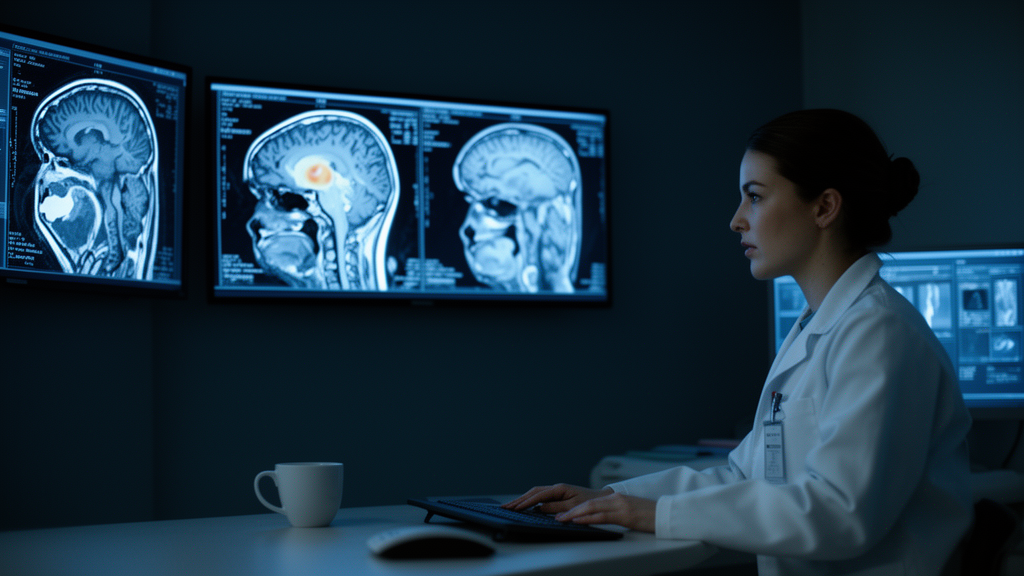
MRI Deep Learning Model Distinguishes Liver Cancer Types Before Surgery

MRI Deep Learning Model Distinguishes Liver Cancer Types Before Surgery

Share on FacebookShare on TwitterShare on LinkedinShare on RedditShare on Telegram

The team reports that their most comprehensive model, integrating multi-phase MRI features with clinical predictors, achieved an area under the curve (AUC) of 0.887 (95% CI, 0.819–0.954) in an internal validation cohort and 0.908 (95% CI, 0.811–1.000) in an independent external validation cohort.

The internal development cohort included 334 surgically confirmed patients, 231 with HCC and 103 with MF-ICC, divided at the patient level into a training set of 233 and an internal validation set of 101. An external validation cohort of 50 patients, 40 with HCC and 10 with MF-ICC, tested generalization. The researchers first constructed separate two-dimensional deep learning models based on arterial phase, portal venous phase, and delayed phase images, then developed fusion models combining them. They also built a multi-channel model by directly stacking the three-phase images along the channel dimension, and a clinical model from independent predictors identified through multivariate analysis, which was ultimately integrated with the best-performing deep learning model.

The multi-channel approach, feeding all three contrast phases simultaneously into the network, discriminated better than every single-phase and corresponding fusion model, reaching an AUC of 0.814 in internal validation. The full combination, a 2D plus multi-channel plus clinical model, performed best overall. Notably, however, the authors report that after correction for multiple comparisons, no statistically significant differences in AUCs remained among the tested models, a caution that tempers any claim that one architecture decisively outperforms the others.

The authors conclude that the fusion model integrating clinical predictors with multi-phase DCE-MRI deep learning features may provide a valuable preoperative decision-support instrument, while the modest external cohort, particularly only ten MF-ICC cases, and the absence of significant between-model differences after multiplicity correction mean the framework requires broader validation before routine clinical use.

Subject of Research: Deep learning on dynamic contrast-enhanced MRI combined with clinical modeling to distinguish hepatocellular carcinoma from mass-forming intrahepatic cholangiocarcinoma before surgery

Article Title: Dynamic contrast-enhanced MRI deep learning model combined with clinical model for noninvasive differentiation of hepatocellular carcinoma from mass-forming intrahepatic cholangiocarcinoma

Article References: Zhang, H., Guo, L., Jia, F., Liu, W., Zhang, M., Li, F., Zhou, J., & Wu, B. (2026). Dynamic contrast-enhanced MRI deep learning model combined with clinical model for noninvasive differentiation of hepatocellular carcinoma from mass-forming intrahepatic cholangiocarcinoma. Frontiers in Oncology, 16, Article 1936989. https://doi.org/10.3389/fonc.2026.1936989

Image Credits: AI Generated

DOI: 10.3389/fonc.2026.1936989

Keywords: deep learning, DCE-MRI, hepatocellular carcinoma, intrahepatic cholangiocarcinoma, liver cancer, medical imaging, diagnostic model, radiomics, clinical prediction, preoperative diagnosis, Dynamic, contrast-enhanced

News Source: Ophelia Keating. (October 29, 2026). MRI Deep Learning Model Distinguishes Liver Cancer Types Before Surgery. Scienmag.

Tags: clinical predictioncontrast-enhancedDCE MRIdeep learningdiagnostic modelDynamicHepatocellular Carcinomaintrahepatic cholangiocarcinomaliver cancerMedical Imagingpreoperative diagnosisradiomics
Share12Tweet7Share2ShareShareShare1

Related Posts

Global Financing Facility falls short on adolescent health funding in three country case studies

Global Financing Facility falls short on adolescent health funding in three country case studies

October 29, 2026
Prostate Cancer Detection Rose After MRI Arrived, But a Single-Centre Study Says the Reason Stays Unclear

Prostate Cancer Detection Rose After MRI Arrived, But a Single-Centre Study Says the Reason Stays Unclear

October 29, 2026

Never-Smoker COPD Shows Stronger Lung Function Gains from Salbutamol and Glycopyrronium

October 29, 2026

Chlorhexidine adds no benefit to oral-care bundles for preventing ventilator-associated pneumonia

October 29, 2026

POPULAR NEWS

  • Global Financing Facility falls short on adolescent health funding in three country case studies

    Global Financing Facility falls short on adolescent health funding in three country case studies

    29 shares
    Share 12 Tweet 7
  • Prostate Cancer Detection Rose After MRI Arrived, But a Single-Centre Study Says the Reason Stays Unclear

    29 shares
    Share 12 Tweet 7
  • Midday Sunlight Yields Smaller Copper Nanoparticles With Stronger Antibacterial Activity

    29 shares
    Share 12 Tweet 7
  • Never-Smoker COPD Shows Stronger Lung Function Gains from Salbutamol and Glycopyrronium

    29 shares
    Share 12 Tweet 7

About

We bring you the latest biotechnology news from best research centers and universities around the world. Check our website.

Follow us

Recent News

Global Financing Facility falls short on adolescent health funding in three country case studies

Prostate Cancer Detection Rose After MRI Arrived, But a Single-Centre Study Says the Reason Stays Unclear

Midday Sunlight Yields Smaller Copper Nanoparticles With Stronger Antibacterial Activity

Subscribe to Blog via Email

Enter your email address to subscribe to this blog and receive notifications of new posts by email.

Join 86 other subscribers
  • Contact Us

Bioengineer.org © Copyright 2023 All Rights Reserved.

Welcome Back!

Login to your account below

Forgotten Password?

Retrieve your password

Please enter your username or email address to reset your password.

Log In
No Result
View All Result
  • Homepages
    • Home Page 1
    • Home Page 2
  • News
  • National
  • Business
  • Health
  • Lifestyle
  • Science

Bioengineer.org © Copyright 2023 All Rights Reserved.
