In a randomised controlled trial evaluating stroke survivors and spousal caregivers, a motivational interviewing intervention led to significantly higher scores across all six co-primary dyadic self-care outcomes at a three-month follow-up compared to usual care.
The clinical trial addressed persistent difficulties in post-stroke recovery, noting that stroke survivors frequently struggle with self-care behaviours such as medication adherence, diet, exercise, and symptom monitoring. Prior trials that focused on patient self-care alone have produced inconsistent results. Because many stroke survivors depend heavily on spousal caregivers, the researchers evaluated a dyadic approach. The study was structured to assess the effect of motivational interviewing on dyadic self-care as primary outcomes, while additionally evaluating secondary outcomes comprising stroke health knowledge, mutuality, and self-efficacy.
The trial enrolled a total of 74 stroke survivor–spousal caregiver dyads who were randomly assigned in a 1:1 ratio to either the motivational interviewing intervention group or a usual-care control group. Investigators tracked participant outcomes across multiple measurement intervals, conducting assessments at baseline, immediately post-intervention, and at subsequent 1-month and 3-month follow-up visits.
By the 3-month follow-up, dyads in the intervention group achieved statistically significant advantages over the control group across all six co-primary outcomes (all P < 0.05). These co-primary endpoints evaluated stroke survivors’ self-care maintenance, monitoring, and management, alongside spousal caregivers’ contributions to each respective behaviour. Specifically, the unadjusted between-group difference reached 25.21 points (95% CI 20.34 to 30.09; P < 0.05) for self-care maintenance among stroke survivors, and 19.44 points (95% CI 11.11 to 30.56; P < 0.05) for caregiver contribution to self-care maintenance.
The investigators concluded that the motivational interviewing intervention was associated with improvements in dyadic self-care and related psychosocial outcomes among stroke survivor–spousal caregiver dyads. Describing the data as preliminary findings, the authors observed that targeted behavioural interventions may help reduce stroke-related burden, while noting that further confirmatory trials are warranted. The study was registered with the Chinese Clinical Trial Registry under registration number ChiCTR2100053591.
Subject of Research: Motivational interviewing for dyadic stroke self-care
Article Title: Motivational interviewing to improve dyadic self-care (MOTIVATE-DSC) in stroke survivors and spousal caregivers: randomised controlled trial
Article References: Xue, M., Wang, W., Wang, S., Li, R., Gu, Y., Dou, Y., Mei, Y., Zhang, Q., Chen, J., & Zhang, Z. (2026). Motivational interviewing to improve dyadic self-care (MOTIVATE-DSC) in stroke survivors and spousal caregivers: randomised controlled trial. BMC Nursing. https://doi.org/10.1186/s12912-026-05591-y
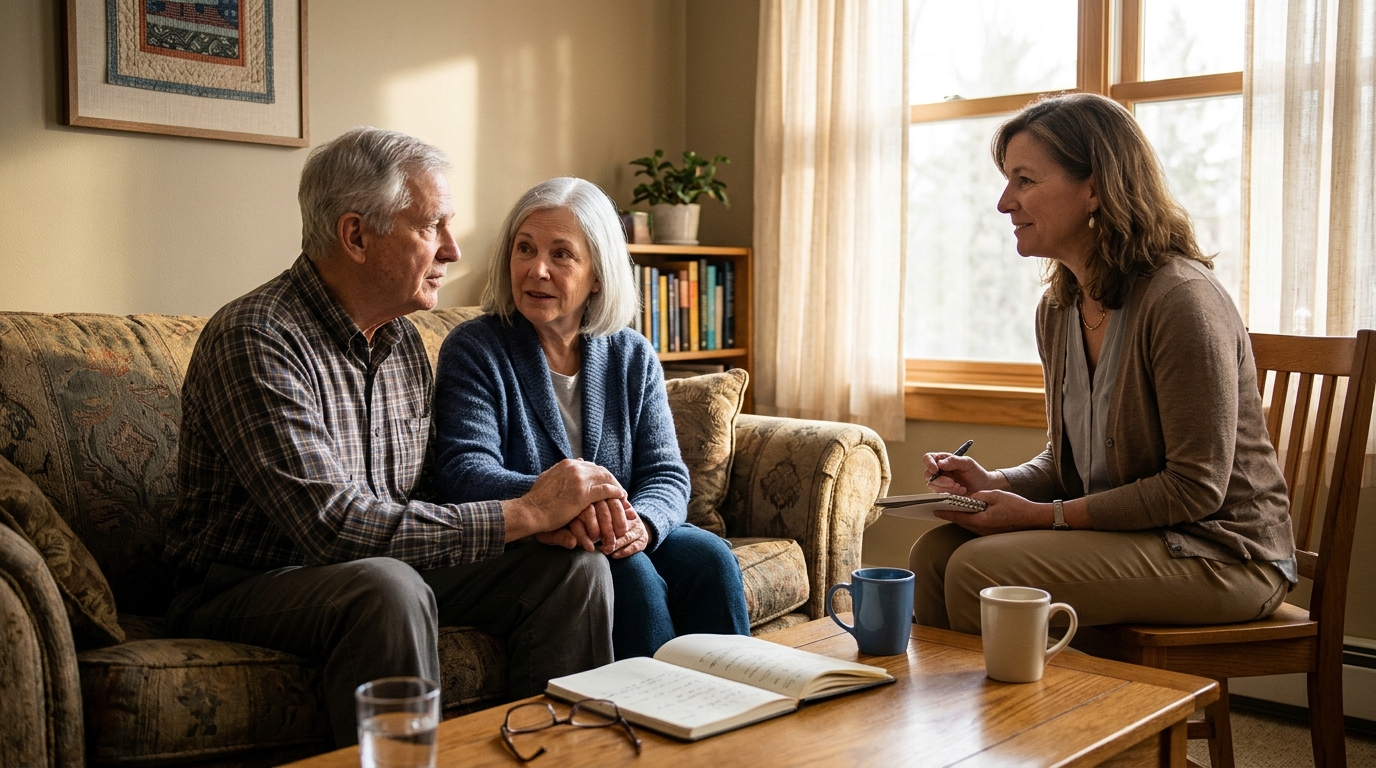
Image Credits: AI Generated
DOI: 10.1186/s12912-026-05591-y
Keywords: stroke rehabilitation, motivational interviewing, dyadic self-care, stroke survivors, spousal caregivers, randomised controlled trial, self-care maintenance, Motivational, interviewing, improve, dyadic, self-care
News Source: Cassandra Pierce. (November 7, 2026). Motivational Interviewing Improves Dyadic Stroke Self-Care in Randomised Controlled Trial. Scienmag.