• HOME
  • NEWS
  • EXPLORE
    • CAREER
      • Companies
      • Jobs
    • EVENTS
    • iGEM
      • News
      • Team
    • PHOTOS
    • VIDEO
    • WIKI
  • BLOG
  • COMMUNITY
    • FACEBOOK
    • INSTAGRAM
    • TWITTER
Saturday, November 14, 2026
BIOENGINEER.ORG
No Result
View All Result
  • Login
  • HOME
  • NEWS
  • EXPLORE
    • CAREER
      • Companies
      • Jobs
        • Lecturer
        • PhD Studentship
        • Postdoc
        • Research Assistant
    • EVENTS
    • iGEM
      • News
      • Team
    • PHOTOS
    • VIDEO
    • WIKI
  • BLOG
  • COMMUNITY
    • FACEBOOK
    • INSTAGRAM
    • TWITTER
No Result
View All Result
Bioengineer.org
No Result
View All Result
Home NEWS Science News Health

Mortality Link to Delayed Pacemaker Insertion in Older Adults Faces Scrutiny

by
November 9, 2026
in Health
Reading Time: 2 mins read
0
Mortality Link to Delayed Pacemaker Insertion in Older Adults Faces Scrutiny

Mortality Link to Delayed Pacemaker Insertion in Older Adults Faces Scrutiny

Share on FacebookShare on TwitterShare on LinkedinShare on RedditShare on Telegram

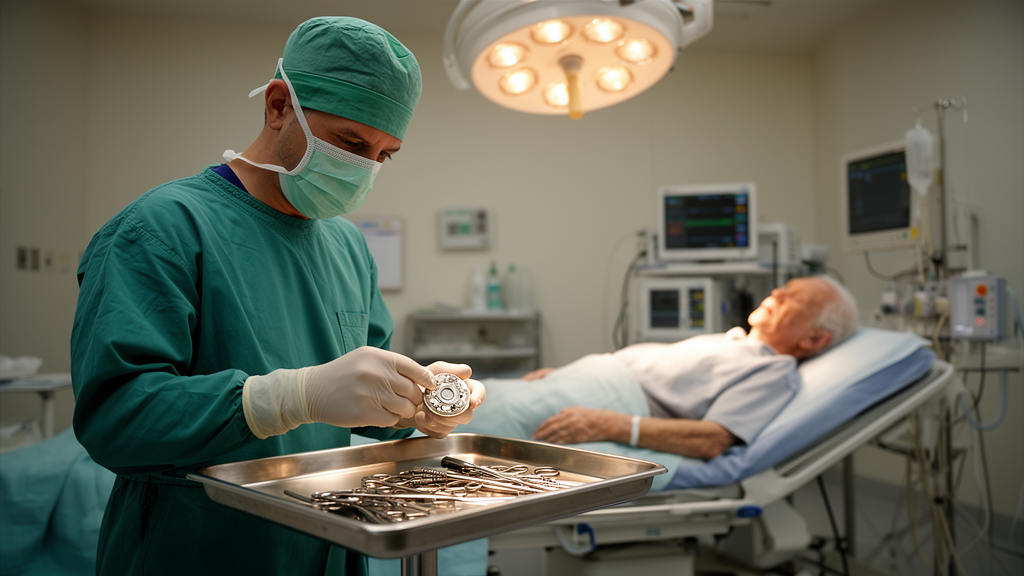
Reported statistical associations between delayed pacemaker insertion and increased long-term mortality in older adults require scrutiny before causal interpretations can be established, according to a perspective published in Aging Clinical and Experimental Research. While pacemaker insertion is common among older adults, the clinical implications of procedural timing remain unclear.

The perspective focuses on a prior study by Nguyen and colleagues, which documented that a longer time to pacemaker implantation was associated with increased mortality over nearly five years of follow-up. While Kazemerof and colleagues acknowledged that this prior contribution is valuable for understanding geriatric care, they noted that several substantial methodological considerations warrant critical examination before concluding that procedural delay itself caused the observed increase in deaths.

One major concern highlighted by the authors is potential reverse causality related to infection. Rather than infection arising as a complication of procedural delay, pre-existing infection may actually drive the delay in pacemaker insertion, a possibility supported by the presence of elevated neutrophil levels in the delayed cohort. Furthermore, while physical deconditioning was proposed as the mediating mechanism linking delayed implantation to poorer survival, deconditioning was never directly measured in the investigation.

The authors also raised critical questions regarding the study endpoints and analytical classifications. Residential aged care admission was employed as a proxy for functional decline, yet the authors emphasized that such admissions are heavily influenced by broader social and caregiver factors independent of patient function. Additionally, the specific 48-hour threshold used to categorize procedural delays appears to be a data-driven cutoff rather than an interval supported by clinical justification.

Finally, the commentary noted that the complete absence of baseline frailty measures leaves substantial residual confounding across the analyzed patient groups. Kazemerof and colleagues concluded that addressing these specific methodological considerations—including distinguishing cause from effect in systemic infection, directly quantifying functional deconditioning, validating timing cutoffs, and accounting for frailty—will be essential to strengthen causal inference and properly refine clinical strategies for older adults requiring pacemaker insertion.

Subject of Research: Methodological evaluation of pacemaker insertion timing and mortality in older adults

Article Title: Time to pacemaker insertion in older adults: A perspective on mortality and functional outcomes

Article References: Kazemerof, R., Mikhailova, M., Nurov, S., Akhmedov, A., Akilov, F., & Ismailov, O. (2026). Time to pacemaker insertion in older adults: A perspective on mortality and functional outcomes. Aging Clinical and Experimental Research, 38(1), Article 194. https://doi.org/10.1007/s40520-026-03514-0

Image Credits: AI Generated

DOI: 10.1007/s40520-026-03514-0

Keywords: pacemaker insertion, older adults, procedural delay, mortality outcomes, functional decline, cardiology, geriatrics, methodological critique, Time, pacemaker, insertion, older

News Source: Ophelia Keating. (November 9, 2026). Mortality Link to Delayed Pacemaker Insertion in Older Adults Faces Scrutiny. Scienmag.


Tags: Cardiologyfunctional declinegeriatricsinsertionmethodological critiquemortality outcomesolderolder adultspacemakerpacemaker insertionprocedural delaytime
Share12Tweet7Share2ShareShareShare1

Related Posts

Novel Molecular Evaluation System Detects Target Abnormalities in Human Spermatozoa Samples

Novel Molecular Evaluation System Detects Target Abnormalities in Human Spermatozoa Samples

November 14, 2026
Preterm Infant Serum Proteomics Identifies Widespread Protein Reductions Preceding Bronchopulmonary Dysplasia

Preterm Infant Serum Proteomics Identifies Widespread Protein Reductions Preceding Bronchopulmonary Dysplasia

November 14, 2026

Computational Analysis Links Metabolic Vascular Axis to Resistant Prostate Cancer

November 14, 2026

Prevascularized Stem Cell Sheets Accelerate Periodontal Tissue Repair in Orthodontic Movement Model

November 14, 2026

POPULAR NEWS

  • Kumtagh Desert Aridity Drives Divergent Microbial Survival Strategies Across Domains

    Kumtagh Desert Aridity Drives Divergent Microbial Survival Strategies Across Domains

    29 shares
    Share 12 Tweet 7
  • Computational Modeling Identifies Quinolinol Analogues Outperforming Tamoxifen Against Breast Cancer Target

    29 shares
    Share 12 Tweet 7
  • Higher Hydrogen Injection Mass Flow Enhances Torque in Commercial Rotary Engines

    29 shares
    Share 12 Tweet 7
  • Preterm Infant Serum Proteomics Identifies Widespread Protein Reductions Preceding Bronchopulmonary Dysplasia

    29 shares
    Share 12 Tweet 7

About

We bring you the latest biotechnology news from best research centers and universities around the world. Check our website.

Follow us

Recent News

Novel Molecular Evaluation System Detects Target Abnormalities in Human Spermatozoa Samples

Kumtagh Desert Aridity Drives Divergent Microbial Survival Strategies Across Domains

Computational Modeling Identifies Quinolinol Analogues Outperforming Tamoxifen Against Breast Cancer Target

Subscribe to Blog via Email

Enter your email address to subscribe to this blog and receive notifications of new posts by email.

Join 87 other subscribers
  • Contact Us

Bioengineer.org © Copyright 2023 All Rights Reserved.

Welcome Back!

Login to your account below

Forgotten Password?

Retrieve your password

Please enter your username or email address to reset your password.

Log In
No Result
View All Result
  • Homepages
    • Home Page 1
    • Home Page 2
  • News
  • National
  • Business
  • Health
  • Lifestyle
  • Science

Bioengineer.org © Copyright 2023 All Rights Reserved.