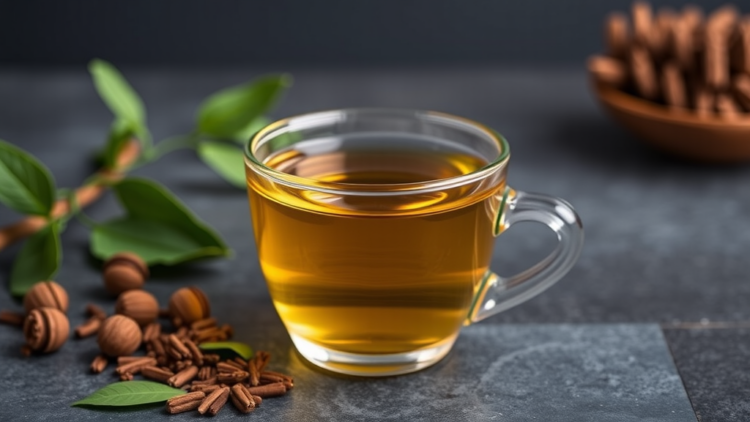
In the souks and family kitchens of Morocco, the ritual of pouring a steaming glass of herbal tea is far more than hospitality. For generations, mint, thyme, sage, geranium, and dozens of other aromatic plants have been steeped and sipped as everyday remedies for ailments ranging from upset stomachs to the thirst and fatigue of what traditional healers long recognized as a wasting sugar sickness: what modern medicine now calls type 2 diabetes mellitus. A new laboratory study has put that folkloric confidence to one of its most rigorous tests yet, and the results suggest that some of these humble infusions contain chemistry that is, by several measures, genuinely remarkable.
The research, published in BMC Complementary Medicine and Therapies, was carried out by an international team of pharmacognosists and analytical chemists working across institutions in Egypt, Morocco, Finland, and elsewhere. Led by Ahmed Zayed of Tanta University in Egypt together with Meryem El Jemli of Mohammed VI University of Sciences and Health in Casablanca, the investigators assembled 21 different herbal teas that Moroccans traditionally drink to help control blood sugar. Their goal was not simply to confirm that the teas are popular, but to open them up at the molecular level and ask a deceptively simple question: what exactly is in the cup, and could any of it plausibly interfere with the biochemical processes that drive high blood glucose after a meal?
To answer that question, the team deployed high-performance liquid chromatography coupled with mass spectrometry, or HPLC-MS, a technique that acts like an extraordinarily sensitive sorting machine for small molecules. The tea extracts are pushed through a column that separates individual compounds based on their chemical affinities, and each fraction is then weighed and identified by its mass-to-charge signature. This allowed the researchers to build a molecular census of each infusion, identifying and quantifying the phenolic compounds, a broad family of plant secondary metabolites that includes flavonoids, phenolic acids, and tannins, all of which are known for their antioxidant behavior and, in some cases, their ability to modulate human enzymes.
The analytical results revealed striking differences from plant to plant. Peppermint, Mentha × piperita, topped the table for total phenolic content, packing 883.2 milligrams of gallic acid equivalents per gram of dry weight, with the Moroccan endemic thyme species Thymus broussonetii close behind at 746.8 milligrams per gram. For readers unfamiliar with the unit, gallic acid equivalents, abbreviated GAE, are a standard yardstick that expresses the total reducing capacity of a plant extract as if it were all one reference antioxidant, allowing chemists to compare apples to oranges, or in this case, mints to thymes. Concentrations approaching or exceeding 700 milligrams per gram mean that these dried herbs are, on a weight basis, extraordinarily dense reservoirs of reactive phenolic chemistry.
Antioxidant capacity was assessed with three complementary assays, each probing a different facet of antioxidant behavior. The DPPH and ABTS tests measure how effectively a compound scavenges synthetic free radicals in solution, while the FRAP assay measures reducing power, the ability to donate electrons to ferric iron. No single assay tells the whole story, which is precisely why the team used all three. Across the panel, antioxidant performance varied substantially, with Thymus broussonetii showing a particularly strong FRAP value of 423.6 micrograms per milliliter and Mentha rotundifolia, apple mint, demonstrating significant reducing capacity at 162.6 micrograms per milliliter. Critically, total phenolic content correlated strongly and positively with antioxidant indices across all 21 teas, with correlation coefficients ranging from 0.93 to 0.96. In statistical terms, that is a near-lockstep relationship, strongly suggesting that the phenolics themselves, rather than some other class of molecules, are the engines of the observed antioxidant activity.
But antioxidant activity alone would be a familiar and somewhat underwhelming finding. The more provocative part of the study concerns carbohydrate-digesting enzymes. After a starchy meal, the digestive enzymes alpha-amylase, secreted by the salivary glands and pancreas, and alpha-glucosidase, anchored in the brush border of the small intestine, work in sequence to chop long carbohydrate chains down to glucose that can be absorbed into the bloodstream. Drugs such as acarbose exploit this biology by inhibiting these enzymes, blunting the post-meal glucose spike that is so dangerous for people with type 2 diabetes. If plant phenolics can do something similar, even modestly, they could help explain the ethnomedicinal reputation of these teas.
The enzyme inhibition results are where the study turns genuinely eye-catching. Pelargonium graveolens, rose-scented geranium, a staple of Moroccan gardens and infusions, inhibited alpha-amylase with an IC50 of just 2.98 micrograms per milliliter. The IC50 is the concentration of an inhibitor needed to halve enzyme activity, so lower numbers mean more potent inhibition, and a value under three micrograms per milliliter for a crude plant extract is, on its face, a striking figure. On the alpha-glucosidase side, spearmint, Mentha viridis, and Calamintha officinalis, calamint, emerged as the standouts, with IC50 values of 1.9 and 1.2 micrograms per milliliter respectively. These are the kinds of numbers that make pharmacognosists sit up and pay attention, because crude extracts rarely achieve such low IC50 values against clinically relevant enzymes.
The correlation analysis added an intriguing chemical clue to the story. The researchers found negative correlations between the abundance of two specific phenolics, the flavonoid rutin and the simple phenolic acid gallic acid, and the alpha-amylase IC50 values, with coefficients of minus 0.49 and minus 0.44 respectively. Because a lower IC50 means stronger inhibition, a negative correlation implies that teas richer in rutin and gallic acid tended to be more potent amylase blockers. Rutin, a glycoside of the flavonol quercetin, and gallic acid are both known from prior biochemical literature to interact with digestive enzymes, and these new correlation data are consistent with the idea that they contribute meaningfully to the observed activity, though correlations across a panel of 21 extracts cannot by themselves prove causation for any single compound.
The authors are careful, and rightly so, to frame what this study does and does not demonstrate. Everything reported here took place in vitro, meaning in test tubes and microplates rather than in living bodies. A potent enzyme inhibitor in a cuvette may behave very differently once it passes through the stomach, encounters liver metabolism, and reaches the intestine at unknown concentrations, a question of pharmacokinetics that in vitro assays simply cannot address. The team explicitly notes that the findings do not establish therapeutic efficacy and that in vivo, mechanistic, pharmacokinetic, and clinical studies are required before any claims about efficacy, safety, or clinical relevance can be made. They also observed that the variability among samples may reflect differences in plant species as well as environmental and agronomic factors such as growing conditions and harvest timing, a reminder that herbal preparations are chemically inconsistent in ways that standardized pharmaceuticals are not.
Even with those caveats firmly in place, the study represents a meaningful step in a larger scientific project: using rigorous analytical chemistry to take traditional knowledge seriously as a source of leads rather than dismissing it as folklore, or credulously accepting it as medicine. Morocco’s herbal tea culture is a living pharmacopoeia refined over centuries, and techniques like HPLC-MS now allow researchers to read that pharmacopoeia molecule by molecule. The 21 infusions examined here vary enormously in their phenolic makeups and biological activities, and that variation itself is information, pointing toward which species deserve deeper investigation, which compounds such as rutin and gallic acid merit isolation and mechanistic testing, and how traditional preparation methods might influence the chemistry that ends up in the glass. For now, the safest conclusion is the one the data support: some of Morocco’s most beloved digestive teas are unusually rich in bioactive phenolics and surprisingly effective at blocking the enzymes that digest starch in the laboratory. Whether a daily glass of mint tea can actually move blood sugar numbers in a person with diabetes remains an open question, one that only carefully designed clinical trials can answer. But the bridge between the Moroccan tea tray and the modern pharmacology of glucose control has never looked more worth crossing.
Subject of Research: Phenolic composition and anti-diabetic enzyme inhibitory activity of traditional Moroccan herbal teas
Article Title: Ethnopharmacological insights into type 2 diabetes management by traditional Moroccan herbal teas: HPLC-MS characterization of phenolic compounds and their related antioxidant and enzyme inhibitory activities
Article References: Zayed, A., El Jemli, M., Kharbach, M., Faouzi, M. E. A., Radwan, R. A., & Ezzat, S. M. (2026). Ethnopharmacological insights into type 2 diabetes management by traditional Moroccan herbal teas: HPLC-MS characterization of phenolic compounds and their related antioxidant and enzyme inhibitory activities. BMC Complementary Medicine and Therapies, 26(1), Article 279. https://doi.org/10.1186/s12906-026-05588-9
Image Credits: AI Generated
DOI: 10.1186/s12906-026-05588-9
Keywords: Moroccan herbal teas, type 2 diabetes, HPLC-MS, phenolic compounds, antioxidant activity, alpha-amylase inhibition, alpha-glucosidase inhibition, rutin, gallic acid, ethnopharmacology, Mentha, Thymus broussonetii
Cite Scienmag News
APA MLA Chicago
Ophelia Keating. (September 26, 2026). Moroccan Herbal Teas Show Potent Enzyme-Blocking Activity Linked to Diabetes. Scienmag. https://scienmag.com/moroccan-herbal-teas-show-potent-enzyme-blocking-activity-linked-to-diabetes/
Ophelia Keating. “Moroccan Herbal Teas Show Potent Enzyme-Blocking Activity Linked to Diabetes.” Scienmag, 26 September 2026, https://scienmag.com/moroccan-herbal-teas-show-potent-enzyme-blocking-activity-linked-to-diabetes/. Accessed 26 September 2026.
Ophelia Keating. “Moroccan Herbal Teas Show Potent Enzyme-Blocking Activity Linked to Diabetes.” Scienmag. September 26, 2026. https://scienmag.com/moroccan-herbal-teas-show-potent-enzyme-blocking-activity-linked-to-diabetes/
Copy citation Download RIS
Tags: alpha-amylase inhibitionalpha-glucosidase inhibitionantioxidant activitycomplementary medicine for diabetesenzyme inhibition in herbal teasenzyme-blocking activityethnobotanical studies of Moroccan plantsethnopharmacologygallic acidherbal remedies for type 2 diabetesherbal tea pharmacologyHPLC-MSlaboratory analysis of herbal infusionsmedicinal plant research MoroccoMenthaMoroccan herbal teasnatural blood sugar regulationPhenolic compoundsphytochemicals in Moroccan herbsrutinThymus broussonetiitraditional medicine for diabetesType 2 diabetes