• HOME
  • NEWS
  • EXPLORE
    • CAREER
      • Companies
      • Jobs
    • EVENTS
    • iGEM
      • News
      • Team
    • PHOTOS
    • VIDEO
    • WIKI
  • BLOG
  • COMMUNITY
    • FACEBOOK
    • INSTAGRAM
    • TWITTER
Thursday, May 14, 2026
BIOENGINEER.ORG
No Result
View All Result
  • Login
  • HOME
  • NEWS
  • EXPLORE
    • CAREER
      • Companies
      • Jobs
        • Lecturer
        • PhD Studentship
        • Postdoc
        • Research Assistant
    • EVENTS
    • iGEM
      • News
      • Team
    • PHOTOS
    • VIDEO
    • WIKI
  • BLOG
  • COMMUNITY
    • FACEBOOK
    • INSTAGRAM
    • TWITTER
  • HOME
  • NEWS
  • EXPLORE
    • CAREER
      • Companies
      • Jobs
        • Lecturer
        • PhD Studentship
        • Postdoc
        • Research Assistant
    • EVENTS
    • iGEM
      • News
      • Team
    • PHOTOS
    • VIDEO
    • WIKI
  • BLOG
  • COMMUNITY
    • FACEBOOK
    • INSTAGRAM
    • TWITTER
No Result
View All Result
Bioengineer.org
No Result
View All Result
Home NEWS Science News Chemistry

More than just genetic code

Bioengineer by Bioengineer
September 8, 2020
in Chemistry
Reading Time: 2 mins read
0
IMAGE
Share on FacebookShare on TwitterShare on LinkedinShare on RedditShare on Telegram

IMAGE

Credit: Figure: Conrad Mullineaux

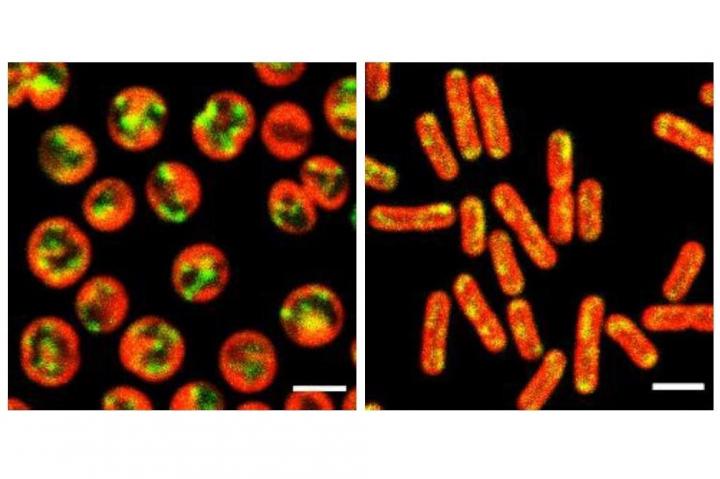
In photosynthesis, solar energy is converted into chemical energy, which is then used in nature to produce organic molecules from carbon dioxide. In plants, algae and cyanobacteria, the key photosynthesis reactions take place in two complex structures known as photosystems. These are located in a special membrane system, the thylakoids. However, many details of their molecular structure and the way the proteins are incorporated into the membranes have yet to be explored. A team led by Professor Conrad Mullineaux from the Institute of Biology and Chemistry at Queen Mary University London, UK, Professor Annegret Wilde and Professor Wolfgang Hess from the Institute of Biology III at the University of Freiburg and Professor Satoru Watanabe from the Institute of Biosciences at the Agricultural University of Tokyo, Japan, has published a study in the current issue of Nature Plants: The mRNAs are transported to the thylakoid membranes and the respective proteins are produced there on the spot.

The researchers used molecular genetic, bioinformatics and high-resolution microscopic approaches at the single cell level for their investigations. The results confirm that mRNA molecules encode much more than just the sequence of the protein. They also carry signals that appear to control the position and coordination of the photosystem structure. The team was able to identify two proteins likely to be involved in this process by interacting with these mRNAs. The researchers say this opens the way to a detailed understanding of the molecular mechanisms involved and provides new approaches to make these processes useful for photobiotechnology.

###

Conrad Mullineaux was a Fellow at the Freiburg Institute for Advanced Studies (FRIAS). The teams of Annegret Wilde from the Research Group for Molecular Genetics of Prokaryotes and of Wolfgang Hess from the Research Group for Genetics and Experimental Bioinformatics are part of the Research Training Group 2344 MeInBio – BioInMe: Investigation of Spatial and Temporal Dynamics of Gene Regulation with High-Resolution High-Throughput Methods, funded by the German Research Foundation. Satoru Watanabe conducted research during a one-year stay as a Research Fellow at the University of Freiburg.

Contact:

Professor Dr. Annegret Wilde

Institute of Biology III

University of Freiburg

Phone: 0761/203-97828

E-Mail: [email protected]

Professor Dr. Wolfgang Hess

Institute of Biology III

University of Freiburg

Phone: 0761/203-2796

E-Mail: [email protected]

Media Contact
Professor Dr. Annegret Wilde
[email protected]

Original Source

https://www.pr.uni-freiburg.de/pm-en/press-releases-2020/more-than-just-genetic-code

Related Journal Article

http://dx.doi.org/10.1038/s41477-020-00764-2

Tags: BiochemistryBiologyMolecular Biology
Share12Tweet8Share2ShareShareShare2

Related Posts

Researchers Develop High-Efficiency Hydrogen Separation Membranes Using Innovative ‘Mortar-and-Brick’ Design — Chemistry

Researchers Develop High-Efficiency Hydrogen Separation Membranes Using Innovative ‘Mortar-and-Brick’ Design

May 13, 2026
Green Electrosynthesis Paves the Way for Direct Amines Production from Atmospheric Nitrogen — Chemistry

Green Electrosynthesis Paves the Way for Direct Amines Production from Atmospheric Nitrogen

May 13, 2026

Decoding Life’s Chemistry: A Revolutionary Search Engine from Molecules to Meaning

May 13, 2026

How Olympic Weightlifting Harnesses the Barbell’s ‘Whip’ for Peak Performance #ASA190

May 13, 2026
Please login to join discussion

POPULAR NEWS

  • Research Indicates Potential Connection Between Prenatal Medication Exposure and Elevated Autism Risk

    842 shares
    Share 337 Tweet 211
  • New Study Reveals Plants Can Detect the Sound of Rain

    729 shares
    Share 291 Tweet 182
  • Salmonella Haem Blocks Macrophages, Boosts Infection

    62 shares
    Share 25 Tweet 16
  • Breastmilk Balances E. coli and Beneficial Bacteria in Infant Gut Microbiomes

    57 shares
    Share 23 Tweet 14

About

We bring you the latest biotechnology news from best research centers and universities around the world. Check our website.

Follow us

Recent News

Functional Ability and Heat Vulnerability in Older Adults

Impact of Invitation Types on Breast Screening Attendance

SNOR Reactivates Translation After Dormancy

Subscribe to Blog via Email

Enter your email address to subscribe to this blog and receive notifications of new posts by email.

Join 82 other subscribers
  • Contact Us

Bioengineer.org © Copyright 2023 All Rights Reserved.

Welcome Back!

Login to your account below

Forgotten Password?

Retrieve your password

Please enter your username or email address to reset your password.

Log In
No Result
View All Result
  • Homepages
    • Home Page 1
    • Home Page 2
  • News
  • National
  • Business
  • Health
  • Lifestyle
  • Science

Bioengineer.org © Copyright 2023 All Rights Reserved.