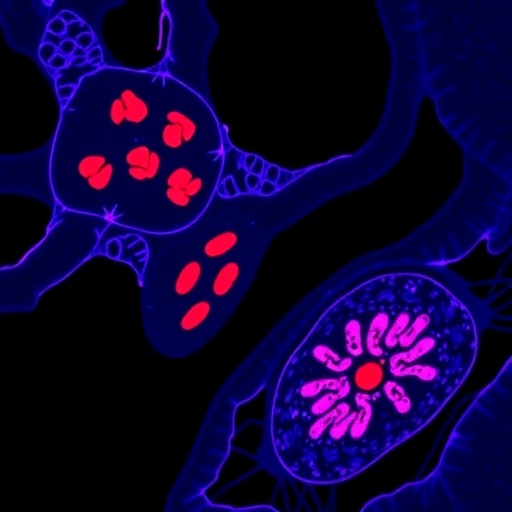
Colorectal cancer is increasingly understood not only as a disease of malignant epithelial cells, but also as a disorder shaped by the immune and inflammatory environment surrounding a tumor. A study published in Genes & Diseases has identified a signaling circuit through which monocyte-derived interleukin-1β, or IL-1β, may help colorectal tumors grow, invade neighboring tissue, and spread to the liver. The researchers report that this inflammatory cytokine activates a self-reinforcing p65–KRT7–ILK pathway, linking immune-cell activity to epithelial–mesenchymal transition, a cellular program that gives cancer cells greater mobility and invasive capacity.
Colorectal cancer remains among the most frequently diagnosed malignancies worldwide and is a major cause of cancer-related mortality. While early-stage disease can often be treated successfully, recurrence and metastatic spread continue to account for a large proportion of deaths. The liver is a particularly common site of metastasis because tumor cells draining from the intestine enter the portal circulation and can establish secondary lesions there. Although genetic alterations within cancer cells are central to progression, the study suggests that signals released by immune cells in the tumor microenvironment can create conditions that make colorectal cancer more aggressive.
The investigators first examined IL-1β levels in patient samples and publicly available molecular datasets. IL-1β was substantially more abundant in colorectal cancer tissues than in matched or adjacent normal tissues. Higher levels were associated with features of advanced disease, including larger tumors, deeper tissue invasion, lymph-node involvement, and more advanced TNM stage. Analyses of tissue and serum samples further indicated that IL-1β could have diagnostic and prognostic relevance. In a cohort of 94 paired colorectal cancer tissue samples, the protein was elevated in malignant tissue, while serum analyses involving 235 patients supported an association between circulating IL-1β and colorectal cancer.
The source of this cytokine was investigated using single-cell transcriptomic analysis, immunofluorescence, flow cytometry, polymerase chain reaction, and Western blotting. Across these approaches, monocytes emerged as the predominant IL-1β-producing population within the colorectal tumor microenvironment. Monocytes are circulating innate immune cells that can enter tumors and develop into tumor-associated macrophage-like populations or other inflammatory states. When stimulated by tissue damage, microbial products, or tumor-derived signals, they can release cytokines that influence cancer-cell survival, proliferation, and movement. The findings place monocytes at the center of an inflammatory communication system that appears to intensify malignant behavior.
The researchers then mapped how IL-1β affects colorectal cancer cells at the molecular level. Binding of IL-1β to its receptor activates intracellular signaling pathways that converge on nuclear factor kappa B, or NF-κB. A central component of this pathway is the transcription factor p65, also known as RELA. In the study, IL-1β increased p65 phosphorylation and promoted its movement from the cytoplasm into the nucleus, where transcription factors bind regulatory DNA sequences and alter gene expression. The team found that activated p65 directly increased transcription of KRT7, a gene encoding keratin 7, a structural intermediate-filament protein associated in several cancers with invasion and poor clinical outcomes.
Evidence that KRT7 is a direct target of p65 came from complementary genomic and transcriptional experiments. CUT&Tag analysis, which identifies the genomic locations occupied by specific DNA-binding proteins or chromatin-associated factors, detected p65 enrichment at the KRT7 promoter. Luciferase reporter assays provided additional support: when the promoter region was linked to a reporter gene, p65 activation increased reporter activity, whereas disrupting the relevant regulatory region weakened the response. These results connect an extracellular inflammatory signal to a specific transcriptional event, showing how IL-1β can reprogram the behavior of colorectal cancer cells rather than simply acting as a general growth stimulus.
The study further described how KRT7 communicates with the integrin-linked kinase pathway. KRT7 was found to interact with integrin subunit alpha 1, or ITGA1, a cell-surface adhesion receptor. This interaction activated integrin-linked kinase, known as ILK, which is involved in transmitting signals from the extracellular matrix into the cell. ILK activation was accompanied by molecular features of epithelial–mesenchymal transition: the cancer cells displayed increased N-cadherin and vimentin, reduced E-cadherin, and greater formation of invadopodia. Invadopodia are actin-rich protrusions that concentrate matrix-degrading enzymes, allowing cancer cells to penetrate surrounding tissue. In functional assays, these molecular changes were associated with enhanced migration and invasion.
Rather than ending with KRT7 and ILK, the signaling pathway appeared to close into a positive feedback loop. ILK increased phosphorylation of p65 at serine 536, a modification associated with enhanced NF-κB transcriptional activity and nuclear localization. This additional p65 activation sustained KRT7 expression, which in turn continued to support ITGA1-associated ILK signaling. Such feedback circuits are biologically important because they can convert a temporary inflammatory stimulus into a persistent cellular state. In this case, monocyte-derived IL-1β may initiate the process, while the p65–KRT7–ILK circuit maintains the invasive program even as tumor cells adapt to their surroundings.
The researchers tested whether interrupting this pathway could restrain tumor progression. Treatment with anakinra, an antagonist of the IL-1 receptor already used clinically to treat certain inflammatory disorders, reduced colorectal cancer cell proliferation, migration, invasion, and EMT-related changes in laboratory experiments. In patient-derived xenograft models and mouse models in which tumor cells were introduced through the spleen to evaluate liver colonization, blocking IL-1β signaling suppressed tumor growth and metastatic development. By contrast, adding exogenous IL-1β accelerated aggressive behavior in cultured cells and promoted tumor progression in animal experiments. These findings do not establish an immediate cancer treatment, but they provide a mechanistic rationale for investigating IL-1β pathway inhibitors, alone or alongside existing therapies, in carefully selected colorectal cancer patients.
The study identifies monocyte-secreted IL-1β as a potential bridge between inflammation and metastatic colorectal cancer. Its proposed p65–KRT7–ILK feedback circuit offers both biomarker and therapeutic possibilities, because elevated IL-1β or activation of downstream components may help identify tumors with a particularly invasive phenotype. However, further work will be needed to determine which patients would benefit from IL-1β blockade, how treatment might interact with chemotherapy or immunotherapy, and whether inhibiting this pathway can control established metastases without compromising protective immune functions. By tracing the pathway from immune-cell cytokine release to cancer-cell invasion, the findings strengthen the case that the tumor microenvironment is not merely a backdrop to cancer progression, but an active driver of disease.
Subject of Research: Monocyte-derived interleukin-1β and its role in colorectal cancer progression, epithelial–mesenchymal transition, tumor growth, and liver metastasis.
Article Title: Monocyte secretory IL-1β promotes colorectal cancer epithelial–mesenchymal transition via the p65–KRT7–ILK feedback
Web References: Genes & Diseases: https://www.sciencedirect.com/journal/genes-and-diseases ; DOI: https://doi.org/10.1016/j.gendis.2026.102250
References: Chen Z, He K, Peng D, Gao D, Zhang H, Liang X, Xu X, Du D, Wang L, Zeng L, Zeng Z, Wu X. “Monocyte secretory IL-1β promotes colorectal cancer epithelial–mesenchymal transition via the p65–KRT7–ILK feedback.” Genes & Diseases. DOI: 10.1016/j.gendis.2026.102250
Image Credits: Zhenzhou Chen, Kuan He, Dong Peng, Donghui Gao, Hongyu Zhang, Xiaolong Liang, Xiang Xu, Dongli Du, Luyue Wang, Li Zeng, Zongyue Zeng, Xingye Wu.
Keywords: Colorectal cancer, IL-1β, monocytes, tumor microenvironment, NF-κB, p65, KRT7, integrin-linked kinase, ILK, epithelial–mesenchymal transition, metastasis, liver metastasis, anakinra.
Tags: cancer metastasis to liverColorectal cancercytokine-driven cancer progressionepithelial-mesenchymal transition (EMT)immune cell influence on tumor invasionimmune-inflammatory tumor interactionsinflammatory cytokines in colorectal cancermolecular pathways in colorectal cancer progressionmonocyte-derived IL-1β signalingp65–KRT7–ILK pathwaytumor invasion and metastasis mechanismstumor microenvironment