• HOME
  • NEWS
  • EXPLORE
    • CAREER
      • Companies
      • Jobs
    • EVENTS
    • iGEM
      • News
      • Team
    • PHOTOS
    • VIDEO
    • WIKI
  • BLOG
  • COMMUNITY
    • FACEBOOK
    • INSTAGRAM
    • TWITTER
Monday, August 24, 2026
BIOENGINEER.ORG
No Result
View All Result
  • Login
  • HOME
  • NEWS
  • EXPLORE
    • CAREER
      • Companies
      • Jobs
        • Lecturer
        • PhD Studentship
        • Postdoc
        • Research Assistant
    • EVENTS
    • iGEM
      • News
      • Team
    • PHOTOS
    • VIDEO
    • WIKI
  • BLOG
  • COMMUNITY
    • FACEBOOK
    • INSTAGRAM
    • TWITTER
  • HOME
  • NEWS
  • EXPLORE
    • CAREER
      • Companies
      • Jobs
        • Lecturer
        • PhD Studentship
        • Postdoc
        • Research Assistant
    • EVENTS
    • iGEM
      • News
      • Team
    • PHOTOS
    • VIDEO
    • WIKI
  • BLOG
  • COMMUNITY
    • FACEBOOK
    • INSTAGRAM
    • TWITTER
No Result
View All Result
Bioengineer.org
No Result
View All Result
Home NEWS Science News Health

Monitoring the body’s fat burning by breath

Bioengineer by Bioengineer
February 10, 2021
in Health
Reading Time: 2 mins read
0
IMAGE
Share on FacebookShare on TwitterShare on LinkedinShare on RedditShare on Telegram

IMAGE

Credit: Tohoku University

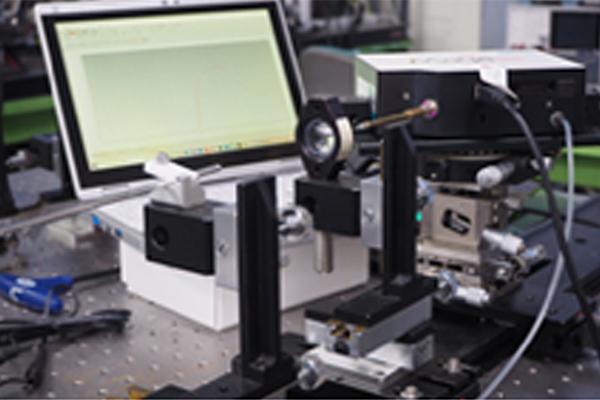
Your breath holds the key to monitoring fat burning, and now a research group from Tohoku University has created a compact and low-cost device that can measure how our body metabolizes fat.

The device uses an ultraviolet lamp to gauge exhaled acetone gas, which is produced in the blood through the metabolic reaction of fat.

“Precise measurements of acetone gas concentration allows us to determine the body’s ability to metabolize fat and develop exercise methods for efficient fat burning,” says Professor Yuji Matsuura from Tohoku University’s Graduate School of Biomedical Engineering, who led the research group.

The details of their study were published in the journal Sensors on January 12, 2021

Matsuura and his team focused on ultraviolet light, which due to its extremely short wavelength is strongly absorbed by acetone gas. They succeeded in measuring the acetone concentration with high accuracy: 0.03 ppm–while the acetone concentration is about 1 ppm in exhaled air.

To do this, they trapped exhaled air in a thin tubular optical fiber–called a hollow optical fiber–that had been exposed to vacuum ultraviolet light produced from an ultraviolet lamp. The group measured the degree to which the light is weakened as a result of the absorption of acetone gases to ascertain the acetone gas concentration.

When putting the device to use the group discovered that fat burning rates gradually increased after exercise. In contrast, the rate remained constant during exercise, indicating that a substantial part of fat metabolization occurs after exercise.

Until now, a large mass spectrometer was required to monitor fat metabolization. The new device, however, comprises only three components: a lamp, a hollow optical fiber, and a small spectrometer making it compact and low cost.

“The present research may also lead to non-invasive diagnosis methods for diabetes, since diabetic patients have high concentrations of acetone gas in their breath,” added Matsuura.

###

Media Contact
Yuji Matsuura
[email protected]

Related Journal Article

http://dx.doi.org/10.3390/s21020478

Tags: Medicine/HealthTechnology/Engineering/Computer Science
Share12Tweet8Share2ShareShareShare2

Related Posts

Study reveals surge in type 2 diabetes among people under 20

August 24, 2026

Blocking glucosylceramide production kills cancer cells via lysosomal dysfunction, not ceramide buildup

August 23, 2026

ZCCHC4 boosts replication-dependent histone mRNA translation by interacting with eIF3

August 23, 2026

Tirzepatide Versus GLP-1 Agonists for Stroke Risk in Atrial Fibrillation and Diabetes

August 22, 2026
Please login to join discussion

POPULAR NEWS

  • Study reveals surge in type 2 diabetes among people under 20

    29 shares
    Share 12 Tweet 7
  • KAIST discovers pathway to faster-charging, longer-lasting electric vehicle batteries

    29 shares
    Share 12 Tweet 7
  • Blocking glucosylceramide production kills cancer cells via lysosomal dysfunction, not ceramide buildup

    29 shares
    Share 12 Tweet 7
  • ZCCHC4 boosts replication-dependent histone mRNA translation by interacting with eIF3

    29 shares
    Share 12 Tweet 7

About

We bring you the latest biotechnology news from best research centers and universities around the world. Check our website.

Follow us

Recent News

Study reveals surge in type 2 diabetes among people under 20

KAIST discovers pathway to faster-charging, longer-lasting electric vehicle batteries

Blocking glucosylceramide production kills cancer cells via lysosomal dysfunction, not ceramide buildup

Subscribe to Blog via Email

Enter your email address to subscribe to this blog and receive notifications of new posts by email.

Join 85 other subscribers
  • Contact Us

Bioengineer.org © Copyright 2023 All Rights Reserved.

Welcome Back!

Login to your account below

Forgotten Password?

Retrieve your password

Please enter your username or email address to reset your password.

Log In
No Result
View All Result
  • Homepages
    • Home Page 1
    • Home Page 2
  • News
  • National
  • Business
  • Health
  • Lifestyle
  • Science

Bioengineer.org © Copyright 2023 All Rights Reserved.