


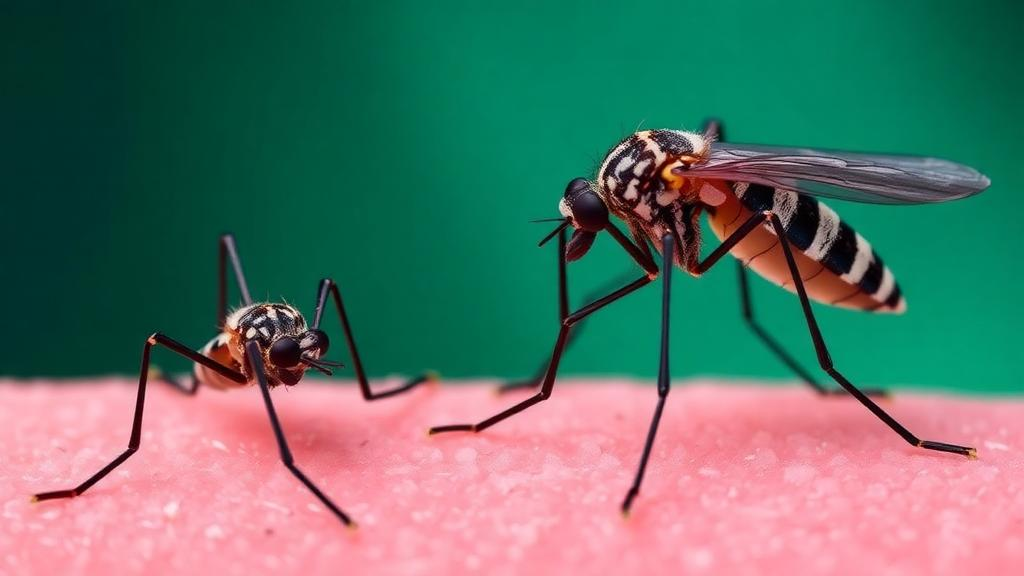
The article, authored by Aroni Preya Biswas, Anika Yesmin Sorna and Md. Mamunur Rahman and published on 8 March 2026, surveys how innovations in medical entomology are targeting both the biology of Aedes mosquito vectors and the pathogenesis of the dengue virus itself.
The scale of the problem motivates the review. In 2023, dengue cases were reported in approximately 80 countries across all WHO regions, with ongoing transmission and an unexpected rise in incidence producing a record 6.5 million cases and around 7,300 deaths. The disease is endemic in more than 100 countries, particularly in tropical and subtropical regions, where urbanization, climate change and inadequate vector control have amplified its spread. Global annual expenditures related to dengue are projected to surpass 8.9 billion dollars. Conventional control, built on chemical pesticides, environmental management and public health education, is strained by pesticide resistance in Aedes populations, limited community involvement and the transient effectiveness of larval source reduction, while the complex interplay among the four dengue virus serotypes has complicated vaccine development.
Against that backdrop, the authors highlight field results that suggest molecular approaches can deliver. Releases of genetically modified Aedes aegypti males carrying a self-limiting gene, which suppress populations by preventing the survival of female offspring, achieved up to a 95 percent reduction in Ae. aegypti abundance in sustained field trials in Brazil. Even more striking epidemiological impact has come from Wolbachia-based population replacement: in a landmark cluster-randomized controlled trial in Yogyakarta, Indonesia, release of Wolbachia-infected Ae. aegypti was associated with a 77 percent reduction in virologically confirmed dengue and an 86 percent reduction in dengue hospitalization. Additional programs in Australia, Brazil and Vietnam report long-term establishment of Wolbachia and substantial decreases in dengue incidence, and integrated sterile-male and incompatible-insect releases have yielded large reductions in egg hatch rates and local transmission.
The molecular basis of the Wolbachia strategy illustrates why understanding vector-virus interactions matters. Wolbachia, an obligate intracellular bacterium, blocks dengue virus replication inside the mosquito through several pathways: it competes for host cellular resources such as lipids and cholesterol needed for viral entry, replication and assembly; it primes innate immunity by upregulating the Toll, JAK-STAT and RNA interference pathways; and recent studies indicate it may trigger reactive oxygen species production and alter host microRNA expression, creating an intracellular environment broadly refractory to arboviruses. At the same time, cytoplasmic incompatibility drives its own spread, because mating between infected males and uninfected females produces no viable offspring, giving infected females a reproductive advantage and making the intervention self-sustaining without continuous releases. Deployments in Yogyakarta and Cairns, Australia, have been associated with a 76 percent reduction in dengue incidence and significant decreases in dengue seroconversion rates. The review cautions, however, that fitness costs under certain environmental conditions, the long-term stability of pathogen blocking and the potential for the virus to evolve resistance all require ongoing genomic surveillance.
Gene editing forms the second pillar of the molecular toolkit. Whole-genome sequencing has identified markers of vector competence and insecticide resistance, including the thioester-containing protein gene TEP1, which is central to the mosquito immune response to dengue, and the resistance-linked genes CYP9J28, tied to pyrethroid detoxification, and GSTe2, tied to DDT and organochlorine resistance. CRISPR-Cas9 has been used to knock out genes that dengue depends on, such as Frizzled 2 in the Wnt signalling pathway, whose deletion significantly diminishes viral replication in Aedes aegypti, and to insert refractory genes, including the D2F2 single-chain antibody targeting the viral envelope protein, which reduced dengue titers and transmission in engineered mosquitoes. Gene-drive constructs targeting female fertility genes such as doublesex, which render female mosquitoes sterile, could in principle suppress or replace wild populations, though the review stresses that such strategies must adhere to ethical and ecological safeguards.
RNA interference occupies a dual role in this landscape. As a natural antiviral pathway, the dicer-2 and Argonaute-2 genes are essential to mosquito defense: suppressing them enhances dengue replication, while overexpression reduces viral loads, pointing to genetic manipulation as a route to refractory mosquitoes. As an applied technology, RNAi-based insecticides deliver double-stranded RNA that triggers silencing of essential mosquito developmental genes, offering species-specific and environmentally targeted alternatives to broad-spectrum chemicals. Nanoparticle delivery systems that protect dsRNA from degradation and improve uptake by larvae have improved stability and efficacy, and RNAi pesticides targeting Aedes aegypti larvae have decreased mosquito populations in experimental settings.
The review also maps the viral side of the arms race. The dengue virus genome, a single-stranded positive-sense RNA encoding three structural and seven non-structural proteins, contains highly conserved structures in its untranslated regions, including stem-loops and dumbbell motifs essential for replication, which serve as targets for small molecules and antisense oligonucleotides. Immune evasion remains a central challenge: antibodies from a first infection may not protect against other serotypes and can mediate antibody-dependent enhancement, in which non-neutralizing antibodies facilitate viral entry into Fc-receptor-bearing cells and heighten disease severity. Mutations in domain III of the envelope protein, a key target of neutralizing antibodies, can reduce antibody binding affinity and undermine both vaccines and therapeutics. Severe dengue, meanwhile, is linked to a cytokine storm involving TNF-alpha, IL-6 and interferon-gamma, which the authors note also raises viremia and thus the infectious dose mosquitoes ingest, linking human immunopathology directly to transmission intensity.
Emerging omics technologies are refining the target list further. Single-cell RNA sequencing has revealed distinct midgut cell populations in Aedes aegypti that respond to dengue infection, including epithelial cells expressing C-type lectins that interact with the viral envelope and a rare population of cells with elevated TEP1 implicated in antiviral defense. MicroRNAs such as miRNA-375, which maintains midgut barrier integrity, and miRNA-989 mimics, which reduced viral load when introduced into mosquitoes, suggest RNA-based intervention points. Proteomic work has identified salivary gland proteins D7 and apyrase as facilitators of blood feeding and transmission, and inhibition of the serine protease CLIPB1 substantially reduced viral load in mosquitoes. Metabolomic studies show that dengue infection reprograms mosquito energy metabolism, increasing glycolysis and fatty acid oxidation to meet ATP demands, and that inhibiting fatty acid synthase with small molecules decreased viral loads, while paratransgenic bacteria such as engineered Serratia AS1 secreting a dengue-binding protein achieved a 90 percent reduction in viral load in Ae. aegypti.
The review closes on integration and realism. Machine-learning models combining climate, genomic and epidemiological data can predict dengue transmission hotspots with over 80 percent accuracy, and multi-omics systems biology is expected to accelerate discovery of new molecular targets. Yet the authors are candid about the obstacles: high costs, extended development timelines, ethical considerations around genetically modified organisms, fitness costs in engineered strains and inadequate funding for translational vector control. They argue that sustainable dengue management will depend on combining molecular innovations with surveillance, community engagement and environmental strategies rather than on any single technology, positioning the field at a transition point from broad-spectrum insecticides toward precision interventions whose public-health benefits are, for the first time, being documented at scale.
Subject of Research: Molecular strategies in medical entomology for dengue vector control and viral pathogenesis
Article Title: Molecular innovations in medical entomology for targeting vector biology and viral pathogenesis in dengue control
Article References: Biswas, A. P., Sorna, A. Y., & Rahman, M. M. (2026). Molecular innovations in medical entomology for targeting vector biology and viral pathogenesis in dengue control. Discover Viruses, 3(1), Article 6. https://doi.org/10.1007/s44370-026-00041-4
Image Credits: AI Generated
DOI: 10.1007/s44370-026-00041-4
Keywords: dengue, Aedes aegypti, Wolbachia, CRISPR-Cas9, RNA interference, gene drives, medical entomology, vector control, paratransgenesis, multi-omics, antiviral targets, public health
News Source: Juliet Wilcox. (October 29, 2026). Molecular Tools Reshape Dengue Fight as Wolbachia and CRISPR Move From Lab to Field. Scienmag.



