A molecular surveillance study in vineyards and surrounding landscapes in Canton Ticino detected ‘Candidatus Phytoplasma ulmi’ in one of 283 analyzed specimens of the leafhopper Orientus ishidae. The observation was made during routine monitoring undertaken for research on Flavescence dorée phytoplasmas and their insect vectors. Researchers used yellow sticky traps in vineyards, near spontaneous plants known to host alternative vectors, and around gone-wild grapevines and rootstock resprouts.
Sixteen additional monitoring plots were established in 2021 near former vineyard sites, while additional traps and a longer sampling period beginning in mid-July were used in 2022 to increase the chances of capturing leafhoppers during their population peak. Investigators analyzed 16 O. ishidae specimens captured in 2021 and 267 captured in 2022. The infected insect was one of three O. ishidae caught in 2021 at an additional plot near Cugnasco on the southern slope of the Swiss Alps.
It had been captured between 1 and 14 October 2021. Four grapevines sampled at the Cugnasco plot in 2021 had no external symptoms associated with Grapevine Yellows and their molecular analyses did not detect phytoplasmas. Each insect was homogenized separately, and nucleic acids were extracted with a CTAB-based protocol.
The investigators used quantitative PCR targeting 16SrV-group phytoplasmas, followed by nested PCR amplification of the map and imp gene loci. Amplicons were checked by agarose-gel electrophoresis, purified, and sequenced in forward and reverse directions by Sanger sequencing. Maximum-likelihood phylogenetic analyses used the General Time Reversible model and 500 bootstrap replicates, and the resulting trees were visualized in iTOL.
The Swiss imp amplicon differed by one nucleotide, a single-nucleotide polymorphism, from German isolate MT668492, corresponding to 99.78% identity. ‘Candidatus Phytoplasma ulmi’ belongs to ribosomal subgroup 16SrV-A and is associated with dieback, shoot proliferation, and yellows on several Ulmus species. It has previously been recorded in European countries including Italy, Germany, and France.
A recent report from northwestern Italy also identified infected Carpinus betulus, Prunus domestica, and Prunus ulmifolius, showing that the phytoplasma can occur in hosts beyond elm. Previously identified competent vectors include Scaphoideus luteolus in the United States, Macropsis glandacea in Italy, and Amplicephalus curtulus in Chile. The study established only that the phytoplasma was present in one captured insect.
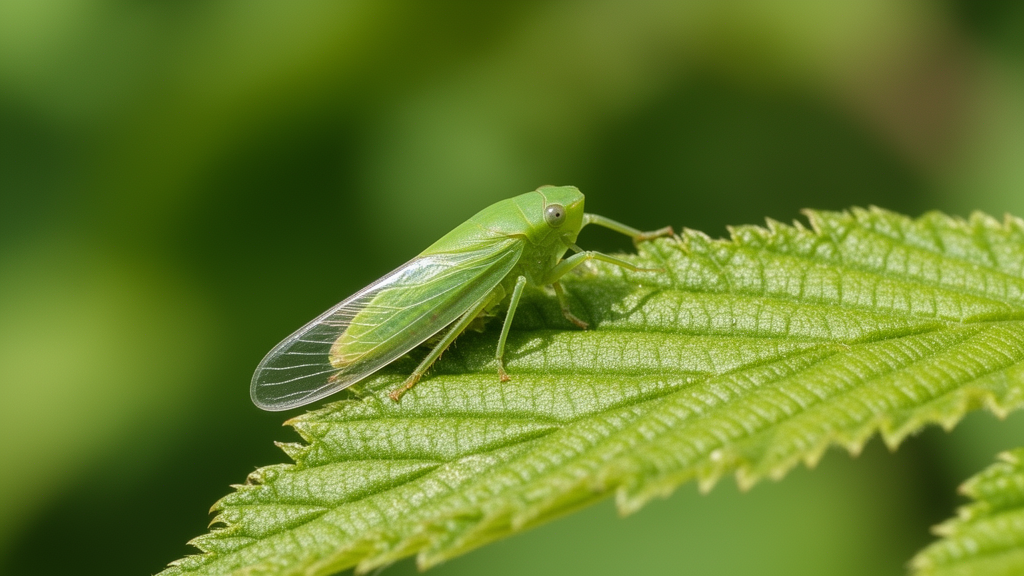
The detection rate among the analyzed O. ishidae was 1 in 283, and the positive result came from monitoring designed primarily to investigate Flavescence dorée vectors rather than from a dedicated survey of Ca. O. ishidae is native to Asia and was first recorded in Europe in 1998. It has since spread across most of the continent and occurs in pre-Alpine and Alpine regions.
Reported host plants include Corylus avellana, Acer species, Alnus glutinosa, Salix species, and Carpinus betulus, many of which are common near vineyards. Previous studies documented its ability to acquire Flavescence dorée phytoplasmas and other phytoplasmas from additional ribosomal groups. The insect can also lay eggs on grapevines and gone-wild grapevines, potentially giving newly hatched nymphs direct access to plant material.
The single positive insect also does not establish a transmission pathway or quantify population-level prevalence. The authors describe O. ishidae as a potential “wild-card” in several phytoplasma pathosystems and call for research on its ecology, agricultural relevance, and possible effects on spontaneous woody plants across the Alpine region.
Subject of Research: First Swiss detection of a phytoplasma in Orientus ishidae through molecular surveillance
Article Title: First detection of ‘ Candidatus Phytoplasma ulmi’ in Switzerland and in Orientus ishidae Matsumura, 1902
Article References: Oggier, A., Debonneville, C., Conedera, M., Schumpp, O., & Rizzoli, A. (2024). First detection of ‘Candidatus Phytoplasma ulmi’ in Switzerland and in Orientus ishidae Matsumura, 1902. Alpine Entomology, 8, 29-34. https://doi.org/10.3897/alpento.8.115588
Image Credits: AI Generated
Keywords: Candidatus Phytoplasma ulmi, Orientus ishidae, Canton Ticino, molecular surveillance, leafhoppers, phytoplasma, Flavescence dorée, plant pathology, Switzerland, 16SrV-A, First, detection
News Source: Drew Townsend. (October 20, 2026). Molecular surveillance finds first Swiss record of ‘Candidatus Phytoplasma ulmi’ in a leafhopper. Scienmag.