• HOME
  • NEWS
  • EXPLORE
    • CAREER
      • Companies
      • Jobs
    • EVENTS
    • iGEM
      • News
      • Team
    • PHOTOS
    • VIDEO
    • WIKI
  • BLOG
  • COMMUNITY
    • FACEBOOK
    • INSTAGRAM
    • TWITTER
Monday, May 11, 2026
BIOENGINEER.ORG
No Result
View All Result
  • Login
  • HOME
  • NEWS
  • EXPLORE
    • CAREER
      • Companies
      • Jobs
        • Lecturer
        • PhD Studentship
        • Postdoc
        • Research Assistant
    • EVENTS
    • iGEM
      • News
      • Team
    • PHOTOS
    • VIDEO
    • WIKI
  • BLOG
  • COMMUNITY
    • FACEBOOK
    • INSTAGRAM
    • TWITTER
  • HOME
  • NEWS
  • EXPLORE
    • CAREER
      • Companies
      • Jobs
        • Lecturer
        • PhD Studentship
        • Postdoc
        • Research Assistant
    • EVENTS
    • iGEM
      • News
      • Team
    • PHOTOS
    • VIDEO
    • WIKI
  • BLOG
  • COMMUNITY
    • FACEBOOK
    • INSTAGRAM
    • TWITTER
No Result
View All Result
Bioengineer.org
No Result
View All Result
Home NEWS Science News Health

Mobile smartphone technology is associated with better clinical outcomes for OHCA

Bioengineer by Bioengineer
October 30, 2020
in Health
Reading Time: 2 mins read
0
IMAGE
Share on FacebookShare on TwitterShare on LinkedinShare on RedditShare on Telegram

IMAGE

Credit: KIRSTY CHALLEN, B.SC., MBCHB, MRES, PH.D., LANCASHIRE TEACHING HOSPITALS, UNITED KINGDOM

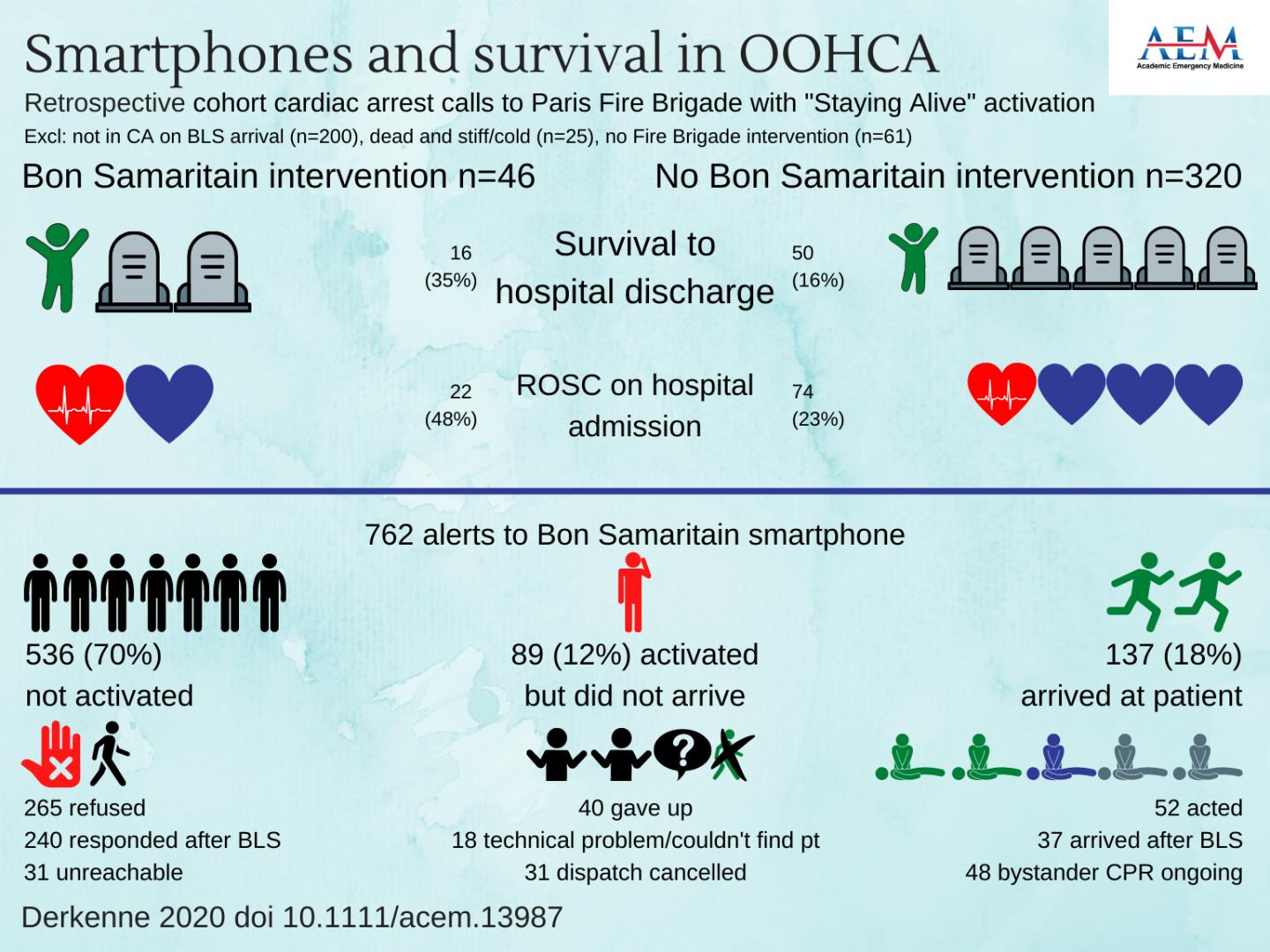
DES PLAINES, IL — Mobile smartphone technology can accelerate first responder dispatch and may be instrumental to improving out of hospital cardiac arrest (OCHA) survival. That is the conclusion of a study published in the October 2020 issue of Academic Emergency Medicine (AEM), a journal of the Society for Academic Emergency Medicine (SAEM).

The lead author of the study is Dr. Clement Derkenne, an emergency physician in the emergency medical department, Paris Fire Brigade, Clamart, France. The findings of the study are discussed in a recent AEM podcast, We Didn’t Start the Fire, But Can Antiacid Monotherapy Stop the Fire?

In France, the introduction of the mobile application “Staying Alive” (a free mobile smartphone application, available in 18 languages and compatible with all operating systems) improved healthcare delivery and OHCA survival outcomes within one year in the Greater Paris area (July 2017 to 2018).

The application allows registered first responders, commonly referred to as “Bons Samaritains” (BS), located near an OHCA scene, to be alerted via a “push notification.” Upon acknowledgment of the notification, available BS are directed toward the scene of OHCA and receive a map of AEDs in the area.

SA is available on all smartphone platforms and uses geolocalization services to flag nearby AEDs. It was first integrated to the Paris Fire Brigade Greater Paris Area CPR protocols in 2017.

The study researchers concluded that smartphone apps that match trained responders to nearby cardiac arrest victims may be a valuable way to improve response times in out of hospital cardiae arrest; however, their impact on clinical outcomes and overall cost effectiveness remains unclear.

###

ABOUT ACADEMIC EMERGENCY MEDICINE

Academic Emergency Medicine, the monthly journal of Society for Academic Emergency Medicine, features the best in peer-reviewed, cutting-edge original research relevant to the practice and investigation of emergency care. The above study is published open access and can be downloaded by following the DOI link: 10.1111/acem.13987. Journalists wishing to interview the authors may contact Stacey Roseen at [email protected].

ABOUT THE SOCIETY FOR ACADEMIC EMERGENCY MEDICINE

SAEM is a 501(c)(3) not-for-profit organization dedicated to the improvement of care of the acutely ill and injured patient by leading the advancement of academic emergency medicine through education and research, advocacy, and professional development. To learn more, visit saem.org.

Media Contact
Stacey Roseen
[email protected]

Related Journal Article

http://dx.doi.org/10.1111/acem.13987

Tags: CardiologyClinical TrialsCritical Care/Emergency MedicineHealth Care Systems/ServicesHealth ProfessionalsMedicine/Health
Share12Tweet8Share2ShareShareShare2

Related Posts

New Post-Hoc Analysis Explores Daily Oral Orforglipron Use in Adults Over 65 with Obesity, Regardless of Diabetes Status

May 11, 2026

Evaluating Digoxin Use in Patients with Symptomatic Rheumatic Heart Disease

May 10, 2026

Evaluating the Effectiveness and Safety of Digitalis Glycosides in Treating Heart Failure

May 10, 2026

Urdu Fall Risk Questionnaire Adapted for Elderly

May 10, 2026
Please login to join discussion

POPULAR NEWS

  • Research Indicates Potential Connection Between Prenatal Medication Exposure and Elevated Autism Risk

    840 shares
    Share 336 Tweet 210
  • New Study Reveals Plants Can Detect the Sound of Rain

    727 shares
    Share 290 Tweet 181
  • Salmonella Haem Blocks Macrophages, Boosts Infection

    61 shares
    Share 24 Tweet 15
  • Breastmilk Balances E. coli and Beneficial Bacteria in Infant Gut Microbiomes

    57 shares
    Share 23 Tweet 14

About

We bring you the latest biotechnology news from best research centers and universities around the world. Check our website.

Follow us

Recent News

New Post-Hoc Analysis Explores Daily Oral Orforglipron Use in Adults Over 65 with Obesity, Regardless of Diabetes Status

Evaluating Digoxin Use in Patients with Symptomatic Rheumatic Heart Disease

Evaluating the Effectiveness and Safety of Digitalis Glycosides in Treating Heart Failure

Subscribe to Blog via Email

Enter your email address to subscribe to this blog and receive notifications of new posts by email.

Join 82 other subscribers
  • Contact Us

Bioengineer.org © Copyright 2023 All Rights Reserved.

Welcome Back!

Login to your account below

Forgotten Password?

Retrieve your password

Please enter your username or email address to reset your password.

Log In
No Result
View All Result
  • Homepages
    • Home Page 1
    • Home Page 2
  • News
  • National
  • Business
  • Health
  • Lifestyle
  • Science

Bioengineer.org © Copyright 2023 All Rights Reserved.