Osteoarthritis has long been viewed as a disease of worn cartilage, but researchers reviewing the field argue that its clinical burden of chronic pain, functional impairment and reduced quality of life cannot be explained by structural damage alone. In patients, the severity of imaging-detected joint damage and the intensity of pain often do not match, pointing to additional drivers such as metabolic disturbance, inflammatory amplification and neural sensitization.
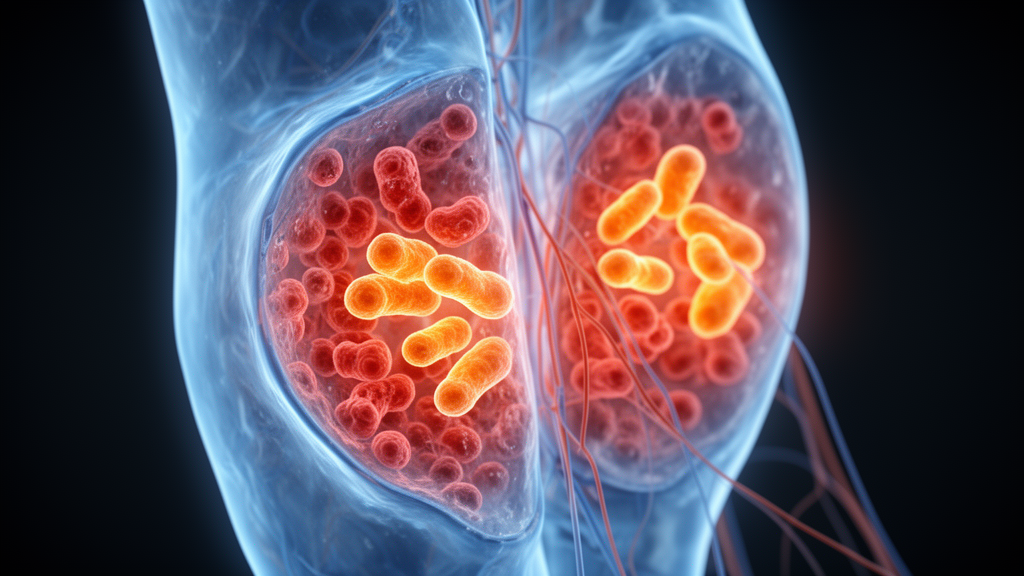
A synthesis published in the osteoarthritis literature proposes that mitochondria are central to this mismatch. Abnormalities in these energy-producing organelles have been observed across cartilage, synovium, subchondral bone and sensory nerve-related compartments. In chondrocytes, the cartilage cells, disruption of mitochondrial homeostasis is accompanied by imbalanced energy metabolism, oxidative stress, impaired quality control and damage to mitochondrial DNA. These changes are associated with cell aging, regulated cell death and degradation of the cartilage matrix.
Importantly, the review stresses that evidence strength and causal hierarchy differ between tissue compartments. Mitochondrial stress in the synovium, subchondral bone and neural compartments may contribute to local inflammation, abnormal bone remodeling and peripheral and central pain sensitization, but the mechanisms are not equally well established everywhere.
The authors highlight potential cross-compartment communication through mitochondria-derived damage-associated molecular patterns and other inflammatory mediators, which could in principle transmit stress signals from one joint tissue to another. However, they are explicit that current evidence is insufficient to establish a continuous causal chain running unidirectionally from cartilage degeneration to pain sensitization. They therefore recommend regarding mitochondria in osteoarthritis as a pathological network shared across multiple tissue compartments and potentially interacting with one another, rather than a single-organ defect.
Building on this perspective, the review uses a hypothesized “metabolism-senescence-pain axis” as a framework for organizing what is known about mitochondrial dysfunction in structural degeneration, cell aging, regulated cell death and pain sensitization, while carefully distinguishing findings from cartilage, synovium, subchondral bone, sensory neurons and central nervous system-related compartments.
By integrating human, animal, in vitro and translational studies, the authors stratify the existing evidence and summarize progress on mitochondria-directed and related therapeutic strategies, along with the barriers that have so far limited their translation into the clinic. Because much of the mechanistic picture rests on animal and cell models, the translational relevance to patients remains an open question.
Looking forward, the review proposes future research directions including cell type-specific delivery of therapeutics, mitochondrial biomarkers, candidate pain-mechanism phenotypes for classifying patients, and composite endpoints that combine mechanism, symptom and structure measures. The authors position this framework as a foundation for dissecting mechanistic heterogeneity, enabling patient stratification and supporting precision intervention in osteoarthritis, a disease in which symptom persistence often outpaces what structural changes alone can explain.
Subject of Research: Mitochondrial dysfunction as a multi-tissue network in osteoarthritis degeneration and pain sensitization
Article Title: From cartilage degeneration to pain sensitization: a multi-tissue mitochondrial dysfunction network in osteoarthritis
Article References: Yang, K., Li, L., & Yu, H. (2026). From cartilage degeneration to pain sensitization: a multi-tissue mitochondrial dysfunction network in osteoarthritis. Frontiers in Cell and Developmental Biology, 14, Article 1914283. https://doi.org/10.3389/fcell.2026.1914283
Image Credits: AI Generated
DOI: 10.3389/fcell.2026.1914283
Keywords: osteoarthritis, mitochondria, pain sensitization, cartilage degeneration, synovium, subchondral bone, oxidative stress, cell senescence, DAMPs, neuroimmune signaling, biomarkers, precision medicine
News Source: Drew Townsend. (October 23, 2026). Mitochondrial Dysfunction Emerges as a Shared Network Behind Osteoarthritis Pain. Scienmag.