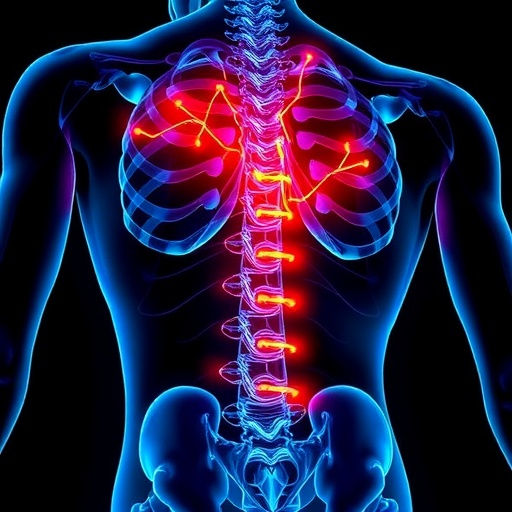
Low back pain may be common, but one of its most stubborn biological causes is hidden deep inside the spine: the gradual breakdown of the intervertebral discs that cushion the vertebrae. A new review argues that the tiny power stations inside disc cells—mitochondria—could become a central target for future treatments. Rather than treating disc degeneration only as a mechanical failure, the authors describe it as a disease driven in part by cellular energy collapse, oxidative damage and inflammatory signaling. Their analysis presents mitochondria-targeted therapy as a potentially transformative strategy, while stressing that most approaches remain at the preclinical stage. The review, published in Advanced Composites and Hybrid Materials, brings together emerging work on targeted molecules, nanotechnology-based drug delivery and mitochondrial supplementation. Its core message is striking: repairing the cell’s energy machinery may help preserve the spinal structures that conventional treatments cannot regenerate.
Intervertebral discs sit between adjacent vertebrae and absorb the forces generated by walking, lifting and twisting. Each disc contains a gelatinous central nucleus pulposus surrounded by a tough, layered annulus fibrosus, with thin cartilage endplates connecting the structure to nearby vertebral bone. These tissues are unusual because they receive limited blood supply, particularly in their inner regions. Disc cells must therefore survive in a relatively nutrient-poor, low-oxygen environment while maintaining the extracellular matrix that gives the disc its flexibility and load-bearing capacity. During degeneration, the matrix is progressively dismantled: molecules such as proteoglycans and type II collagen decline, water content falls, and the disc loses height and mechanical resilience. Cracks can develop in the annulus, while inflammatory mediators and enzymes accelerate tissue destruction. The resulting changes can irritate surrounding nerves or alter spinal biomechanics, contributing to persistent pain.
The review by Yidian Wang, Pengfei Wen, Binfei Zhang, Shouye Hu, Xuewen Kang and Zhi Yang focuses on how mitochondrial dysfunction may intensify this destructive cycle. Mitochondria generate adenosine triphosphate, or ATP, through oxidative phosphorylation, a process that converts chemical energy from nutrients into the immediately usable energy required by cells. They also regulate calcium balance, programmed cell death and the production of reactive oxygen species. In healthy disc cells, mitochondrial activity must be carefully controlled: too little ATP can impair matrix synthesis, while excessive reactive oxygen species can damage proteins, lipids and DNA. When damaged mitochondria accumulate, they may leak still more reactive molecules and trigger inflammatory pathways. This creates a feedback loop in which energy failure weakens the cell, oxidative stress injures its components and inflammation further compromises mitochondrial performance.
That loop is especially dangerous in the disc because its cells already operate under harsh physiological conditions. Reduced nutrient transport, mechanical overload, aging and inflammatory stress can all interfere with mitochondrial quality control. Cells normally remove defective mitochondria through a recycling process called mitophagy and replace them through mitochondrial biogenesis. Degeneration can disturb both processes, leaving the tissue with a larger population of dysfunctional organelles. The consequences extend beyond energy production. Mitochondria can release molecular signals associated with cellular danger, activate inflammasomes and promote apoptosis, a controlled form of cell death. Loss of viable disc cells means less capacity to replenish matrix components and repair microscopic damage. The authors therefore frame mitochondria not as a secondary consequence of degeneration but as a possible driver that links mechanical stress, inflammation, oxidative injury and cellular senescence.
Repairing mitochondria inside a degenerating disc, however, is far more difficult than delivering a drug into a well-supplied organ. The disc’s sparse vasculature limits access from the bloodstream, while its dense extracellular matrix can impede the movement of therapeutic molecules. A treatment must reach the correct disc compartment, enter the relevant cells and act within mitochondria without causing toxicity elsewhere. Local injection may improve delivery to the disc, but it introduces additional challenges, including rapid diffusion, leakage, uneven distribution and the risk of damaging already fragile tissue. Systemic treatment faces the opposite problem: a compound may circulate widely but reach the disc at concentrations too low to be effective. The review emphasizes that these anatomical and biological barriers help explain why promising mitochondrial repair strategies have not yet translated into established clinical therapies.
One category discussed is the use of small molecules designed to reduce oxidative stress, stabilize mitochondrial membranes or stimulate the cell’s own quality-control systems. Such compounds may act by improving antioxidant defenses, supporting ATP production, regulating mitophagy or activating pathways involved in mitochondrial biogenesis. Theoretically, restoring mitochondrial balance could reduce the production of reactive oxygen species and interrupt inflammatory signaling before irreversible matrix loss occurs. But broad antioxidant treatment is not automatically beneficial. Reactive oxygen species also function as normal signaling molecules, and indiscriminately eliminating them could interfere with physiological responses. A more precise strategy would deliver the active compound to damaged cells or directly to mitochondria, increasing local efficacy while limiting exposure to healthy tissues. The review presents this specificity as one of the defining goals of mitochondria-targeted medicine.
Nanotechnology offers a possible route to that precision. Nano-drug delivery systems can be engineered from materials that encapsulate therapeutic molecules, protect them from degradation and release them in response to particular chemical or physical conditions. Some designs can be modified with targeting groups that favor uptake by certain cells or accumulation in particular intracellular compartments. Mitochondria possess a negatively charged inner membrane, a feature that has inspired the development of positively charged or mitochondria-seeking carriers. In principle, such systems could transport antioxidants, gene-regulating molecules or other therapeutic agents across cellular membranes and toward the organelle most in need of repair. Within the disc, nanocarriers might also be adapted for sustained release after local administration, helping maintain drug concentrations despite the tissue’s limited circulation. Yet the same properties that make nanoparticles powerful create safety questions: their size, surface chemistry, persistence and breakdown products can influence inflammation, immune responses and long-term tissue compatibility.
The review also considers mitochondrial supplementation, an especially ambitious approach that seeks to provide cells with healthy mitochondria or mitochondrial components. Because mitochondria contain their own DNA and can be transferred between cells under certain circumstances, researchers have investigated whether functional organelles might help rescue cells suffering from energy failure. Related strategies could involve mitochondrial-derived vesicles, isolated mitochondrial material or biological signals that encourage endogenous recovery. The attraction is clear: instead of attempting to repair every defective pathway individually, supplementation could potentially restore a broader package of energy-producing and regulatory functions. But major technical hurdles remain. Mitochondria must survive isolation and delivery, enter the intended cells, integrate with the recipient cell’s network and remain functional in the hostile environment of a degenerated disc. The long-term fate of transplanted material, its immune effects and the possibility of uneven or uncontrolled distribution all require careful study.
For mitochondria-targeted therapy to move toward patients, researchers will need stronger evidence than changes in cell culture markers. Laboratory models should establish whether a treatment genuinely restores ATP production, improves mitochondrial membrane potential, reduces harmful oxidative signaling and normalizes mitophagy. Those molecular improvements must then translate into meaningful tissue outcomes, such as preservation of proteoglycan content, reduced matrix-degrading enzyme activity, improved disc hydration and maintenance of mechanical strength. Animal studies will need to address how therapies behave in discs with anatomy and loading patterns that resemble human disease. The authors also point to the importance of treatment timing. A mitochondrial intervention might be most effective early, when viable disc cells remain and the extracellular matrix is still partly recoverable. In advanced degeneration, restoring cell energy may not be enough to rebuild tissue that has already collapsed.
The review ultimately portrays mitochondria-targeted therapy as a promising framework rather than a ready-made cure for back pain. Its potential lies in addressing a fundamental biological process that links the major features of disc degeneration, but translation will depend on solving delivery, dosing, safety and durability problems simultaneously. Future treatments may combine mitochondrial protection with biomaterials, regenerative cells, anti-inflammatory agents or tissue-engineering scaffolds designed to rebuild the disc’s architecture. Advanced composites and hybrid materials could be particularly useful as local platforms for controlled release, allowing a therapeutic system to remain where it is needed while shielding fragile molecules from rapid clearance. Even so, the path from an elegant mechanism to a safe injection for patients is long. The authors’ analysis makes the field’s promise vivid while underscoring the central challenge: keeping the disc’s microscopic power plants alive may be essential, but medicine must still learn how to reach them, repair them and prove that doing so changes the course of disease.
Subject of Research: Mitochondria-targeted therapies for intervertebral disc degeneration
Subject of Research: Technology and Engineering
Article Title: Mitochondria-targeted therapy: a promising treatment strategy for intervertebral disc degeneration
Article References: Wang, Y., Wen, P., Zhang, B., Hu, S., Kang, X., & Yang, Z. (2026). Mitochondria-targeted therapy: a promising treatment strategy for intervertebral disc degeneration. Advanced Composites and Hybrid Materials. https://doi.org/10.1007/s42114-026-02027-8
Image Credits: AI Generated
DOI: 10.1007/s42114-026-02027-8
Keywords: intervertebral disc degeneration, mitochondrial dysfunction, mitochondria-targeted therapy, low back pain, drug delivery, nanotechnology, mitochondrial supplementation
Cite Scienmag News
APA MLA Chicago
Lydia Kingsley. (August 28, 2026). Mitochondria-Targeted Therapy Shows Promise Against Intervertebral Disc Degeneration. Scienmag. https://scienmag.com/mitochondria-targeted-therapy-shows-promise-against-intervertebral-disc-degeneration/
Lydia Kingsley. “Mitochondria-Targeted Therapy Shows Promise Against Intervertebral Disc Degeneration.” Scienmag, 28 August 2026, https://scienmag.com/mitochondria-targeted-therapy-shows-promise-against-intervertebral-disc-degeneration/. Accessed 28 August 2026.
Lydia Kingsley. “Mitochondria-Targeted Therapy Shows Promise Against Intervertebral Disc Degeneration.” Scienmag. August 28, 2026. https://scienmag.com/mitochondria-targeted-therapy-shows-promise-against-intervertebral-disc-degeneration/
Copy citation Download RIS
Tags: cellular energy collapse in discscellular energy failure in disc cellsemerging treatments for chronic back paininflammation in disc diseaseintervertebral disc degenerationmitochondria-targeted therapymitochondrial dysfunction in intervertebral discsmitochondrial supplementation for spinal repairmitochondrial supplementation for spine healthnanotechnology-based drug deliverynanotechnology-based drug delivery for spinal treatmentsnovel approaches to prevent intervertebral disc breakdownnovel approaches to treat low back painoxidative damage and inflammation in disc degenerationoxidative damage in spinal discspreclinical research in spine therapyregenerative therapies for disc degenerationregenerative treatments for intervertebral discsrole of mitochondria in disc degenerationrole of mitochondria in spinal cell healthspinal health and low back pain