• HOME
  • NEWS
  • EXPLORE
    • CAREER
      • Companies
      • Jobs
    • EVENTS
    • iGEM
      • News
      • Team
    • PHOTOS
    • VIDEO
    • WIKI
  • BLOG
  • COMMUNITY
    • FACEBOOK
    • INSTAGRAM
    • TWITTER
Wednesday, May 27, 2026
BIOENGINEER.ORG
No Result
View All Result
  • Login
  • HOME
  • NEWS
  • EXPLORE
    • CAREER
      • Companies
      • Jobs
        • Lecturer
        • PhD Studentship
        • Postdoc
        • Research Assistant
    • EVENTS
    • iGEM
      • News
      • Team
    • PHOTOS
    • VIDEO
    • WIKI
  • BLOG
  • COMMUNITY
    • FACEBOOK
    • INSTAGRAM
    • TWITTER
  • HOME
  • NEWS
  • EXPLORE
    • CAREER
      • Companies
      • Jobs
        • Lecturer
        • PhD Studentship
        • Postdoc
        • Research Assistant
    • EVENTS
    • iGEM
      • News
      • Team
    • PHOTOS
    • VIDEO
    • WIKI
  • BLOG
  • COMMUNITY
    • FACEBOOK
    • INSTAGRAM
    • TWITTER
No Result
View All Result
Bioengineer.org
No Result
View All Result
Home NEWS Science News

Mitochondria drive cell survival in times of need

Bioengineer by Bioengineer
September 21, 2017
in Science News
Reading Time: 2 mins read
0
Share on FacebookShare on TwitterShare on LinkedinShare on RedditShare on Telegram
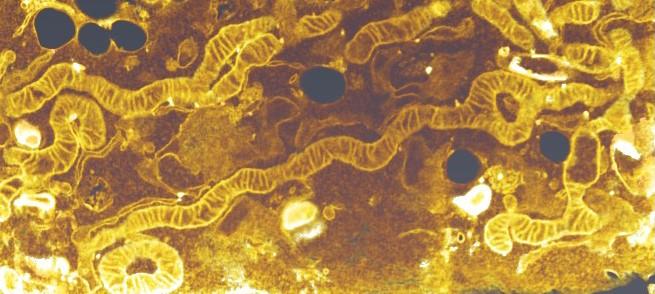
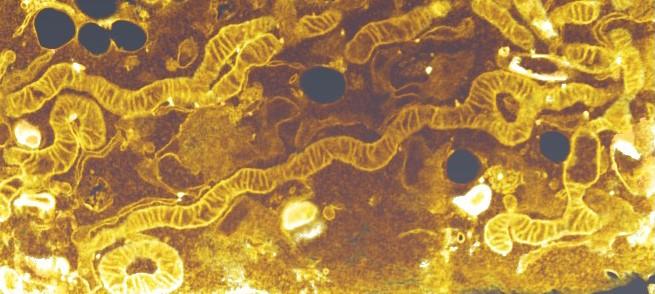
IMAGE

Credit: Facility for Electron Microscopy Research/McGill University Department of Anatomy and Cell Biology

McGill University researchers have discovered a mechanism through which mitochondria, the energy factory of our body's cells, play a role in preventing cells from dying when the cells are deprived of nutrients – a finding that points to a potential target for next-generation cancer drugs.

The research, published in Molecular Cell, builds on previous work by McGill professor Nahum Sonenberg, one of the senior authors of the new study.

Cells in our body grow in size, mass and numbers through a process governed by a master regulator known as mTOR (Mechanistic Target of Rapamycin). Sonenberg discovered years ago that mTOR also controls protein expression in all human cells. In particular, mTOR targets the selective synthesis of proteins destined for the mitochondria, the bacteria-like structures in all our cells that generate the energy needed for cells to grow and divide.

In collaboration with the research labs of McGill scientists Heidi McBride and John Bergeron, Sonenberg and his team have now shown that mTOR also controls the expression of proteins that alter the structure and function of mitochondria — thereby protecting cells from dying.

Their work has implications for cancer therapy, since new drugs that act on mTOR are currently in clinical trials for cancer. While the treatments are effective in arresting the expansion and growth of cancer cells, the cells continue to survive, despite a shortage of nutrients. The new study reveals that mitochondria help keep these cells alive by fusing together and blocking a central point in a cell death pathway, called apoptosis.

This advance offers clues to develop combination therapies that could promote cancer-cell death by reversing the protection offered by mitochondria, the researchers say.

###

Two postdoctoral fellows from the Sonenberg and McBride labs, Masahiro Morita currently at the University of Texas Health Science Center at San Antonio, and Julien Prudent, currently at MRC Mitochondrial Biology Unit in Cambridge, UK, led the collaborative team, working together to map the details of this cellular survival pathway.

"mTOR Controls Mitochondrial Dynamics and Cell Survival via MTFP1," Masahiro Morita, Julien Prudent, et al. Molecular Cell, Sept. 21, 2017 DOI: 10.1016/j.molcel.2017.08.013

Funding for the research was provided in part by the Canadian Institutes of Health Research, the Canadian Cancer Society Research Institute, the Terry Fox Research Institute, and the National Sciences and Engineering Research Council of Canada.

Media Contact

Cynthia Lee
[email protected]
514-398-6754
@McGillU

http://www.mcgill.ca

Share20Tweet8Share2ShareShareShare2

Related Posts

Did Heart Health Influence the Severity of COVID-19 Infections During the Pandemic?

May 27, 2026

Heart Health Linked to Severity of COVID-19 Infection During the Pandemic

May 27, 2026

Robust Single-Mode Laser Created by Merging Bound States

May 27, 2026

Eravacycline and Omadacycline Against Acinetobacter Baumannii

May 27, 2026
Please login to join discussion

POPULAR NEWS

  • ESMO 2025: mRNA COVID Vaccines Enhance Efficacy of Cancer Immunotherapy

    317 shares
    Share 127 Tweet 79
  • New Study Reveals Plants Can Detect the Sound of Rain

    735 shares
    Share 293 Tweet 183
  • Common Food Preservatives Associated with Elevated Blood Pressure and Increased Heart Disease Risk

    56 shares
    Share 22 Tweet 14
  • AI-Powered Atlas Uncovers Extensive Whole-Body Damage Linked to Obesity

    53 shares
    Share 21 Tweet 13

About

We bring you the latest biotechnology news from best research centers and universities around the world. Check our website.

Follow us

Recent News

Did Heart Health Influence the Severity of COVID-19 Infections During the Pandemic?

Heart Health Linked to Severity of COVID-19 Infection During the Pandemic

Robust Single-Mode Laser Created by Merging Bound States

Subscribe to Blog via Email

Enter your email address to subscribe to this blog and receive notifications of new posts by email.

Join 82 other subscribers
  • Contact Us

Bioengineer.org © Copyright 2023 All Rights Reserved.

Welcome Back!

Login to your account below

Forgotten Password?

Retrieve your password

Please enter your username or email address to reset your password.

Log In
No Result
View All Result
  • Homepages
    • Home Page 1
    • Home Page 2
  • News
  • National
  • Business
  • Health
  • Lifestyle
  • Science

Bioengineer.org © Copyright 2023 All Rights Reserved.