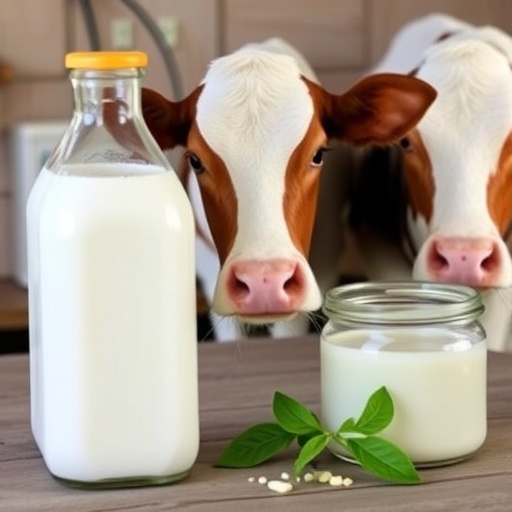
When you buy milk, the nutrition profile may shift with both labeling and season. A year-long study presented at NUTRITION 2026 reports that omega-3 fatty acids are highest in organic grass-fed milk and lowest in conventionally produced milk, while other fatty acid patterns depend on dairy system and time of year.
Researchers led by Emily Youngmark, MS, of the University of Vermont analyzed more than 300 milk samples purchased from retailers across Vermont and New York. Using producer information and label claims, each sample was grouped as conventional, organic, organic grass-fed, or non-organic pasture-based.
Across all seasons, organic grass-fed milk contained significantly more omega-3 fatty acids than every comparison group. The average was 88 milligrams per serving versus 25 mg per serving in conventionally produced milk, indicating a consistent difference aligned with pasture-based feeding and management.
In contrast, omega-6 fatty acids were highest in conventional milk, averaging 166 mg per serving compared with 92 mg per serving in organic grass-fed milk. Omega-6 and omega-3 fatty acids are both dietary components, but many nutrition guidelines emphasize raising omega-3 intake to support cardiovascular and metabolic health.
The study also examined seasonal structure. The fatty acid composition of non-organic pasture-based milk was generally similar to organic milk, with notable fluctuations across the year rather than a single uniform profile.
A key driver proposed by the researchers is forage quality. As pasture and fresh forage availability change with seasons, the underlying fatty acid precursors in cow diets can shift, reshaping the milk fatty acid balance.
Although differences between production systems were statistically significant, the team cautions that health implications remain uncertain. Further research is needed to determine whether everyday consumption translates into measurable clinical outcomes.
Youngmark emphasized context: the observed fatty acid variations are unlikely to produce major health effects by themselves. Instead, organic grass-fed milk may contribute as one component within an overall healthy dietary pattern and lifestyle.
The work will be shared during the Dietary Bioactive Components (II) Poster Session on Monday, July 27, at NUTRITION 2026. The abstract has been selected by experts but has not yet undergone the peer-review process required for journal publication.
Subject of Research: Seasonal and production-system effects on fatty acid composition in milk
Article Title: Seasonal variation in health-relevant fatty acids in milk across production systems
News Publication Date: July 27, 2026
Web References: https://www.dropbox.com/scl/fi/uzpxpot03xmsi9qyf3xaj/Youngmark-Kraft-milk-abstract.pdf?rlkey=4p5bk1lv6cqniw2h2nhqjnw06&dl=0
References: NUTRITION 2026 Dietary Bioactive Components (II) Poster Session
Image Credits: Emily Youngmark
Keywords
milk; fatty acids; omega-3; omega-6; organic; grass-fed; pasture-based; seasonality; dairy production systems; NUTRITION 2026
Tags: dairy production methods and nutritiondairy system comparisonshealth benefits of omega-3 in dairyimpact of pasture-based feeding on milkinfluence of farming practices on milk nutrientsmilk nutritional profilenutrition labeling accuracy in dairy productsomega-3 fatty acids in milkorganic grass-fed vs conventional milkseasonal and production method effects on milk compositionseasonal changes in milk fatty acidsseasonal variation in milk nutrients