


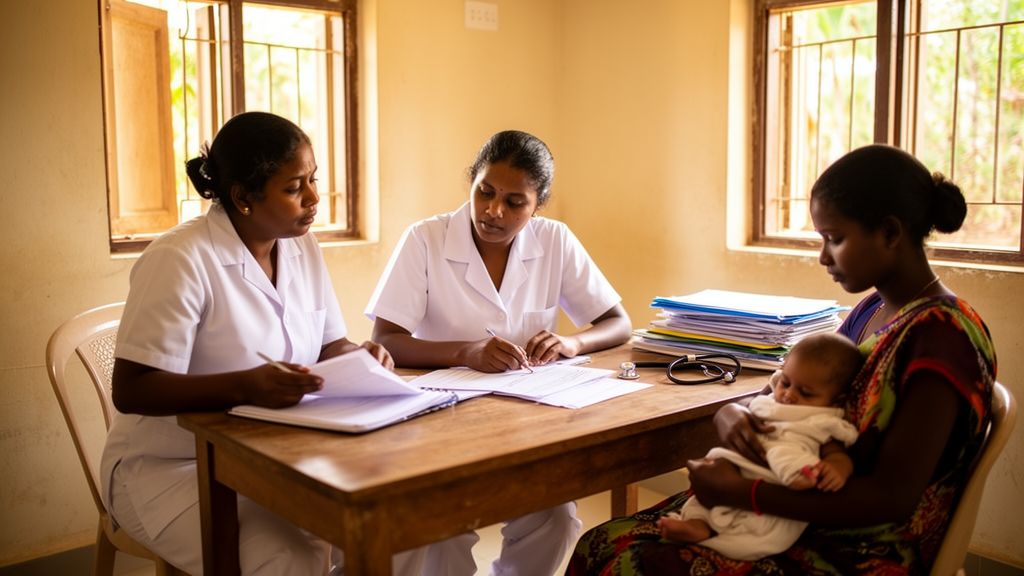
Most midwives in Sri Lanka’s Jaffna district have only a moderate grasp of postpartum depression and how to manage it, according to a descriptive cross-sectional study published in BMC Nursing. The finding matters because midwives are often the first health professionals positioned to spot the condition in the community, where it affects an estimated 10–15% of women after childbirth and carries risks for maternal well-being, infant development and family health.
Researchers surveyed 215 eligible midwives in the district, of whom 186 responded, a response rate of 86.5%. Data were collected with a self-administered questionnaire covering socio-demographic characteristics, service-related factors, and knowledge of postpartum depression and its management. The questionnaire was developed by the researcher with guidance from supervisors, reviewed for clarity and relevance, and pretested among five midwives who were excluded from the main study. Knowledge scores were converted into percentages and categorised using commonly applied KAP cut-off criteria: good knowledge at 80–100%, moderate at 60–79%, and poor below 60%.
The results showed that over half of the midwives demonstrated a moderate level of knowledge about postpartum depression. The majority of participants were aged 31–40 years and had completed Advanced Level midwifery training. Knowledge levels were significantly associated with age, educational level, years of professional experience, and postpartum depression-related training or practical experience, with p values below 0.05. Higher proportions of good knowledge were observed among midwives aged 36–50 years, those with diploma-level education, and those with ten or fewer years of professional experience.
The authors caution that although most midwives demonstrated moderate knowledge, gaps remain in certain areas of recognition and management of the condition. Because the study was descriptive and cross-sectional and confined to a single district, it captures a snapshot of knowledge among these midwives rather than changes over time or causal effects, and its findings apply to the surveyed population in Jaffna.
Based on the results, the study recommends targeted educational interventions and continuous professional development programmes to strengthen midwives’ capacity to identify and manage postpartum depression effectively, with the aim of improving maternal mental health outcomes in the region. The article was published open access on 23 October 2026 by Thurka Preman, Luxmi Kamalarupan and Sambasivamoorthy Sivayokan, and is being shared early as a citable, peer-reviewed accepted version subject to further edits before the final Version of Record.
Subject of Research: Knowledge of postpartum depression and its management among midwives in Jaffna district, Sri Lanka
Article Title: Knowledge of postpartum depression and its management among midwives in Jaffna district, Sri Lanka: a descriptive cross-sectional study
Article References: Preman, T., Kamalarupan, L., & Sivayokan, S. (2026). Knowledge of postpartum depression and its management among midwives in Jaffna district, Sri Lanka: a descriptive cross-sectional study. BMC Nursing. https://doi.org/10.1186/s12912-026-05564-1
Image Credits: AI Generated
DOI: 10.1186/s12912-026-05564-1
Keywords: postpartum depression, midwives, Sri Lanka, Jaffna district, cross-sectional study, maternal mental health, knowledge levels, nursing, professional development, BMC Nursing, Knowledge, postpartum
News Source: Glenn Wilkins. (October 29, 2026). Midwives in Jaffna show moderate knowledge of postpartum depression, study finds. Scienmag.



