Known to be fine regulators of gene expression, microRNAs are small molecules that remain particularly stable in biofluids—blood, urine, etc. In humans, these molecules have revealed great potential as prognostic or diagnostic tools for many diseases such as various cancers, strokes, and, particularly, heart attacks. However, few studies have been carried out on their potential as non-invasive biomarkers in animals, either for disease control or as a tool to assess their physiological status. This lack of information is particularly noticeable in cold-blooded aquatic species, whose physiological status is directly affected by environmental fluctuations, both in the wild and on farms. For this reason, specialists in fish reproduction and nutrition at INRAE, in collaboration with an American team from the University of Oregon, decided to conduct a study to evaluate the potential of circulating microRNAs as biomarkers of the metabolic or reproductive state of fish.
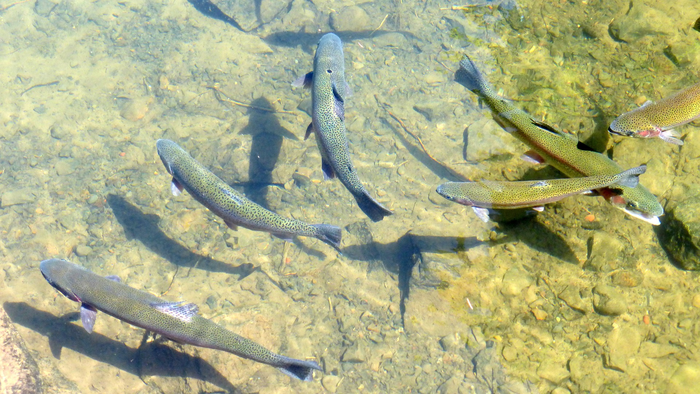
Credit: Pixabay
Known to be fine regulators of gene expression, microRNAs are small molecules that remain particularly stable in biofluids—blood, urine, etc. In humans, these molecules have revealed great potential as prognostic or diagnostic tools for many diseases such as various cancers, strokes, and, particularly, heart attacks. However, few studies have been carried out on their potential as non-invasive biomarkers in animals, either for disease control or as a tool to assess their physiological status. This lack of information is particularly noticeable in cold-blooded aquatic species, whose physiological status is directly affected by environmental fluctuations, both in the wild and on farms. For this reason, specialists in fish reproduction and nutrition at INRAE, in collaboration with an American team from the University of Oregon, decided to conduct a study to evaluate the potential of circulating microRNAs as biomarkers of the metabolic or reproductive state of fish.
The team conducted their work on rainbow trout—the predominant fish species in French aquaculture—by first establishing a comprehensive sequence annotation of expressed microRNAs in the species. Then, they used a simple blood sample to carry out PCR analyses—a genetic analysis method used here to identify and measure microRNAs—which enabled them to identify microRNAs showing major changes in abundance, depending on the physiological status of the animal. Most notably, they characterised a microRNA that could detect, and even predict, ovulation and egg quality in fish. The researchers were also able to identify a growth signature, since their results showed an over-abundance of some specific microRNAs, called myomiRs, under conditions of high fish growth. MyomiRs are actually known to be involved in high episodes of muscle growth in many other animals as well.
This innovative study opens up great possibilities, since non-invasive biomarkers—accessible from a simple blood test and quantifiable by PCR—could not only avoid costly and time-consuming experimental procedures, but also facilitate access to valuable information on the physiological or pathological state of living animals. Their results might also lead to the development of a wide range of applications to monitor the physiological state of animals, both for researchers and veterinary specialists. In the future, thanks to the identification of generic biomarkers like myomiRs—which are present in many animal species—similar studies might be carried out for other species.
Journal
BMC Biology
DOI
10.1186/s12915-021-01163-5
Article Title
Circulating miRNA repertoire as a biomarker of metabolic and reproductive states in raindow trout
Article Publication Date
16-Nov-2021