• HOME
  • NEWS
  • EXPLORE
    • CAREER
      • Companies
      • Jobs
    • EVENTS
    • iGEM
      • News
      • Team
    • PHOTOS
    • VIDEO
    • WIKI
  • BLOG
  • COMMUNITY
    • FACEBOOK
    • INSTAGRAM
    • TWITTER
Monday, May 18, 2026
BIOENGINEER.ORG
No Result
View All Result
  • Login
  • HOME
  • NEWS
  • EXPLORE
    • CAREER
      • Companies
      • Jobs
        • Lecturer
        • PhD Studentship
        • Postdoc
        • Research Assistant
    • EVENTS
    • iGEM
      • News
      • Team
    • PHOTOS
    • VIDEO
    • WIKI
  • BLOG
  • COMMUNITY
    • FACEBOOK
    • INSTAGRAM
    • TWITTER
  • HOME
  • NEWS
  • EXPLORE
    • CAREER
      • Companies
      • Jobs
        • Lecturer
        • PhD Studentship
        • Postdoc
        • Research Assistant
    • EVENTS
    • iGEM
      • News
      • Team
    • PHOTOS
    • VIDEO
    • WIKI
  • BLOG
  • COMMUNITY
    • FACEBOOK
    • INSTAGRAM
    • TWITTER
No Result
View All Result
Bioengineer.org
No Result
View All Result
Home NEWS Science News Biology

Microplastic pollution accumulates heavily in coastal areas such as fjords and estuaries

Bioengineer by Bioengineer
June 30, 2020
in Biology
Reading Time: 3 mins read
0
IMAGE
Share on FacebookShare on TwitterShare on LinkedinShare on RedditShare on Telegram

IMAGE

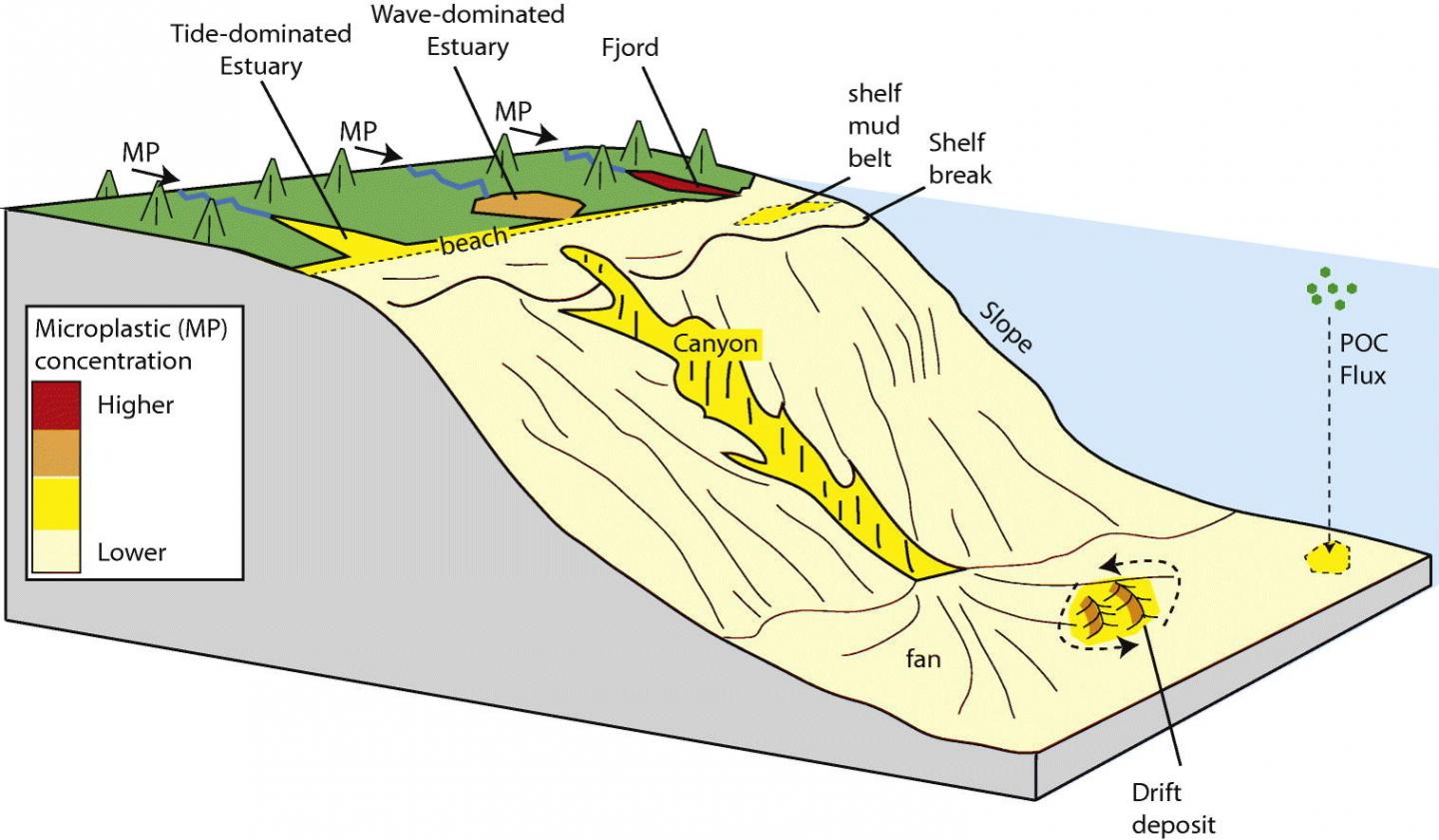
Credit: Peter T. Harris, https://doi.org/10.1016/j.marpolbul.2020.111398

Microplastic pollution in marine environments is concentrated most highly in coastal habitats, especially fjords and estuaries, according to a new review article published in the journal Marine Pollution Bulletin. Deep sea environments generally have much lower microplastic concentrations, although there are hotspots where elevated concentrations of microplastic occur.

Each year humans produce 360 million tonnes of plastic, and according to one study, around 8 million tonnes of it enters the ocean. Until recently the fate of microplastics (particles less than 5 mm in size) in the ocean has been unclear, but recent research has found that microscopic particles often settle in marine sediments, following the pattern of other pollutants.

The new review article – written by marine geologist Peter Harris, managing director of GRID-Arendal – includes information from more than 80 research papers that each reported measurements of microplastic found in sediments in one or more marine environments. Combining the results of all 80 papers shows that the overall pattern of microplastic pollution mirrors the pathways of natural sediment accumulation in which most material is deposited close to its input source, at the mouths of rivers and generally close to the coastline. Some environments, like fjords, lagoons, and estuaries, are naturally more efficient at trapping sediment and microplastic particles. Others, including highly energetic beaches and wave- and tide-dominated river deltas and estuaries, show less microplastic accumulation; they leak a significant fraction of especially fine sediments and microplastic particles to deep-water, offshore environments.

Microplastic pollution was found in fjords at a median concentration of around 7,000 particles per kilogram, and in some cases as high as 200,000 particles per kilogram of sediment. Concentrations were found to be lower in other marine environments: around 300 particles per kilogram in estuarine environments, 200 in beaches, and 80 in deep sea environments.

The article identified critical gaps that should be addressed by further research. More measurements of microplastic accumulation rates are needed from different environments in order to model the actual fate of microplastic pollution in the marine environment. Around 80% of published studies are from beach environments, as beaches are easily accessible for collecting samples, but more study is needed of other environments such as estuaries, lagoons, and fjords. Also, more measurements of the mass of microplastics (i.e. grams of plastic per kilogram of sediment) are needed. Only three out of the 80 studies surveyed included data on the mass of microplastics, while the vast majority of studies reported on the number of particles per kilogram of sediment. In order to understand how microplastic is dispersed in the ocean, we need quantitative data on the rate of the mass of plastic accumulating (g m-2 yr-1) from many different environments.

The findings of this work will be included in a new marine litter vital graphics publication that is being prepared by GRID-Arendal in collaboration with the UN Environment Programme.

###

Media Contact
Lisa Hymas
[email protected]

Original Source

https://www.grida.no/press_releases/6

Related Journal Article

http://dx.doi.org/10.1016/j.marpolbul.2020.111398

Tags: BiologyEarth ScienceEcology/EnvironmentGeology/SoilHydrology/Water ResourcesMarine/Freshwater BiologyOceanographyPollution/Remediation
Share12Tweet8Share2ShareShareShare2

Related Posts

Uncovering C. elegans Immunity via Genetic Screens — Biology

Uncovering C. elegans Immunity via Genetic Screens

May 16, 2026
Single mother must adapt swiftly — the survival of her colony depends on it — Biology

Single mother must adapt swiftly — the survival of her colony depends on it

May 15, 2026

Why Are Nearly Everyone Right-Handed? It Might Be Linked to How We Learned to Walk

May 15, 2026

Excessive Neuronal Activity Initiates Severe Autoimmune Brain Disorder

May 15, 2026
Please login to join discussion

POPULAR NEWS

  • Research Indicates Potential Connection Between Prenatal Medication Exposure and Elevated Autism Risk

    844 shares
    Share 338 Tweet 211
  • New Study Reveals Plants Can Detect the Sound of Rain

    731 shares
    Share 292 Tweet 182
  • Salmonella Haem Blocks Macrophages, Boosts Infection

    62 shares
    Share 25 Tweet 16
  • Breastmilk Balances E. coli and Beneficial Bacteria in Infant Gut Microbiomes

    58 shares
    Share 23 Tweet 15

About

We bring you the latest biotechnology news from best research centers and universities around the world. Check our website.

Follow us

Recent News

Unraveling Nanoscale Chirality via Momentum Polarimetry

Controlling Surrounding Rock Failure in Coal Pillar Retreats

Gut Microbiome Nitrogen Shift Boosts Ulcerative Colitis Treatment

Subscribe to Blog via Email

Success! An email was just sent to confirm your subscription. Please find the email now and click 'Confirm' to start subscribing.

Join 82 other subscribers
  • Contact Us

Bioengineer.org © Copyright 2023 All Rights Reserved.

Welcome Back!

Login to your account below

Forgotten Password?

Retrieve your password

Please enter your username or email address to reset your password.

Log In
No Result
View All Result
  • Homepages
    • Home Page 1
    • Home Page 2
  • News
  • National
  • Business
  • Health
  • Lifestyle
  • Science

Bioengineer.org © Copyright 2023 All Rights Reserved.