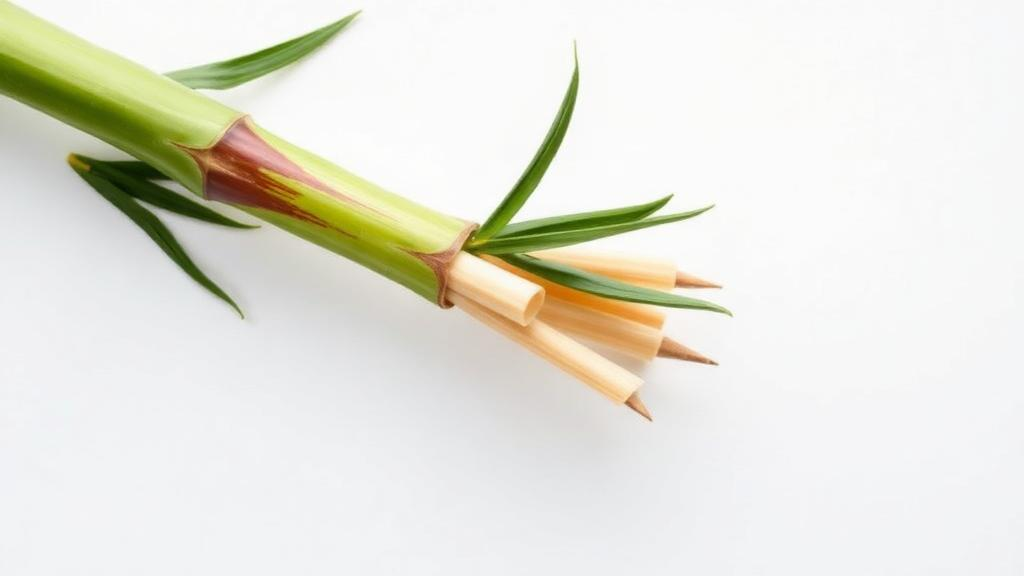
Fermentation is one of humanity’s oldest food technologies, yet the molecular choreography unfolding inside a jar of pickling vegetables remains astonishingly complex. A new study published in Food Chemistry: X has now mapped that choreography in remarkable detail for water bamboo shoot, a beloved East Asian vegetable known in China as jiaobai. By combining volatilomics, metagenomics, and intelligent sensing technologies, researchers tracked exactly how flavor compounds evolve and which microbes drive the transformation over nine days of fermentation. The work offers one of the most complete pictures to date of how a fresh, perishable vegetable becomes a shelf-stable, aromatic fermented product.
Water bamboo shoot is an unusual crop. Its edible swollen stem forms only after infection by the fungus Ustilago esculenta, which induces the crisp, tender tissue prized across East Asia. The vegetable is nutritionally rich, providing dietary fiber, proteins, vitamins, minerals, and bioactive compounds with documented antioxidant, anti-inflammatory, hypoglycemic, and lipid-lowering activities. In Zhejiang Province alone, cultivation covers more than 20,000 hectares with an annual fresh production of roughly 500,000 tons. But the fresh stems deteriorate rapidly after harvest, suffering browning, water loss, lignification, and texture softening. Fermentation offers a promising route to reduce these losses and create value-added products, yet the mechanisms linking microbial communities to flavor development had never been systematically characterized for this vegetable.
The research team, led by Kai Zhu and colleagues, prepared fermented water bamboo shoots using the Hangzhou cultivar obtained from a commercial farm in Qingpu District, Shanghai. The shoots were cut into uniform pieces, air-dried to 70 percent moisture, mixed with 6 percent salt, and pickled for nine days. Samples were collected on days 1, 3, 5, 7, and 9 and split for chemical analysis and microbial DNA extraction. This time-series design allowed the researchers to capture the full arc of fermentation, from the initial raw-material character to the mature flavor profile of the finished product.
The physicochemical measurements told a clear story of acidification. The pH fell steadily from 4.45 on day 1 to 3.64 on day 9, while titratable acidity climbed from 0.28 to 0.86 grams per 100 grams. Because pickled vegetables are conventionally considered mature when the pH drops below 4.0 and acidity exceeds 0.3 grams per 100 grams, the samples crossed the maturity threshold early and continued to intensify. Hardness declined from 2,850 grams to 1,760 grams, and springiness fell from 0.92 to 0.72, reflecting the gradual softening of plant tissue as acid weakened cell walls and enzymes degraded pectin, cellulose, and hemicellulose. The acidic environment also suppresses spoilage organisms, improving microbial safety and storage stability.
The analysis of non-volatile taste compounds revealed a dynamic balance between construction and consumption. Twenty free amino acids were detected, and their total concentration rose from 322.75 micrograms per gram on day 1 to a peak of 499.23 micrograms per gram on day 5 before declining to 374.96 by day 9. This rise-and-fall pattern reflects protein hydrolysis releasing amino acids early on, followed by microbial consumption of those amino acids as nitrogen sources and flavor precursors. Umami amino acids, aspartate and glutamate, peaked on day 7, signaling enhanced savory depth in the later stages. Most strikingly, gamma-aminobutyric acid, or GABA, was the single most abundant amino acid throughout fermentation, peaking at 212.862 micrograms per gram on day 5. GABA accumulation points to active microbial conversion of glutamate via decarboxylation and is notable because the compound is associated with stress regulation, sleep improvement, and blood pressure modulation.
Organic acids underwent an equally dramatic reshaping. Oxalic acid, malic acid, citric acid, and fumaric acid dominated day 1 but collapsed over the following days; malic acid plunged from 3,682.573 milligrams per kilogram to just 25.597 by day 9. In their place, lactic acid surged from 1,794.010 milligrams per kilogram on day 1 to 13,276.960 by day 3, peaking at 13,677.385 on day 5. Succinic acid, which contributes sour, salty, and umami-like notes, jumped from 1,657.550 to 7,638.416 milligrams per kilogram within the first two days. Trace acids such as propionic, butyric, and isovaleric acid remained at low concentrations but likely enhance aroma complexity because of their very low odor thresholds.
To capture the overall sensory trajectory, the team deployed an electronic tongue and an electronic nose. The electronic tongue distinguished samples from every stage, with principal component analysis explaining 77.9 percent of taste variance across the first two components and no overlap between groups. The electronic nose, equipped with ten metal oxide semiconductor sensors, showed even sharper separation: a single principal component accounted for 94.98 percent of the variance in odor profiles. Sensors responsive to sulfur compounds, alcohols, aldehydes, ketones, and aromatic compounds carried most of the discriminatory power, confirming that the aroma evolved from the fresh, green character of raw shoots toward mature, fermentation-derived notes. Because sensor arrays cannot identify individual molecules, the researchers then turned to headspace solid-phase microextraction gas chromatography-mass spectrometry.
The GC-MS analysis detected 76 volatile organic compounds spanning alcohols, aldehydes, esters, ketones, acids, phenols, furans, alkanes, and terpenes. The total volatile concentration increased throughout fermentation. Early samples were dominated by esters such as hexyl acetate and ethyl acetate, along with aldehydes like nonanal and 3-methylbutanal, imparting fruity, sweet, and fresh aromas. As fermentation progressed, phenolic compounds including phenol, 4-vinylphenol, eugenol, and 2-methoxy-4-vinylphenol rose steadily, marking the development of mature fermented character. Multivariate statistics identified 14 key differential volatiles meeting strict criteria of variable importance in projection greater than 1, odor activity value greater than 1, and statistical significance, positioning them as candidate markers of flavor formation.
Metagenomic sequencing, which offers higher taxonomic resolution and functional gene characterization than 16S amplicon sequencing, revealed a staged microbial succession. Early fermentation, days 1 through 3, was dominated by Leuconostoc, Lactococcus, and Weissella, with species such as Leuconostoc citreum and Weissella cibaria converting sugars into lactic acid, acetic acid, ethanol, and carbon dioxide. From day 3 onward, Lactiplantibacillus rose sharply, and by day 9 Lactiplantibacillus, particularly Lactiplantibacillus plantarum, stood alongside Leuconostoc and Weissella as the dominant genera. Day 7 showed the greatest microbial diversity, with a transient bloom of Pseudomonadota including Acinetobacter, Pseudomonas, and Enterobacter. Functional annotation against the KEGG database showed that carbohydrate metabolism, amino acid metabolism, lipid metabolism, membrane transport, and signal transduction were highly enriched, consistent with the observed acid accumulation, amino acid turnover, and volatile formation. The analysis even suggested potential biosynthesis of B vitamins by the community.
Spearman correlation analysis tied the microbial succession directly to specific flavor compounds. Lactiplantibacillus was significantly positively correlated with pentanal and benzenepropanoic acid ethyl ester, while Exiguobacterium and Kolesnikvirus tracked with 2-nonanol and 2-undecanone. Weissella showed significant negative correlations with 4-ethylphenol, beta-pinene, and bornyl acetate. Reconstructing the underlying pathways, the researchers linked pyruvate from carbohydrate metabolism to ethanol, acetic acid, acetoin, and diacetyl; fatty acid degradation to pentanal, 2-nonanol, and 2-undecanone; the phenylalanine pathway to 4-ethylphenol; terpenoid biosynthesis to pinenes and bornyl acetate; and esterification to ethyl acetate, ethyl caprylate, and ethyl palmitate. Together, these findings identify Lactiplantibacillus, Lactococcus, Leuconostoc, and Weissella as core functional microorganisms and provide a rational foundation for designing starter cultures, controlling fermentation quality, and engineering the flavor of fermented water bamboo shoot products with precision rather than chance.
Subject of Research: Microbial succession and flavor compound formation during fermentation of water bamboo shoots
Article Title: Dynamic flavor formation and microbial succession during fermentation of water bamboo shoots: Insights from volatilomics and metagenomics
Article References: Zhu, K., Wu, S., Deng, H., Liu, C., Zhang, J., Zhu, C., Qiao, Y., & Zhang, Y. (2026). Dynamic flavor formation and microbial succession during fermentation of water bamboo shoots: Insights from volatilomics and metagenomics. Food Chemistry: X, 39, Article 104575. https://doi.org/10.1016/j.fochx.2026.104575
Image Credits: AI Generated
DOI: 10.1016/j.fochx.2026.104575
Keywords: water bamboo shoot, fermentation, metagenomics, volatilomics, lactic acid bacteria, Lactiplantibacillus plantarum, volatile organic compounds, organic acids, free amino acids, GABA, electronic nose, flavor formation
News Source: Morgan Morrow. (October 12, 2026). Microbial Succession Drives the Flavor Journey of Fermented Water Bamboo Shoots. Scienmag.