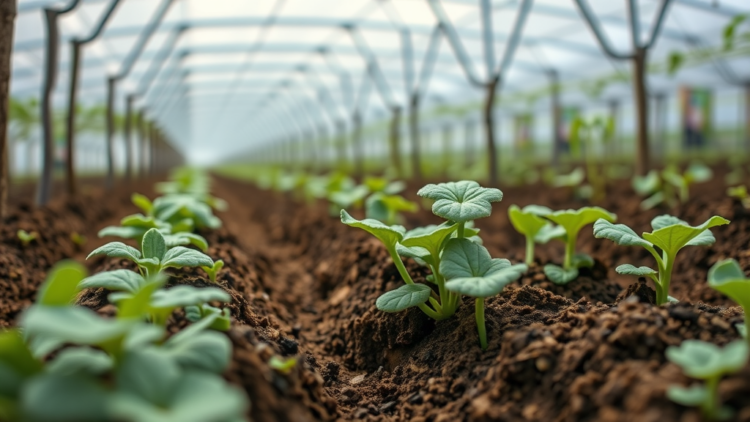
As global temperatures climb and weather patterns grow increasingly erratic, scientists are turning their attention to some of the smallest organisms on Earth as potential saviors of the world’s food supply. A new thematic collection published in the journal Discover Plants argues that the intricate relationships between plants and their associated microorganisms may represent one of the most powerful, underexploited tools for building agricultural systems capable of withstanding the pressures of a changing climate. The collection, edited by Debasis Mitra and Anju Rani of Graphic Era University in India together with Snežana Anđelković of the Institute for Forage Crops in Serbia, brings together studies spanning three continents and a remarkable range of crops, pathogens, and beneficial microbes, all unified by a single question: how can the plant microbiome be harnessed to protect crops and sustain productivity as environmental conditions deteriorate?
The stakes could hardly be higher. Climate change threatens long-term food security through rising temperatures, shifting precipitation patterns, and a heightened frequency of extreme weather events that disrupt the delicate balance within agricultural systems. Plants today face a barrage of biotic and abiotic stressors—pathogens, drought, salinity, heat, and heavy metal contamination—that affect their physiological, biochemical, and molecular machinery. Against this backdrop, beneficial microorganisms that drive nutrient cycling, maintain soil structure, and bolster plant resilience have moved from the margins of agricultural science to its center. The new collection examines these interactions across an unusually broad canvas, covering the biocontrol of diseases such as Fusarium wilt and yellow rust, the mitigation of salinity and drought stress, carbon sequestration, endophyte-mediated defense, and rhizobacterial strategies for developing climate-resilient crops.
Among the most striking findings comes from the Ethiopian highlands, where wheat yellow rust is the most economically significant wheat disease. A field study by Kusa and colleagues surveyed the prevalence and severity of the disease, caused by the fungus Puccinia striiformis f. sp. tritici, across the highlands of the Guji zone in southern Ethiopia. The results were sobering: yellow rust prevalence reached 100 percent in the Bore and Dama districts and 92 percent in Ana Sora, with Bore recording the highest incidence at 66.4 percent and severity at 58.4 percent. The analysis identified altitude and wheat variety as the most influential factors driving disease intensity, while early planting, heavy weed infestation, and a preceding cereal crop also significantly heightened both severity and incidence. Such epidemiological detail is essential for targeting interventions in a warming world where rust pathogens are expanding into new territories.
Disease resistance breeding features prominently throughout the collection. In Bangladesh, Farthouse and colleagues evaluated blackgram mutants under natural field conditions against three major diseases—Cercospora leaf spot, powdery mildew, and yellow mosaic. Two mutants, BM-63 and BM-42, emerged as clear leaders, displaying moderate resistance to powdery mildew, mixed resistance and susceptibility to the other two diseases, and the highest grain yields of the trial, reaching up to 812.6 kilograms per hectare. Meanwhile, in India, Vinodhini and colleagues used molecular techniques to confirm a mixed infection of chilli leaf curl virus, formally Begomovirus chillicapsici, and a phytoplasma identified as Candidatus Phytoplasma australasiaticum in symptomatic chilli plants in Coimbatore. The work underscores how modern molecular diagnostics are indispensable for untangling complex co-infections that would confound field observation alone.
Computational biology is also contributing to climate-ready crop protection. Das and colleagues performed a comparative in silico analysis of the bacterial blight resistance genes Xa27 and Xa23 in the indica and japonica subspecies of rice. Their genomic survey revealed that the 100-kilobase regions flanking these genes differ between subspecies in gene composition, GC content, and simple sequence repeat motifs, and are rich in pathogen-responsive cis-regulatory elements, particularly ABRE motifs. The team also identified nearby genes involved in cuticular wax biosynthesis, receptor kinases, and other defense mechanisms—structural insights that could guide breeders seeking to stack resistance traits in future rice varieties.
On the beneficial-microbe side of the ledger, the collection documents remarkable successes. In the Sundarbans Delta of India, where soil salinity is rising, Kundu and colleagues showed that inoculating chickpea with the arbuscular mycorrhizal fungus Glomus mosseae improved seedling emergence by 45 percent, plant height by 52 percent, pod number by 95 percent, and seed yield by 48 percent under saline conditions, while enhancing phenolic content, water status, membrane stability, and chlorophyll levels. In tomato, Hasna and colleagues demonstrated that the biocontrol fungus Trichoderma asperellum inhibited Fusarium wilt pathogen growth by up to 90 percent in laboratory assays, reduced disease severity in living plants, and activated a suite of host defense genes including PAL3, PR10, PRS, CH4, and PR4—confirming a dual mechanism of direct antagonism and induced systemic immunity.
Other studies extend the microbial toolkit further. Rawat and colleagues standardized the use of plant growth-promoting bacteria, including Bacillus subtilis and Pseudomonas putida, to biologically harden tissue-cultured plantlets of Valeriana jatamansi, an endangered Himalayan medicinal herb; inoculation with B. subtilis lifted survival rates to 90 percent while boosting plant height, leaf count, biomass, and valuable secondary metabolites such as phenolics and tannins. Bhardwaj and colleagues found that diazotrophic cyanobacteria, notably Anabaena torulosa, alleviated the impact of elevated carbon dioxide on rice by improving soil nitrogen availability, increasing the abundance of nitrogen-fixing microbes, and enhancing nutrient mobilization, growth, and grain yield. Abiala, in a separate contribution, highlighted rhizobacteria genome sequencing as a platform for identifying genes governing osmolyte production, antioxidant systems, and stress signaling—knowledge that can accelerate the design of targeted biofertilizers for drought-stressed food crops.
The collection also confronts the darker side of a changing microbial landscape. Mohan and colleagues identified two novel fungal pathogens, Poitrasia circinans and Neoscirrhia matteucciicola, associated with leaf spot disease in ginger in Meghalaya, India—the first report of these fungi affecting ginger in the region. Sarnaik and colleagues reviewed Fusarium wilt of brinjal, caused by Fusarium oxysporum and F. solani, which can devastate yields by 50 to 80 percent, and advocated integrated management combining crop rotation, biocontrol agents such as Trichoderma and Bacillus, resistant varieties, and reduced fungicide use. A review by Gore and colleagues detailed how endophytic microbes suppress pathogens directly through antimicrobial metabolites, enzymes, and siderophores, and indirectly by activating systemic acquired resistance and induced systemic resistance pathways, offering a sustainable alternative to chemical pesticides.
Beyond microbes, the collection addresses broader sustainability questions. Mafirakurewa and Mutanda assessed the carbon sequestration potential of climate-smart finger millet, whose deep roots, drought resistance, and continuous photosynthesis generate substantial biomass and enrich soil carbon even on marginal land, though adoption remains constrained by weak policy support and market incentives. A systematic review of Good Agricultural Practices in Bangladesh found that such approaches could reduce agrochemical runoff by up to 40 percent and improve water quality, yet standards, extension services, financing, and marketing challenges impede wider uptake. Complementary work by Kumar and colleagues catalogued plant growth-promoting bacteria associated with Salvadora species—dominated by Pseudomonas and Bacillus strains producing indole-3-acetic acid, solubilizing minerals, forming biofilms, and generating siderophores and ammonia—while Arif and colleagues showed that combined zinc and boron application at 15 to 20 milligrams per kilogram significantly enhanced growth, chlorophyll, phenolics, protein, nutrient uptake, and heavy metal tolerance in Brassica rapa.
Taken together, the collection advances knowledge at the intersection of climate science, microbiology, and agriculture, offering essential insights for adaptive farming systems that safeguard plant protection and long-term productivity. The editors emphasize that microorganisms acquire specific metabolic capabilities in relation to their host plants, producing interactions that can be positive, neutral, or negative—and that climate-driven shifts in microbial diversity and function may either amplify or erode these benefits. Understanding how climate change reshapes microbial dynamics is therefore crucial. From the rust-swept wheat fields of Ethiopia to the saline paddies of the Sundarbans, the message is consistent: the future of sustainable agriculture may depend less on new chemistry than on cultivating the ancient partnerships between plants and the microbes that sustain them.
Subject of Research: Plant–microbe interactions under climate change for sustainable agriculture and plant protection
Article Title: Plants and microbes under climate change: an interaction for sustainable agriculture and plant protection
Article References: Mitra, D., Rani, A., & Anđelković, S. (2026). Plants and microbes under climate change: an interaction for sustainable agriculture and plant protection. Discover Plants, 3(1), Article 390. https://doi.org/10.1007/s44372-026-00847-y
Image Credits: AI Generated
DOI: 10.1007/s44372-026-00847-y
Keywords: plant-microbe interactions, climate change, sustainable agriculture, plant protection, biocontrol, mycorrhizal fungi, plant growth-promoting bacteria, endophytes, drought stress, salinity tolerance, Fusarium wilt, carbon sequestration
Cite Scienmag News
APA MLA Chicago
Sloane Callahan. (September 13, 2026). Microbes May Hold the Key to Farming That Survives Climate Change. Scienmag. https://scienmag.com/microbes-may-hold-the-key-to-farming-that-survives-climate-change/
Sloane Callahan. “Microbes May Hold the Key to Farming That Survives Climate Change.” Scienmag, 13 September 2026, https://scienmag.com/microbes-may-hold-the-key-to-farming-that-survives-climate-change/. Accessed 13 September 2026.
Sloane Callahan. “Microbes May Hold the Key to Farming That Survives Climate Change.” Scienmag. September 13, 2026. https://scienmag.com/microbes-may-hold-the-key-to-farming-that-survives-climate-change/
Copy citation Download RIS
Tags: beneficial soil microbes for drought tolerancebiocontrolcarbon sequestrationclimate changeclimate change impact on plant-microbe interactionsdrought stressendophytesFusarium wiltglobal research on microbes and climate changeharnessing microorganisms for food securityinnovative microbiome applications in agriculturemicrobes and crop disease resistancemicrobial contributions to crop resiliencemicrobial protection against environmental stressorsMicrobial role in climate-resilient agriculturemicrobiome-based strategies for climate adaptationMycorrhizal fungiplant growth-promoting bacteriaplant microbiome for sustainable farmingplant protectionplant-microbe interactionssalinity tolerancesustainable agriculturesustainable farming with plant-associated microbes