• HOME
  • NEWS
  • EXPLORE
    • CAREER
      • Companies
      • Jobs
    • EVENTS
    • iGEM
      • News
      • Team
    • PHOTOS
    • VIDEO
    • WIKI
  • BLOG
  • COMMUNITY
    • FACEBOOK
    • INSTAGRAM
    • TWITTER
Friday, May 15, 2026
BIOENGINEER.ORG
No Result
View All Result
  • Login
  • HOME
  • NEWS
  • EXPLORE
    • CAREER
      • Companies
      • Jobs
        • Lecturer
        • PhD Studentship
        • Postdoc
        • Research Assistant
    • EVENTS
    • iGEM
      • News
      • Team
    • PHOTOS
    • VIDEO
    • WIKI
  • BLOG
  • COMMUNITY
    • FACEBOOK
    • INSTAGRAM
    • TWITTER
  • HOME
  • NEWS
  • EXPLORE
    • CAREER
      • Companies
      • Jobs
        • Lecturer
        • PhD Studentship
        • Postdoc
        • Research Assistant
    • EVENTS
    • iGEM
      • News
      • Team
    • PHOTOS
    • VIDEO
    • WIKI
  • BLOG
  • COMMUNITY
    • FACEBOOK
    • INSTAGRAM
    • TWITTER
No Result
View All Result
Bioengineer.org
No Result
View All Result
Home NEWS Science News Chemistry

Micro-brewing goes more micro

Bioengineer by Bioengineer
January 28, 2021
in Chemistry
Reading Time: 3 mins read
0
IMAGE
Share on FacebookShare on TwitterShare on LinkedinShare on RedditShare on Telegram

IMAGE

Credit: Ho Vu

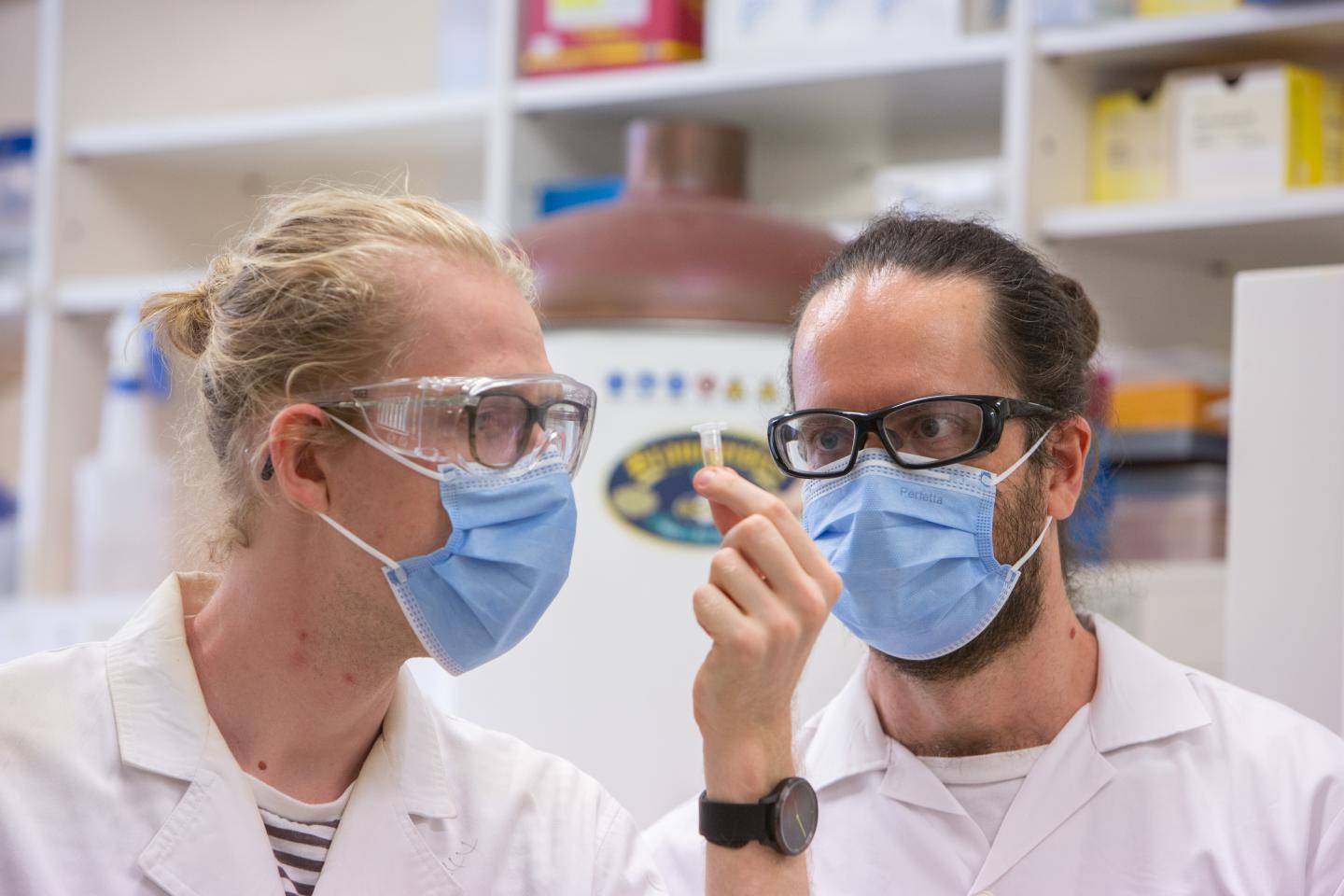
A PhD student and ‘beer scientist’ has inadvertently discovered a way to conduct extremely small-scale brewing experiments, potentially leading to better beer.

It came about when University of Queensland PhD candidate Edward Kerr hit a hurdle when he completed a beer brewing experiment for a paper.

“I was looking at barley protein changes during the mashing stage of beer brewing, when one of the paper’s reviewers asked if the changes were caused by temperature or time spent mashing the barley,” Mr Kerr said.

“It was a good question, but to find out I’d need to brew all over again, with an instrument that would hold at least 23 litres of brew, including five kilograms of malt for each brew – it would have taken another three months.

“To be honest, I was feeling a little lazy, so decided to see if I could do the same experiment on a much smaller scale.

“The result was surprising – I found that I could replicate the beer brewing process using only a single barley seed in a 1.5 millilitre tube.”

Mr Kerr said these kinds of experiments would previously have occurred at much larger, ingredient-intensive scales of about 50 to 100 litres.

“This is because it has always been thought that testing how barley varieties perform in brewing had to be done at a similar scale to actual beer production,” he said.

“When breweries are trying out a new beer recipe they also want to make enough of it to be able to easily test it by drinking.

“But this discovery brings together large-scale industrial beer producers and research scientists, who are used to high precision and sensitivity.”

Mr Kerr’s supervisor, Associate Professor Benjamin Schulz, said the method could speed up the quality testing of newly-bred barley varieties.

“Barley breeding focuses on increasing productivity and resistance to stresses such as heat and disease, but doesn’t take into account the quality of the barley until late in the process,” Dr Schulz said.

“And that’s a pretty challenging thing to test for, simply because of the scale previously required.

“Now that we only need a tiny amount of malted barley, we can quickly and easily ensure new varieties are of high quality.

“This could encourage breweries to be adventurous with their brewing conditions and may very well lead to new styles of beer.

“Hopefully it’ll also help ensure we have a supply of high-quality Australian barley into the future, given ongoing stresses of drought and climate change.

“We’re also hoping to use this approach in undergraduate practical courses in chemical engineering associated with the upcoming UQ Nanobrewery – it’s a great opportunity to bring process experimentation and optimisation into the student experience.

“But while 1.5 millilitres is definitely more convenient, quicker and cheaper, it’s a little small for a refreshing after-work beer.”

###

The research has been published in Scientific Reports (DOI: 10.1038/s41598-020-80442-7).

Mr Kerr’s PhD project is supported by Newstead Brewing Co. and Advance Queensland.

Media Contact
Dr Ben Schulz
[email protected]

Original Source

https://www.uq.edu.au/news/article/2021/01/micro-brewing-goes-more-micro

Related Journal Article

http://dx.doi.org/10.1038/s41598-020-80442-7

Tags: BiochemistryChemistry/Physics/Materials SciencesFood/Food ScienceIndustrial Engineering/Chemistry
Share12Tweet8Share2ShareShareShare2

Related Posts

Personalized beverages offer vital nutrients for space missions, new study reveals — Chemistry

Personalized beverages offer vital nutrients for space missions, new study reveals

May 15, 2026
Synthetic Cell Microreactor with Dual Dynamic DNA Pores — Chemistry

Synthetic Cell Microreactor with Dual Dynamic DNA Pores

May 15, 2026

Hanyang University Researchers Pinpoint 2.5 Nanometers as Minimum Coating Thickness for Durable Solid-State EV Batteries

May 15, 2026

Smart Hydrogels Revolutionize Information Security with Photo-Patterning and Multi-Stimuli Responsive Structural Colors

May 15, 2026
Please login to join discussion

POPULAR NEWS

  • Research Indicates Potential Connection Between Prenatal Medication Exposure and Elevated Autism Risk

    843 shares
    Share 337 Tweet 211
  • New Study Reveals Plants Can Detect the Sound of Rain

    729 shares
    Share 291 Tweet 182
  • Salmonella Haem Blocks Macrophages, Boosts Infection

    62 shares
    Share 25 Tweet 16
  • Breastmilk Balances E. coli and Beneficial Bacteria in Infant Gut Microbiomes

    58 shares
    Share 23 Tweet 15

About

We bring you the latest biotechnology news from best research centers and universities around the world. Check our website.

Follow us

Recent News

Tocilizumab vs Sarilumab in COVID-19 Trial Emulation

Personalized beverages offer vital nutrients for space missions, new study reveals

Innovative Ultrasonic Framework Enhances Real-Time Measurement of Oil Film Thickness in Rolling Bearings

Subscribe to Blog via Email

Enter your email address to subscribe to this blog and receive notifications of new posts by email.

Join 82 other subscribers
  • Contact Us

Bioengineer.org © Copyright 2023 All Rights Reserved.

Welcome Back!

Login to your account below

Forgotten Password?

Retrieve your password

Please enter your username or email address to reset your password.

Log In
No Result
View All Result
  • Homepages
    • Home Page 1
    • Home Page 2
  • News
  • National
  • Business
  • Health
  • Lifestyle
  • Science

Bioengineer.org © Copyright 2023 All Rights Reserved.