• HOME
  • NEWS
  • EXPLORE
    • CAREER
      • Companies
      • Jobs
    • EVENTS
    • iGEM
      • News
      • Team
    • PHOTOS
    • VIDEO
    • WIKI
  • BLOG
  • COMMUNITY
    • FACEBOOK
    • INSTAGRAM
    • TWITTER
Tuesday, October 6, 2026
BIOENGINEER.ORG
No Result
View All Result
  • Login
  • HOME
  • NEWS
  • EXPLORE
    • CAREER
      • Companies
      • Jobs
        • Lecturer
        • PhD Studentship
        • Postdoc
        • Research Assistant
    • EVENTS
    • iGEM
      • News
      • Team
    • PHOTOS
    • VIDEO
    • WIKI
  • BLOG
  • COMMUNITY
    • FACEBOOK
    • INSTAGRAM
    • TWITTER
  • HOME
  • NEWS
  • EXPLORE
    • CAREER
      • Companies
      • Jobs
        • Lecturer
        • PhD Studentship
        • Postdoc
        • Research Assistant
    • EVENTS
    • iGEM
      • News
      • Team
    • PHOTOS
    • VIDEO
    • WIKI
  • BLOG
  • COMMUNITY
    • FACEBOOK
    • INSTAGRAM
    • TWITTER
No Result
View All Result
Bioengineer.org
No Result
View All Result
Home NEWS Science News Health

Michael Hall wins Charles Rodolphe Brupbacher Prize for Cancer Research 2019

Bioengineer by Bioengineer
December 6, 2018
in Health
Reading Time: 2 mins read
0
IMAGE
Share on FacebookShare on TwitterShare on LinkedinShare on RedditShare on Telegram

IMAGE

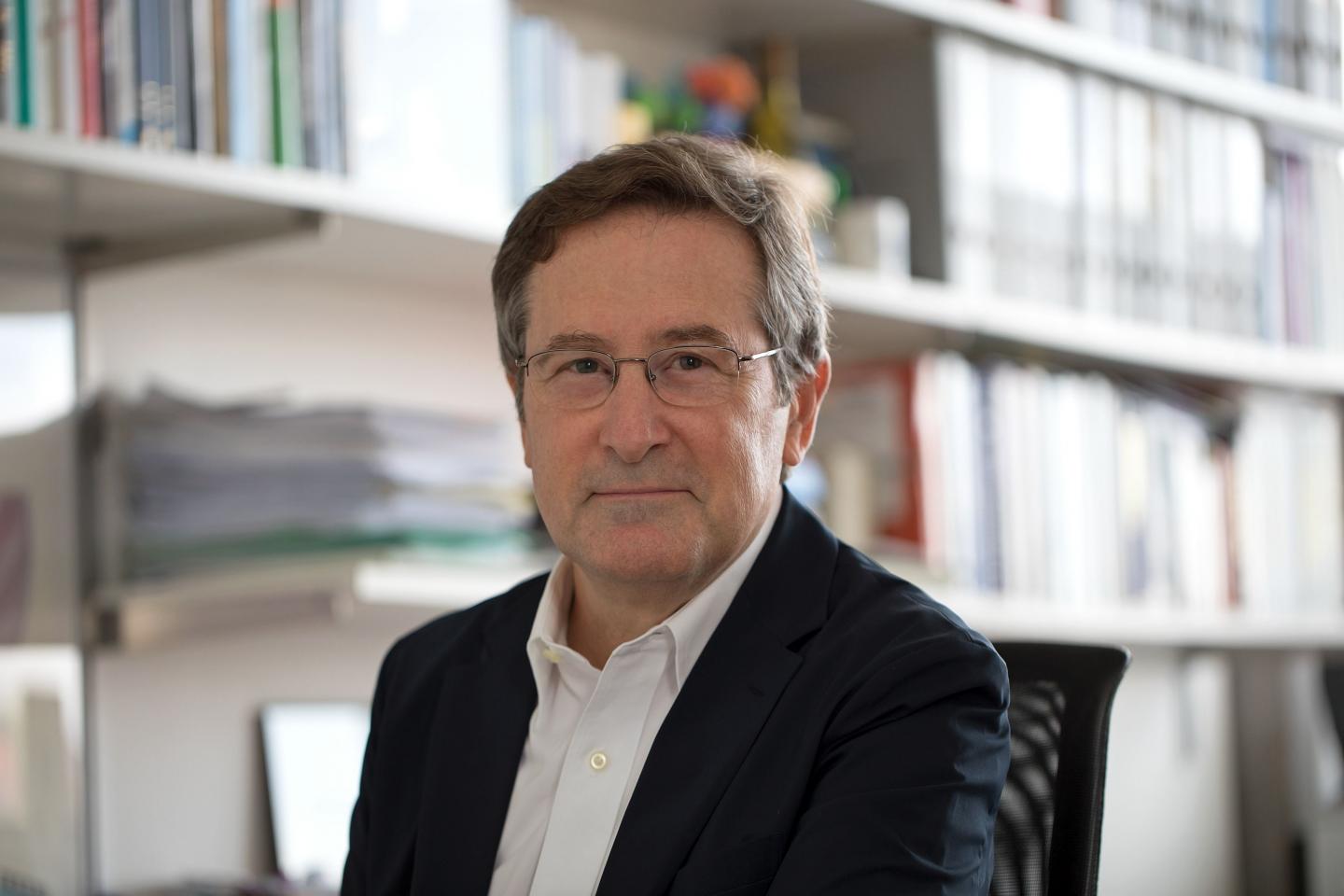
Credit: Matthew Lee, Biozentrum


The prize worth 100,000 Swiss francs, established by Frédérique Brupbacher in memory of her husband Charles Rodolphe Brupbacher, will be awarded for the 14th time in January 2019, and is one of the most renowned awards for scientists working in cancer research world-wide. In 2019 the award will be presented to Michael Hall, Professor of Biochemistry at the University of Basel’s Biozentrum, for his fundamental discovery of the basic mechanism of cell growth control and how this contributes to cancer development.

Central control of cell growth discovered

In the early 1990s, while working at the Biozentrum in Basel, Michael Hall discovered the protein TOR (Target of Rapamycin). Using yeast as a simple model organism, Hall found that the TOR kinase is a central controller of cell growth and metabolism. The TOR enzyme is also found in all higher organisms, from worms and plants to mammals, in which it is known as mTOR. TOR forms two different multi-protein complexes, which function via a complicated network of signalling pathways. If the TOR signalling pathways are normally activated, the cell turns on its growth machinery and suppresses catabolic processes. In some cancers, TOR is abnormally activated.

Basis for targeted cancer treatment

Rapamycin is secreted by a soil bacterium and was initially found to inhibit fungal growth. After this first discovery, TOR was also found to act as an immunosuppressant and as well to block tumor growth. Michael Hall was able to show that faulty regulation of the mTOR signalling pathways is implicated in diseases such as cancer, diabetes and cardiovascular disease. Today, rapamycin and its derivatives are used to prevent organ rejection in transplant patients and to treat cancer. mTOR inhibitors have been used successfully for many years in the treatment of different types of cancer including kidney, pancreas, breast, stomach and lung. Indeed, the life expectancy of some patients with advanced cancer has been shown to be significantly extended by mTOR inhibitors.

###

Media Contact
Georg C. Umbricht
[email protected]
41-442-269-960

Original Source

https://www.media.uzh.ch/en/Press-Releases/2018/brupbacher-prize.html

News source: https://scienmag.com/

Tags: BiologycancerCell BiologyMedicine/HealthMolecular Biology
Share12Tweet8Share2ShareShareShare2

Related Posts

Pets Help Older Adults Age Well, But Policy Gaps Leave Them Vulnerable, Review Finds

Pets Help Older Adults Age Well, But Policy Gaps Leave Them Vulnerable, Review Finds

October 6, 2026
Neck Circumference May Signal Hidden Metabolic Risk in People with Obesity

Neck Circumference May Signal Hidden Metabolic Risk in People with Obesity

October 6, 2026

New Patient Questionnaire Catches Ataxia Before Symptoms Show

October 6, 2026

Plant Flavonoid Sophoraflavanone G Cracks Staphylococcal Biofilms but Spares Pseudomonas

October 6, 2026
Please login to join discussion

POPULAR NEWS

  • Alloys That Shrink Their Own Grains: New PIX Mechanism Refines Metals With Heat Alone

    Alloys That Shrink Their Own Grains: New PIX Mechanism Refines Metals With Heat Alone

    29 shares
    Share 12 Tweet 7
  • Endurance Exercise Reshapes the Liver in Males and Females Through Distinct Molecular Routes

    29 shares
    Share 12 Tweet 7
  • Single Transcription Factor PU.1 Rapidly Converts Fibroblasts into Macrophage-Lineage Cells

    29 shares
    Share 12 Tweet 7
  • New Scale Measures How Ready Nurse Educators Really Are for the AI Era

    29 shares
    Share 12 Tweet 7

About

We bring you the latest biotechnology news from best research centers and universities around the world. Check our website.

Follow us

Recent News

Alloys That Shrink Their Own Grains: New PIX Mechanism Refines Metals With Heat Alone

Endurance Exercise Reshapes the Liver in Males and Females Through Distinct Molecular Routes

Single Transcription Factor PU.1 Rapidly Converts Fibroblasts into Macrophage-Lineage Cells

Subscribe to Blog via Email

Success! An email was just sent to confirm your subscription. Please find the email now and click 'Confirm' to start subscribing.

Join 85 other subscribers
  • Contact Us

Bioengineer.org © Copyright 2023 All Rights Reserved.

Welcome Back!

Login to your account below

Forgotten Password?

Retrieve your password

Please enter your username or email address to reset your password.

Log In
No Result
View All Result
  • Homepages
    • Home Page 1
    • Home Page 2
  • News
  • National
  • Business
  • Health
  • Lifestyle
  • Science

Bioengineer.org © Copyright 2023 All Rights Reserved.