


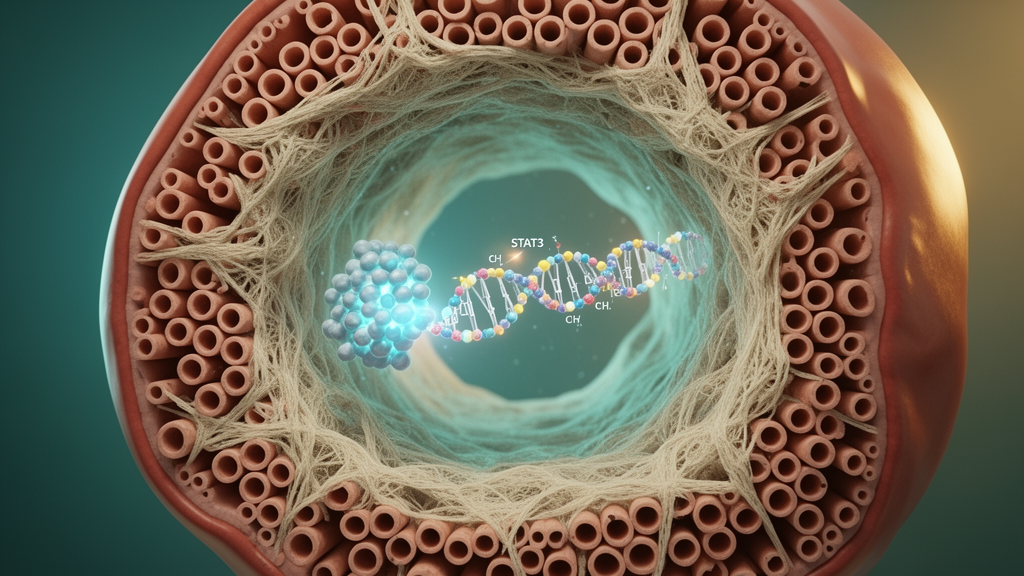
A new study published in Cell & Bioscience identifies a molecular pathway that links cisplatin chemotherapy to chronic kidney disease and renal fibrosis. The work shows that the lysine methyltransferase SMYD2 promotes partial epithelial–mesenchymal transition, a key process in fibrosis progression, by methylating and activating the signaling protein STAT3 in renal tubular epithelial cells.
Cisplatin is a widely used chemotherapy drug, but cisplatin-induced nephrotoxicity remains a serious clinical complication that can progress to chronic kidney disease and renal fibrosis. Partial epithelial–mesenchymal transition in renal tubular epithelial cells is considered a central driver of fibrosis progression, yet the regulatory mechanisms behind it have not been fully understood. The research team set out to test whether SMYD2 promotes this transition and subsequent scarring through methylation of STAT3.
To model the disease, the researchers used a repeated low-dose cisplatin regimen to induce chronic kidney disease in mice, and treated human HK-2 kidney tubule cells with cisplatin in the laboratory. They combined genetic knockdown of SMYD2 with pharmacological inhibition using the compound LLY507, and applied overexpression and inhibition strategies for both HIF1α and STAT3 to dissect the pathway.
The experimental toolkit included co-immunoprecipitation, Western blotting, immunofluorescence, immunohistochemistry, luciferase reporter assays and ChIP-qPCR. The team also analyzed human chronic kidney disease transcriptomic data from the Nephroseq database, allowing them to check whether their mouse and cell findings aligned with gene expression patterns in human patients.
The results showed that SMYD2 was significantly upregulated in human chronic kidney disease samples, in cisplatin-treated mice, and in cisplatin-treated HK-2 cells. This convergence across human tissue, an animal model and cultured cells pointed to SMYD2 as a consistent feature of the fibrotic response to cisplatin injury.
The study then identified HIF1α, a transcription factor activated under stress conditions, as a direct transcriptional regulator of SMYD2 under cisplatin-induced stress. In other words, when kidney tubule cells experience cisplatin damage, HIF1α appears to switch on SMYD2 expression, setting the downstream cascade in motion.
At the protein level, SMYD2 bound to STAT3 and methylated it at lysine 685. This methylation facilitated phosphorylation of STAT3 at tyrosine 705 and promoted its translocation into the nucleus, where activated STAT3 can alter gene expression. Activation of this SMYD2–STAT3 axis drove partial epithelial–mesenchymal transition, secretion of inflammatory cytokines, and deposition of extracellular matrix, the hallmark accumulation of fibrotic tissue.
The converse experiment supported the causal chain: inhibition of SMYD2 attenuated STAT3 activation and suppressed both partial epithelial–mesenchymal transition and fibrosis in the models. This suggests that the methyltransferase is not merely a correlate of disease but an active participant in the fibrotic program triggered by repeated cisplatin exposure.
The authors conclude that SMYD2-mediated methylation of STAT3 promotes partial epithelial–mesenchymal transition and renal fibrosis in cisplatin-induced chronic kidney disease, and they propose that targeting the HIF1α/SMYD2/STAT3 signaling axis may offer a promising therapeutic strategy to mitigate cisplatin-induced kidney injury while potentially enhancing chemotherapeutic efficacy. As with any preclinical study, these findings come from mouse models, cultured kidney cells and human transcriptomic correlations, and clinical translation would require further validation. The article is open access and was published on 8 October 2026.
Subject of Research: The HIF1α/SMYD2/STAT3 signaling axis in cisplatin-induced chronic kidney disease and renal fibrosis
Article Title: HIF1α/SMYD2/STAT3 axis drives partial EMT and renal fibrosis in cisplatin-induced CKD
Article References: Yuan, H., Liang, L., Chen, M., Zou, X., Wang, T., Liu, Z., Gong, B., Wu, T., Cen, M., Zhang, Q., Zhao, Q., Guo, B., & Liu, L. (2026). HIF1α/SMYD2/STAT3 axis drives partial EMT and renal fibrosis in cisplatin-induced CKD. Cell & Bioscience. https://doi.org/10.1186/s13578-026-01662-4
Image Credits: AI Generated
DOI: 10.1186/s13578-026-01662-4
Keywords: cisplatin, chronic kidney disease, renal fibrosis, SMYD2, STAT3, HIF1α, partial EMT, methylation, nephrotoxicity, HK-2 cells, LLY507, Cell & Bioscience
News Source: Drew Townsend. (October 29, 2026). Methyltransferase SMYD2 Activates STAT3 to Drive Kidney Scarring After Cisplatin. Scienmag.



