• HOME
  • NEWS
  • EXPLORE
    • CAREER
      • Companies
      • Jobs
    • EVENTS
    • iGEM
      • News
      • Team
    • PHOTOS
    • VIDEO
    • WIKI
  • BLOG
  • COMMUNITY
    • FACEBOOK
    • INSTAGRAM
    • TWITTER
Tuesday, May 12, 2026
BIOENGINEER.ORG
No Result
View All Result
  • Login
  • HOME
  • NEWS
  • EXPLORE
    • CAREER
      • Companies
      • Jobs
        • Lecturer
        • PhD Studentship
        • Postdoc
        • Research Assistant
    • EVENTS
    • iGEM
      • News
      • Team
    • PHOTOS
    • VIDEO
    • WIKI
  • BLOG
  • COMMUNITY
    • FACEBOOK
    • INSTAGRAM
    • TWITTER
  • HOME
  • NEWS
  • EXPLORE
    • CAREER
      • Companies
      • Jobs
        • Lecturer
        • PhD Studentship
        • Postdoc
        • Research Assistant
    • EVENTS
    • iGEM
      • News
      • Team
    • PHOTOS
    • VIDEO
    • WIKI
  • BLOG
  • COMMUNITY
    • FACEBOOK
    • INSTAGRAM
    • TWITTER
No Result
View All Result
Bioengineer.org
No Result
View All Result
Home NEWS Science News

Methanol synthesis: Insights into the structure of an enigmatic catalyst

Bioengineer by Bioengineer
August 4, 2020
in Science News
Reading Time: 3 mins read
0
IMAGE
Share on FacebookShare on TwitterShare on LinkedinShare on RedditShare on Telegram

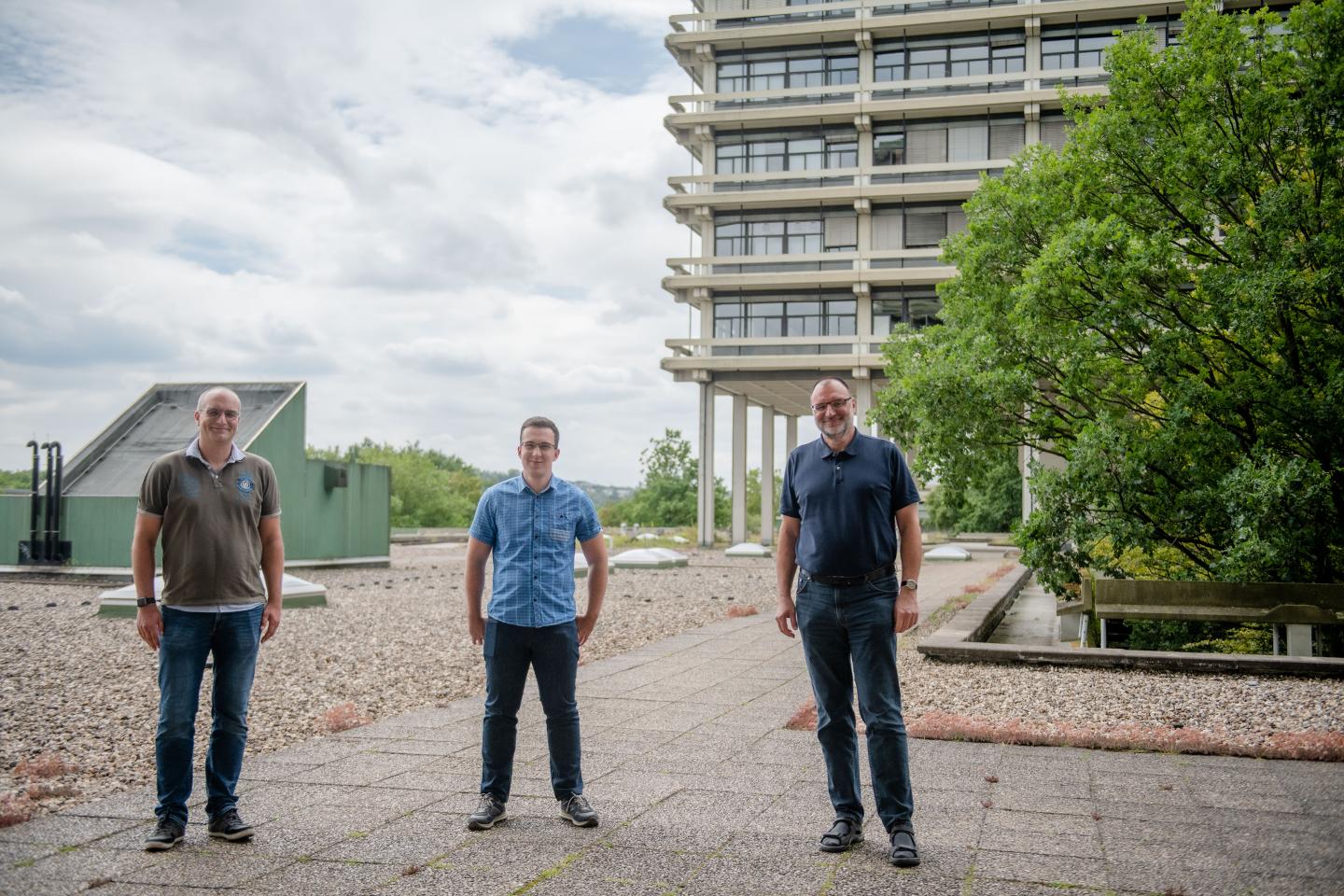
In the past, the catalyst for the production of methanol had eluded all attempts to clarify its surface structure
IMAGE

Credit: RUB, Marquard

Methanol is one of the most important basic chemicals used, for example, to produce plastics or building materials. To render the production process even more efficient, it would be helpful to know more about the copper/zinc oxide/aluminium oxide catalyst deployed in methanol production. To date, however, it hasn’t been possible to analyse the structure of its surface under reaction conditions. A team from Ruhr-Universität Bochum (RUB) and the Max Planck Institute for Chemical Energy Conversion (MPI CEC) has now succeeded in gaining insights into the structure of its active site. The researchers describe their findings in the journal Nature Communications from 4 August 2020.

In a first, the team showed that the zinc component of the active site is positively charged and that the catalyst has as many as two copper-based active sites. “The state of the zinc component at the active site has been the subject of controversial discussion since the catalyst was introduced in the 1960s. Based on our findings, we can now derive numerous ideas on how to optimise the catalyst in the future,” outlines Professor Martin Muhler, Head of the Department of Industrial Chemistry at RUB and Max Planck Fellow at MPI CEC. For the project, he collaborated with Bochum-based researcher Dr. Daniel Laudenschleger and Mülheim-based researcher Dr. Holger Ruland.

Sustainable methanol production

The study was embedded in the Carbon-2-Chem project, the aim of which is to reduce CO2 emissions by utilising metallurgical gases produced during steel production for the manufacture of chemicals. In combination with electrolytically produced hydrogen, metallurgical gases could also serve as a starting material for sustainable methanol synthesis. As part of the Carbon-2-Chem project, the research team recently examined how impurities in metallurgical gases, such as are produced in coking plants or blast furnaces, affect the catalyst. This research ultimately paved the way for insights into the structure of the active site.

Active site deactivated for analysis

The researchers had identified nitrogen-containing molecules- ammonia and amines – as impurities that act as catalyst poisons. They deactivated the catalyst, but not permanently: if the impurities disappear, the catalyst recovers by itself. Using a unique research apparatus that was developed in-house, i.e. a continuously operated flow apparatus with an integrated high-pressure pulse unit, the researchers passed ammonia and amines over the catalyst surface, temporarily deactivating the active site with a zinc component. Despite the zinc component being deactivated, another reaction still took place on the catalyst: namely the conversion of ethene to ethane. The researchers thus detected a second active site operating in parallel, which contains metallic copper but doesn’t have a zinc component.

Since ammonia and the amines are bound to positively charged metal ions on the surface, it was evident that zinc, as part of the active site, carries a positive charge.

###

Media Contact
Martin Muhler
[email protected]

Original Source

https://news.rub.de/english/press-releases/2020-08-04-methanol-synthesis-insights-structure-enigmatic-catalyst

Related Journal Article

http://dx.doi.org/10.1038/s41467-020-17631-5

Tags: Chemistry/Physics/Materials SciencesIndustrial Engineering/Chemistry
Share12Tweet8Share2ShareShareShare2

Related Posts

Humans and Zebra Finches Share Similar Speech Learning Techniques #ASA190 — Chemistry

Humans and Zebra Finches Share Similar Speech Learning Techniques #ASA190

May 11, 2026
New Study Uncovers How Fungal Parasites Attack Strawberries and Raspberries — Agriculture

New Study Uncovers How Fungal Parasites Attack Strawberries and Raspberries

May 11, 2026

City of Hope Researchers to Present Groundbreaking Immunotherapy and Precision Medicine Advances Across Multiple Cancer Types at ASCO 2026

May 11, 2026

Medicaid Expansion Reduces Mortality in Young Adults with Kidney Failure

May 11, 2026
Please login to join discussion

POPULAR NEWS

  • Research Indicates Potential Connection Between Prenatal Medication Exposure and Elevated Autism Risk

    841 shares
    Share 336 Tweet 210
  • New Study Reveals Plants Can Detect the Sound of Rain

    728 shares
    Share 290 Tweet 182
  • Salmonella Haem Blocks Macrophages, Boosts Infection

    62 shares
    Share 25 Tweet 16
  • Breastmilk Balances E. coli and Beneficial Bacteria in Infant Gut Microbiomes

    57 shares
    Share 23 Tweet 14

About

We bring you the latest biotechnology news from best research centers and universities around the world. Check our website.

Follow us

Recent News

Humans and Zebra Finches Share Similar Speech Learning Techniques #ASA190

New Study Uncovers How Fungal Parasites Attack Strawberries and Raspberries

City of Hope Researchers to Present Groundbreaking Immunotherapy and Precision Medicine Advances Across Multiple Cancer Types at ASCO 2026

Subscribe to Blog via Email

Enter your email address to subscribe to this blog and receive notifications of new posts by email.

Join 82 other subscribers
  • Contact Us

Bioengineer.org © Copyright 2023 All Rights Reserved.

Welcome Back!

Login to your account below

Forgotten Password?

Retrieve your password

Please enter your username or email address to reset your password.

Log In
No Result
View All Result
  • Homepages
    • Home Page 1
    • Home Page 2
  • News
  • National
  • Business
  • Health
  • Lifestyle
  • Science

Bioengineer.org © Copyright 2023 All Rights Reserved.