Cancer’s ability to evade the immune system may depend on a metabolic conversation between two very different immune-cell populations, according to a study published in Nature Cancer. Researchers report that regulatory T cells infiltrating tumors can use the nutrient-rich, chemically hostile environment around them to promote the decline of natural killer cells, weakening one of the immune system’s most important antitumor defenses. The work identifies a previously unrecognized lactate–α-ketoglutarate circuit inside tumor-infiltrating regulatory T cells, or Ti-Treg cells. This circuit increases production of the signaling molecule WNT2, which in turn drives natural killer, or NK, cells toward a senescent state. The discovery points to a metabolic vulnerability that could potentially be targeted to make cancer immunotherapies more effective. In particular, blocking the pathway reduced NK-cell senescence and improved the response to adoptive NK-cell transfer in the researchers’ experimental systems.
Regulatory T cells are essential guardians against autoimmune disease. They suppress excessive immune reactions and help prevent the body from attacking its own tissues. Inside tumors, however, that same suppressive function can become an advantage for malignant cells. Ti-Treg cells accumulate in the tumor microenvironment and restrain immune activity that might otherwise destroy cancer cells. Their behavior is shaped not only by immune signals but also by the unusual metabolism of tumors, where oxygen can be scarce and nutrients are unevenly distributed. Tumor cells and surrounding stromal cells commonly release large amounts of lactate, a product of glucose metabolism. Rather than serving merely as metabolic waste, lactate can act as a signaling and regulatory molecule. The new findings suggest that Ti-Treg cells exploit this lactate-rich setting to reprogram their own metabolism and acquire the ability to undermine NK-cell function.
The central enzyme identified in the study is glutamate dehydrogenase 1, or GDH1. This enzyme helps regulate the conversion of glutamate into α-ketoglutarate, a metabolite that participates in the tricarboxylic acid cycle and also influences gene regulation. The researchers found that Ti-Treg cells increase GDH1 expression, resulting in higher levels of α-ketoglutarate. That metabolic shift was associated with accelerated tumor progression. α-ketoglutarate is especially important because it can serve as a cofactor for a family of enzymes that chemically modify proteins and nucleic acids. In this case, the metabolite fuels activity linked to ALKBH5, an RNA demethylase. By connecting a change in cellular metabolism to the stability or expression of a specific immune-regulatory gene, the study provides a mechanistic explanation for how the tumor environment can reshape immune-cell behavior from the inside out.
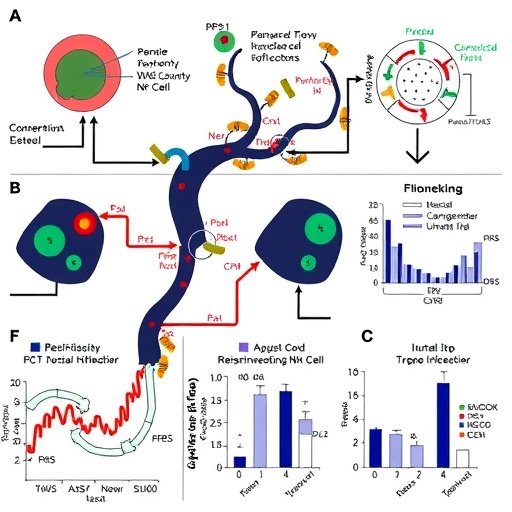
The pathway begins with lactate entering Ti-Treg cells through SLC16A1, a transporter that moves monocarboxylates such as lactate across the cell membrane. Within the lactate-rich tumor microenvironment, the researchers found that GDH1 undergoes lactylation, a chemical modification associated with the presence of lactate. This modification boosts GDH1’s ability to generate α-ketoglutarate. The result is a metabolic circuit in which lactate does not simply provide fuel: it changes the activity of an enzyme, increases a regulatory metabolite and ultimately alters gene expression. The chain can be summarized as lactate uptake, GDH1 lactylation, increased α-ketoglutarate production and enhanced ALKBH5-dependent regulation of Wnt2. Each step offers a possible point of intervention. It also illustrates why cancer metabolism is increasingly viewed as an information system as well as an energy system, capable of transmitting signals between the tumor and immune cells.
The gene Wnt2 encodes a member of the WNT family, a group of secreted signaling proteins involved in communication between cells, tissue development and cancer biology. In the Ti-Treg cells examined in the study, the lactate-driven α-ketoglutarate increase fuels ALKBH5-mediated control of Wnt2 expression. The resulting increase in WNT2 affects neighboring NK cells. NK cells normally recognize and eliminate stressed, infected or transformed cells without requiring the same antigen-specific priming used by conventional T cells. They can release cytotoxic molecules, including perforin and granzymes, that damage target cells. But in the tumor microenvironment, their activity can deteriorate. The study links WNT2 produced under the influence of Ti-Treg metabolism to NK-cell senescence, a state in which cells lose functional capacity and may no longer mount an effective antitumor response.
Senescence is not simply temporary exhaustion. A senescent cell undergoes a durable change in its biological state, often involving altered gene expression, reduced proliferation and changes in the signals it sends to neighboring cells. For NK cells, senescence can mean diminished ability to kill tumor cells and reduced effectiveness after transfer into a patient or experimental host. By inducing this state, Ti-Treg cells can neutralize an immune population that cancer therapies are designed to mobilize. The findings therefore reveal an indirect form of immune suppression: Ti-Treg cells do not merely inhibit NK cells through conventional suppressive signals, but use a metabolic pathway to produce WNT2 and push NK cells toward functional decline. This distinction matters because it suggests that an apparently resistant tumor may not be protecting itself only through cancer-cell mutations or checkpoint signals. It may also be constructing a metabolic environment that ages immune cells before they can attack.
The researchers tested whether interrupting the circuit could restore antitumor immunity. Inhibition of GDH1 reduced the metabolic activity associated with the pathway, while deletion of SLC16A1 specifically in Ti-Treg cells limited lactate uptake. Both interventions reduced NK-cell senescence, according to the study. The results place lactate transport and GDH1 activity upstream of the changes observed in NK cells, strengthening the case that the pathway is causal rather than merely a correlation between tumor metabolism and immune dysfunction. Importantly, interfering with the circuit also improved adoptive NK-cell transfer therapy. In this approach, NK cells are supplied from outside the tumor in an effort to increase the number of cancer-killing immune cells. The study suggests that adding more NK cells may not be enough if Ti-Treg cells continue to expose them to the lactate–α-ketoglutarate–WNT2 circuit. Protecting transferred cells from that environment could substantially improve their therapeutic performance.
The work also highlights the challenge of targeting metabolism without damaging beneficial immune regulation. GDH1 is not unique to Ti-Treg cells, and lactate transporters are used by many normal cells. A broadly acting drug could therefore produce unwanted effects if it disrupts essential metabolic processes in healthy tissues or alters regulatory T-cell activity throughout the body. The most selective strategy suggested by the findings would be to target the pathway within tumor-infiltrating Treg cells, block their access to lactate, or interfere with the GDH1 modification that specifically amplifies α-ketoglutarate production in the tumor setting. Another possibility would be to prevent the downstream WNT2 signal from acting on NK cells. Each approach raises different pharmacological and safety questions. The source study establishes the circuit and identifies intervention points, but translating those findings into treatment will require determining how broadly the mechanism operates across tumor types and how it interacts with existing immunotherapies.
The discovery could be particularly relevant to efforts to improve cell-based cancer treatments, which often fail because transferred immune cells become dysfunctional after entering a tumor. Adoptive NK-cell therapy is attractive because NK cells can recognize malignant stress signals and kill targets without the individualized antigen matching required for some T-cell therapies. Yet their effectiveness depends on surviving and remaining active inside the tumor microenvironment. The new study suggests that Ti-Treg cells may act as metabolic gatekeepers, converting a tumor’s excess lactate into a signal that disables incoming NK cells. Blocking SLC16A1, GDH1 or the downstream WNT2 pathway could therefore be explored as a combination strategy rather than as a standalone treatment. Such combinations might include NK-cell transfer, immune checkpoint blockade or other approaches designed to increase immune-cell infiltration. Whether the mechanism is shared by human tumors remains an important question, as does the possibility that related metabolic circuits suppress other immune-cell types.
At a broader level, the study reframes the relationship between cancer metabolism and immune suppression. Lactate has often been associated with poor immune performance because of its effects on acidity and cellular energy balance. The findings describe a more specific and sophisticated process: lactate chemically modifies GDH1 in Ti-Treg cells, raises α-ketoglutarate, engages an RNA-regulatory enzyme and increases WNT2 production, which then promotes NK-cell senescence. That sequence connects a metabolite, an enzyme modification, epigenetic or RNA regulation and intercellular immune signaling in a single pathway. The researchers’ identification of GDH1 inhibition and Ti-Treg-specific SLC16A1 deletion as ways to reduce NK senescence provides a foundation for therapeutic investigation. If future studies confirm the circuit in human cancers, disrupting this metabolic relay could help turn the tumor microenvironment from a place that exhausts immune cells into one where transferred and naturally occurring NK cells retain their ability to attack malignant tissue.
Subject of Research: A lactate–α-ketoglutarate metabolic circuit in tumor-infiltrating regulatory T cells and its role in inducing natural killer cell senescence
Subject of Research: Cancer
Article Title: A lactate–α-ketoglutarate metabolic circuit in tumor-infiltrating regulatory T cells accelerates tumor progression by inducing NK cell senescence
Article References: Shi, T., Ding, Y., Chen, Y., Tan, X., Qu, F., Xu, D., Liu, X., Li, Y., Liu, Y.-F., Zhang, X., Yu, G., Shao, J., & Wang, X. (2026). A lactate–α-ketoglutarate metabolic circuit in tumor-infiltrating regulatory T cells accelerates tumor progression by inducing NK cell senescence. Nature Cancer. https://doi.org/10.1038/s43018-026-01210-6
Image Credits: AI Generated
DOI: 10.1038/s43018-026-01210-6
Keywords: tumor-infiltrating regulatory T cells, lactate metabolism, alpha-ketoglutarate, GDH1, NK cell senescence, WNT2 signaling, ALKBH5, adoptive NK-cell therapy
Cite Scienmag News
APA MLA Chicago
Rowan B. (August 28, 2026). Metabolic Circuit in Tumor-Infiltrating Tregs Drives Cancer Progression by Aging NK Cells. Scienmag. https://scienmag.com/metabolic-circuit-in-tumor-infiltrating-tregs-drives-cancer-progression-by-aging-nk-cells/
Rowan B. “Metabolic Circuit in Tumor-Infiltrating Tregs Drives Cancer Progression by Aging NK Cells.” Scienmag, 28 August 2026, https://scienmag.com/metabolic-circuit-in-tumor-infiltrating-tregs-drives-cancer-progression-by-aging-nk-cells/. Accessed 28 August 2026.
Rowan B. “Metabolic Circuit in Tumor-Infiltrating Tregs Drives Cancer Progression by Aging NK Cells.” Scienmag. August 28, 2026. https://scienmag.com/metabolic-circuit-in-tumor-infiltrating-tregs-drives-cancer-progression-by-aging-nk-cells/
Copy citation Download RIS
Tags: cancer immune escape mechanismscancer immune evasionenhancing immunotherapy effectiveness through metabolic pathway inhibitionimmune cell interactions in tumor microenvironmentimmunotherapy enhancement strategiesimpact of tumor metabolism on immune responseslactate-α-ketoglutarate pathwaylactate–α-ketoglutarate metabolic circuitmetabolic circuits in tumor microenvironmentmetabolic communication between regulatory T cells and natural killer cellsmetabolic vulnerabilities in cancermetabolic vulnerabilities in tumor immune evasionnatural killer cell senescenceNK cell senescence in cancerNK-cell transfer therapytargeting Treg cell metabolism for cancer therapyTreg cell metabolismtumor microenvironment immune suppressiontumor-associated immune suppressionTumor-infiltrating regulatory T cellstumor-infiltrating Treg cells role in cancer progressionWNT2 signaling in immune cell agingWNT2 signaling in Tregs