A systematic review of home-range studies in seven Palaearctic steppe bird species has revealed that the published evidence base is heavily skewed geographically, demographically and technologically, leaving large parts of the species’ ranges and life cycles poorly documented. The meta-analysis, published in the journal Animal Biotelemetry, synthesised spatial data from 39 primary studies to assess how home-range size estimates vary across ecological contexts, tracking methods and seasons.
Home-range size is a fundamental metric in spatial ecology and conservation, but estimates often differ between studies because of variation in ecological context, demographic composition such as sex and age, annual cycle period, and the tracking technology used. The authors argue that synthesising dispersed information on spatial requirements is particularly urgent for steppe birds, which rank among the most threatened avian groups in Europe and globally.
The review found that geographic and ecological coverage was strongly biased. Most research was conducted in western Europe, while large parts of the species’ breeding ranges, including eastern Europe, western and central Asia and northern Africa, were poorly represented, as were wintering areas.
Habitat coverage showed a similar imbalance. Studies were mainly carried out in arable land, with little information available from other key habitats for the species, such as natural grasslands and shrublands. This concentration in farmland contexts limits the ability to generalise spatial requirements across the full range of environments these birds occupy.
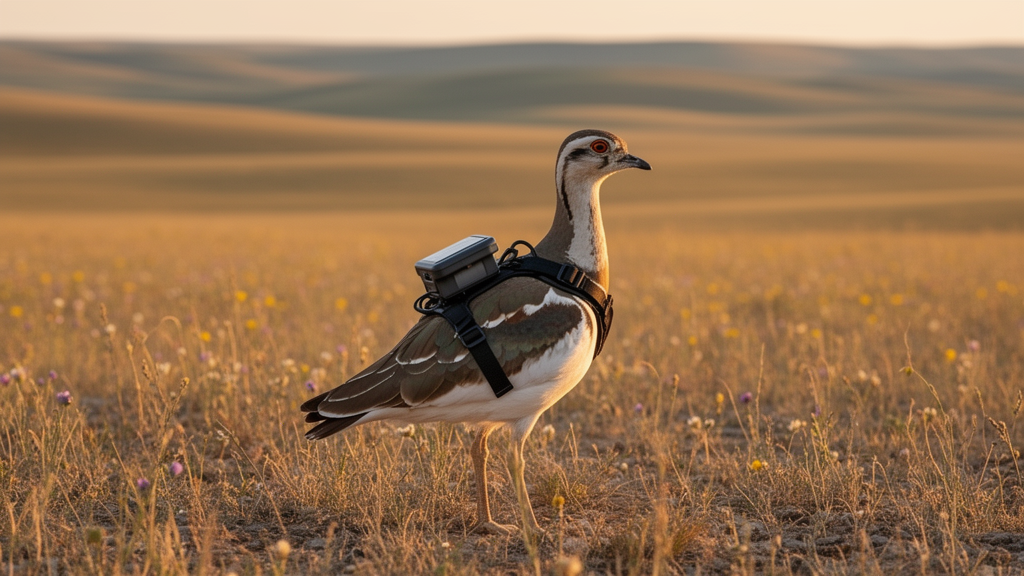
Technology also shaped the evidence base in unexpected ways. Despite the widespread availability of GPS tracking, very high frequency (VHF) tracking dominated the published home-range estimates.
Adult males during the breeding season represented 75.6 percent of all monitored individuals, out of a total of 623 individuals across the retained studies. Information on females, subadults, juveniles and non-breeding periods was far less represented, meaning the spatial requirements of most of the population remain largely undocumented.
The authors conclude that home-range size is a context-dependent property shaped by individual behaviour, seasonal variation and local environmental conditions. Extrapolating estimates across sexes, ages, seasons or habitat contexts can misinform management, they warn, because estimates drawn from one segment of a population may not apply to others.
To address these gaps, the review recommends that studies using GPS technology report basic home-range metrics even when home-range estimation is not the primary focus of the research. The authors also call for broadening GPS-based research to include underrepresented demographic groups, regions and habitat contexts, which they argue would enhance ecological knowledge and improve the robustness of environmental assessments and conservation planning.
For a group of conservation concern whose spatial requirements directly inform environmental impact assessment, habitat management and spatial planning, the findings suggest that current evidence reflects only a narrow slice of the ecology of these species. Filling the identified gaps in geography, habitat, demography and season would be necessary before home-range estimates can be applied reliably across the Palaearctic steppe bird community.
Subject of Research: Home-range size estimates and knowledge gaps for seven Palaearctic steppe bird species based on a systematic review of tracking studies
Article Title: Home-range ecology of seven Palaearctic steppe bird species: a meta-analysis of spatial dimensions and ecological knowledge gaps
Article References: Solé-Bujalance, L., Morales, M. B., & Bota, G. (2026). Home-range ecology of seven Palaearctic steppe bird species: a meta-analysis of spatial dimensions and ecological knowledge gaps. Animal Biotelemetry. https://doi.org/10.1186/s40317-026-00498-6
Image Credits: AI Generated
DOI: 10.1186/s40317-026-00498-6
Keywords: steppe birds, home range, meta-analysis, GPS tracking, VHF telemetry, spatial ecology, conservation planning, knowledge gaps, Palaearctic, adult males, breeding season, arable land
News Source: Drew Townsend. (October 28, 2026). Meta-analysis finds steppe bird home-range data skewed to male breeders in western Europe. Scienmag.