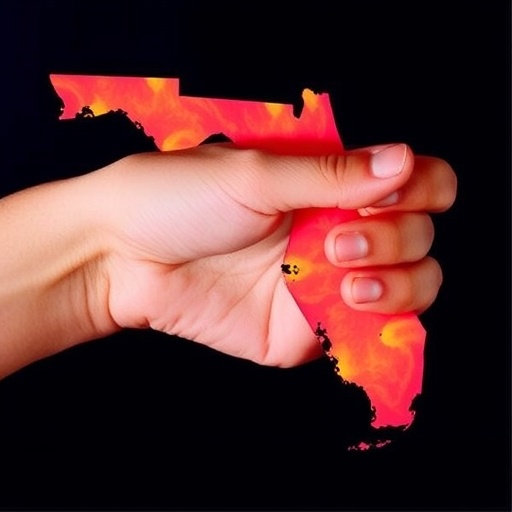
Florida’s relentless sunshine, coupled with intense ultraviolet (UV) radiation, creates an environment uniquely conducive to one of the highest skin cancer burdens in the United States. A recently published study from Florida Atlantic University’s Charles E. Schmidt College of Medicine provides a detailed examination of melanoma incidence and mortality within the state’s elderly population, revealing troubling disparities grounded in sex, race, and ethnicity. This comprehensive analysis signifies a critical juncture in understanding melanoma trends, particularly in older adults residing in a region where UV exposure levels are unparalleled.
The Sunshine State ranks second nationally for melanoma incidence, underscoring a public health challenge that is both urgent and complex. Using a population-based approach, researchers mined data from the CDC’s WONDER database to scrutinize skin cancer diagnoses from 2018 to 2021 and associated deaths through 2023. Basal cell and squamous cell carcinomas were deliberately excluded to focus specifically on melanoma and other aggressive cutaneous malignancies, highlighting shifts not only in prevalence but also in mortality patterns among Floridians aged 65 and above.
Published in the Journal of Geriatric Oncology, the study’s results highlight a persistent and troubling sex disparity: older men in Florida experience nearly twice the rates of skin cancer mortality compared to women throughout the study period. The incidence rates have remained relatively stable, yet this gender gap persists—a phenomenon the authors attribute to a multifaceted set of behavioral, environmental, and biological determinants that go beyond mere exposure.
Men’s typically lower engagement in sun-protective practices and less frequent skin self-examinations exacerbate their susceptibility in an environment saturated with UV radiation. Coupling these behavioral gaps with Florida’s high cumulative lifetime UV exposure paints a grim picture, particularly when emerging immunological research suggests intrinsic biological differences might influence both cancer progression and survival outcomes based on sex. This intersection of factors signals the need for gender-sensitive preventive measures and clinical vigilance.
Racial and ethnic disparities in melanoma incidence and mortality further complicate the epidemiological landscape. Non-Hispanic white populations in Florida bear a substantially greater skin cancer burden compared to Hispanic groups. However, these patterns cannot be simplistically interpreted as mere biological differences. Structural inequities—ranging from disparities in dermatologic care access to variations in health literacy and diagnostic opportunity—undermine equitable skin cancer detection and timely treatment, particularly among historically underserved communities.
An important temporal trend observed in the study is the dip in cancer incidence during 2020, followed by a rebound in 2021. This fluctuation is believed to be a byproduct of the COVID-19 pandemic, which disrupted routine cancer screening, diagnosis, and reporting mechanisms statewide. These findings echo a broader theme encountered during the pandemic: delayed or foregone medical care may mask the true burden of disease, emphasizing the latent risks of interrupted preventive health services.
The study’s meticulous dissection of melanoma trends in Florida’s aging demographic not only uncovers persistent disparities but also underscores missed opportunities in early detection and prevention. Given that melanoma is largely preventable through behavioral modification and timely intervention, these findings demand robust public health strategies tailored to the unique vulnerabilities of older adults, especially men, in high UV exposure regions.
Dr. Lea Sacca, the study’s senior author and assistant professor of population health, emphasizes the urgent need for enhanced public health messaging geared towards older populations. She points out that the disproportionate melanoma burden borne by men is likely multifactorial—a confluence of behavioral, immunological, and perhaps genetic factors—that resists simplistic explanations. This underscores that prevention campaigns must integrate a nuanced understanding of gender-specific risks and health-seeking behaviors.
The interplay between Florida’s enhanced UV index and melanoma outcomes reveals further complexity. UV radiation is indisputably a potent carcinogen, yet it fails to fully elucidate the markedly worse melanoma outcomes observed in men and non-Hispanic whites. This incongruity suggests that other determinants, including biological susceptibility and social determinants of health, play influential roles in disease trajectory and survival outcomes.
Crucially, the study advocates for heightened awareness around skin cancer risks, promoting routine skin examinations and advancing culturally competent educational interventions. These efforts would bolster early diagnosis, which is vital given that melanoma detected at an initial stage has significantly better prognostic outcomes. Targeted outreach is especially essential in reaching demographic groups historically experiencing gaps in preventive care and healthcare access.
The ongoing public health threat posed by melanoma in Florida is exacerbated by an aging population whose cumulative lifetime UV exposure amplifies risk. As summer temperatures climb and beach activities intensify, the urgency to address these disparities grows more pressing. The combination of environmental risk factors and entrenched gaps in healthcare utilization and preventive practices demands innovative strategies grounded in epidemiological insights.
Effective reduction in melanoma incidence and mortality necessitates integrated efforts. These include the development of tailored public health campaigns, improvement in access to dermatologic specialists, and the fostering of healthcare environments that encourage proactive skin cancer screening among older adults. Such measures, if implemented with rigor, can substantially alleviate the disproportionate melanoma burden borne by Florida’s senior residents.
Ultimately, this investigation presents a clarion call affirming that melanoma in Florida transcends a mere environmental hazard. It embodies a complex public health challenge where biology, behavior, and social inequities intertwine. Addressing these intertwined factors with concerted, evidence-based interventions will be critical to mitigating the impact of a largely preventable malignancy among one of the nation’s most vulnerable populations.
Subject of Research: People
Article Title: Trends in skin cancer in the Sunshine State: An ongoing concern for older adults in the United States
News Publication Date: 12-May-2026
Web References: Journal of Geriatric Oncology Article
References: DOI: 10.1016/j.jgo.2026.103005
Image Credits: Alex Dolce, Florida Atlantic University
Keywords: Melanoma, Older adults, Population studies, Mortality rates, Health and medicine, Human health, Gerontology, Dermatology, Oncology, Cancer risk, Cancer screening, Cancer patients, Ultraviolet radiation, Sunlight, Skin cancer, Health disparity, Medical diagnosis, Medical tests, Physical examinations
Tags: age-related melanoma mortality patternsaggressive cutaneous malignancies in seniorselderly melanoma mortality ratesFlorida skin cancer statistics 2018-2023melanoma incidence in older adults Floridamelanoma prevention in high UV regionsmelanoma trends in geriatric oncologypublic health impact of melanoma Floridaracial and ethnic differences in melanomasex disparities in melanoma outcomesultraviolet radiation skin cancer riskUV exposure and skin cancer Florida