• HOME
  • NEWS
  • EXPLORE
    • CAREER
      • Companies
      • Jobs
    • EVENTS
    • iGEM
      • News
      • Team
    • PHOTOS
    • VIDEO
    • WIKI
  • BLOG
  • COMMUNITY
    • FACEBOOK
    • INSTAGRAM
    • TWITTER
Monday, May 11, 2026
BIOENGINEER.ORG
No Result
View All Result
  • Login
  • HOME
  • NEWS
  • EXPLORE
    • CAREER
      • Companies
      • Jobs
        • Lecturer
        • PhD Studentship
        • Postdoc
        • Research Assistant
    • EVENTS
    • iGEM
      • News
      • Team
    • PHOTOS
    • VIDEO
    • WIKI
  • BLOG
  • COMMUNITY
    • FACEBOOK
    • INSTAGRAM
    • TWITTER
  • HOME
  • NEWS
  • EXPLORE
    • CAREER
      • Companies
      • Jobs
        • Lecturer
        • PhD Studentship
        • Postdoc
        • Research Assistant
    • EVENTS
    • iGEM
      • News
      • Team
    • PHOTOS
    • VIDEO
    • WIKI
  • BLOG
  • COMMUNITY
    • FACEBOOK
    • INSTAGRAM
    • TWITTER
No Result
View All Result
Bioengineer.org
No Result
View All Result
Home NEWS Science News Chemistry

Medicine and personal care products may lead to new pollutants in waterways

Bioengineer by Bioengineer
March 21, 2019
in Chemistry
Reading Time: 3 mins read
0
IMAGE
Share on FacebookShare on TwitterShare on LinkedinShare on RedditShare on Telegram

Rutgers study shows how bacteria in wastewater plants transform widely used chemicals
IMAGE

Credit: Abigail W. Porter/Rutgers University-New Brunswick

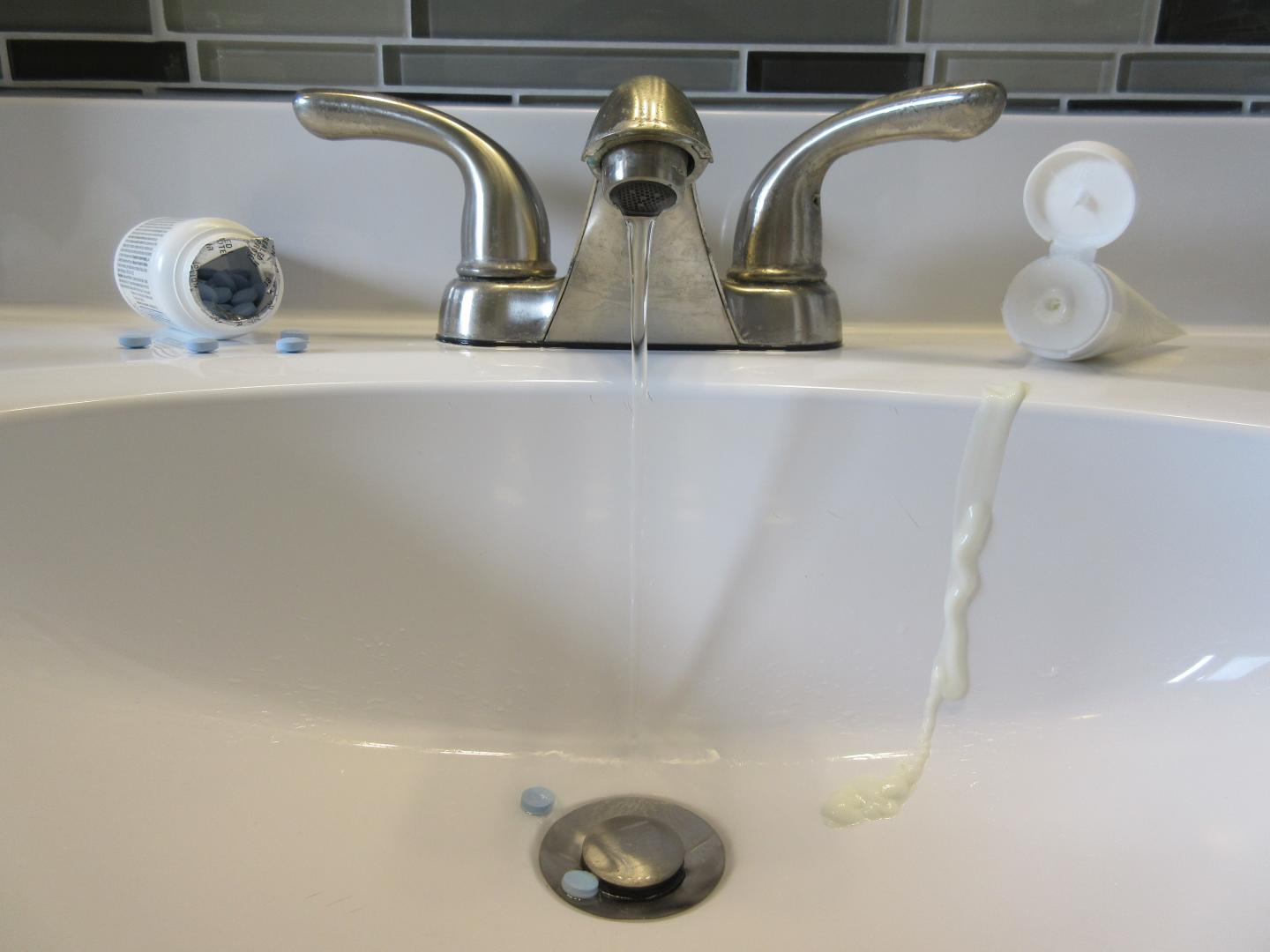
When you flush the toilet, you probably don’t think about the traces of the medicine and personal care products in your body that are winding up in sewage treatment plants, streams, rivers, lakes, bays and the ocean.

But Rutgers scientists have found that bacteria in sewage treatment plants may be creating new contaminants that have not been evaluated for potential risks and may affect aquatic environments, according to a study in Environmental Toxicology and Chemistry.

The scientists tested the ability of bacteria in sludge from a sewage treatment plant to break down two widely used pharmaceutical products: naproxen, a non-steroidal anti-inflammatory drug, and guaifenesin, an expectorant in many cough and cold medications. They also tested two common compounds in personal care products: oxybenzone, a key ingredient in many sunscreens, and methylparaben, a preservative in many cosmetics.

Bacteria that don’t require oxygen to grow in the sludge broke down methylparaben, but the microbes only partially broke down the three other chemicals – and created new contaminants in the process, according to the study.

“The partial breakdown of pharmaceuticals and personal care products is important because it results in a stream of possible contaminants in waterways that may have biological effects on impacted environments,” said Abigail W. Porter, corresponding author and teaching instructor in the Department of Environmental Sciences at Rutgers University-New Brunswick. “These contaminants and their potential risks have yet to be studied.”

Contaminants of emerging concern, including pharmaceuticals and personal care products, are increasingly found at low levels in surface water, according to the U.S. Environmental Protection Agency. There is concern that these chemical compounds may have an impact on aquatic life and human health.

“Our findings can help us assess other widely used pharmaceutical and personal care products with similar chemical structures,” said co-author Lily Young, Distinguished Professor in the Department of Environmental Sciences. “By predicting or assessing the chemicals that might form during the breakdown process, we can identify and quantify them in the environment.”

The Rutgers scientists are interested in how anaerobic microorganisms, such as bacteria that thrive in zero-oxygen conditions, break down the chemicals in pharmaceuticals and personal care products.

The team studied two bacterial communities: one in sludge from a sewage treatment plant and the other in low-oxygen subsurface sediment in a clean marine environment off Tuckerton, New Jersey. The researchers previously showed that bacteria can transform the anti-inflammatory drug naproxen.

The researchers found that the two microbial communities had different types of bacteria. But both communities transformed the four chemicals, which have very different structures, in the same way. Future research will look at sediment samples from different environmental locations to evaluate the long-term persistence of transformed chemicals.

###

The study’s lead author is Sarah J. Wolfson, a former doctoral student in the Department of Environmental Sciences who is now a post-doc at Albert Einstein College of Medicine. Other co-authors include former doctoral student Thomas S. Villani, now chief science officer at Visikol, and James E. Simon, a Distinguished Professor in the Department of Plant Biology in the School of Environmental and Biological Sciences.

Media Contact
Todd Bates
[email protected]

Original Source

https://news.rutgers.edu/medicine-and-personal-care-products-may-lead-new-pollutants-waterways/20190319#.XJEQJ6BKi71

Related Journal Article

http://dx.doi.org/10.1002/etc.4406

Tags: BacteriologyBiologyEcology/EnvironmentEnvironmental HealthMarine/Freshwater BiologyMicrobiologyPharmaceutical ChemistryPharmaceutical SciencesPollution/RemediationPublic Health
Share12Tweet8Share2ShareShareShare2

Related Posts

Miniature Sensor Uses Light to Detect Touch — Chemistry

Miniature Sensor Uses Light to Detect Touch

May 8, 2026
Iron Minerals Determine Whether Dissolved Organic Matter Fuels Microbes or Becomes Long-Term Carbon Storage — Chemistry

Iron Minerals Determine Whether Dissolved Organic Matter Fuels Microbes or Becomes Long-Term Carbon Storage

May 8, 2026

Kate Evans Appointed Associate Lab Director for Biological and Environmental Systems Science at ORNL

May 8, 2026

Advancing Multiscale Modeling and Overcoming Operational Challenges in Autothermal COâ‚‚-to-Methanol Reactors

May 8, 2026
Please login to join discussion

POPULAR NEWS

  • Research Indicates Potential Connection Between Prenatal Medication Exposure and Elevated Autism Risk

    840 shares
    Share 336 Tweet 210
  • New Study Reveals Plants Can Detect the Sound of Rain

    727 shares
    Share 290 Tweet 181
  • Salmonella Haem Blocks Macrophages, Boosts Infection

    61 shares
    Share 24 Tweet 15
  • Breastmilk Balances E. coli and Beneficial Bacteria in Infant Gut Microbiomes

    57 shares
    Share 23 Tweet 14

About

We bring you the latest biotechnology news from best research centers and universities around the world. Check our website.

Follow us

Recent News

New Post-Hoc Analysis Explores Daily Oral Orforglipron Use in Adults Over 65 with Obesity, Regardless of Diabetes Status

Evaluating Digoxin Use in Patients with Symptomatic Rheumatic Heart Disease

Evaluating the Effectiveness and Safety of Digitalis Glycosides in Treating Heart Failure

Subscribe to Blog via Email

Enter your email address to subscribe to this blog and receive notifications of new posts by email.

Join 82 other subscribers
  • Contact Us

Bioengineer.org © Copyright 2023 All Rights Reserved.

Welcome Back!

Login to your account below

Forgotten Password?

Retrieve your password

Please enter your username or email address to reset your password.

Log In
No Result
View All Result
  • Homepages
    • Home Page 1
    • Home Page 2
  • News
  • National
  • Business
  • Health
  • Lifestyle
  • Science

Bioengineer.org © Copyright 2023 All Rights Reserved.