In the dense machinery of gene regulation, few molecules have proven as paradoxical as MED1, a subunit of the Mediator complex that serves as a molecular bridge between transcription factors and RNA polymerase II. For years, researchers have been puzzled by what appears to be a fundamental contradiction: in some cancers, MED1 behaves as an oncogene that fuels tumor growth, while in others its loss seems to drive aggressive, invasive disease. Now, a comprehensive review published in Cancer Cell International offers a framework to resolve this apparent contradiction, arguing that MED1’s role in cancer cannot be understood from expression levels alone but must instead be read through the lens of cellular context, genomic occupancy, and the specific transcription factor partners it engages.
The review, authored by Zhe Li, Zhaosong Meng, Lei Sui, Chufan Ma, and colleagues from institutions including The Fourth Military Medical University and Tianjin Medical University, advances what the authors describe as an evidence-weighted, locus- and complex-centered framework. Rather than treating MED1 as simply “pro-” or “anti-tumor,” the authors distinguish between causal genetic and mechanistic data on one hand and clinicopathological correlations on the other. This distinction matters, they argue, because much of the confusion in the MED1 literature stems from studies that observed associations between MED1 abundance and patient outcomes without establishing whether MED1 actually drives the biology in question.
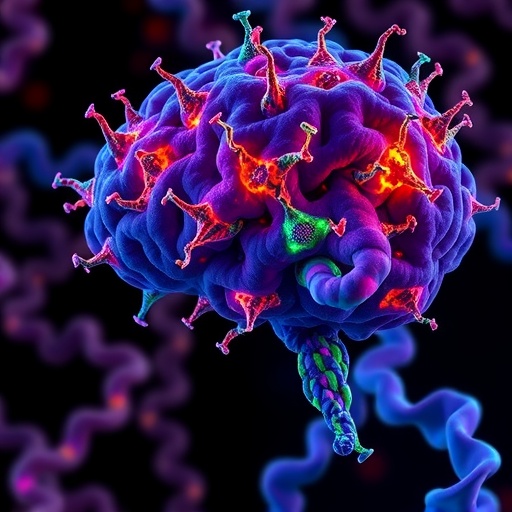
MED1, also known as TRAP220 or PBP, is a non-DNA-binding transcriptional co-regulator. It does not bind DNA directly, and it does not catalyze any reaction. Instead, it functions as part of the massive Mediator complex, a multi-protein assembly that physically connects DNA-bound transcription factors to RNA polymerase II, the enzyme that reads genes and produces messenger RNA. MED1 is particularly interesting within this complex because it contains domains that interact with nuclear receptors, the family of ligand-activated transcription factors that includes the estrogen receptor and the androgen receptor, two of the most clinically important drivers of hormone-responsive cancers.
The strength of direct mechanistic evidence varies dramatically across cancer types, and the review maps this landscape carefully. In estrogen receptor-driven breast cancer, the evidence that MED1 supports oncogenic transcription is robust. MED1 is recruited to estrogen receptor-bound enhancers, where it helps deploy the transcriptional machinery needed to activate genes promoting proliferation and survival. Similarly, in androgen receptor-driven prostate cancer, MED1 contributes to the expression of the androgen receptor’s target gene program. The authors also point to E2A-PBX1-positive B-cell acute lymphoblastic leukemia and hepatocyte tumor models as contexts where direct experimental manipulation of MED1 has demonstrated its oncogenic function.
But the picture inverts in other settings. In defined models of non-small-cell lung cancer and melanoma, the loss of MED1 promotes invasive behavior rather than suppressing it. This is a striking finding because it suggests that MED1 can act as a tumor suppressor in certain cellular contexts, restraining the transcriptional programs that drive invasion and metastasis. The review also notes that findings in colorectal and bladder cancer remain largely correlative, meaning that while MED1 expression patterns may track with clinical features, causality has not been established through mechanistic experiments.
What determines which way MED1 tips in any given cancer? The review identifies several interacting determinants. Lineage-specific transcription-factor recruitment plays a central role: which transcription factors are present and active in a particular cell type determines which genomic loci MED1 occupies and which gene programs it influences. Signaling-dependent modification also matters, since MED1 is subject to post-translational modifications that alter its behavior in response to external signals. Chromatin state and broader cellular context further shape MED1’s output, meaning that the same protein operating on different genomic terrain can produce entirely different consequences for the cell.
One of the more technically interesting sections of the review addresses MED1’s role in super-enhancers and transcriptional condensates. Super-enhancers are dense clusters of enhancer elements that drive high expression of genes critical for cell identity, and they are often marked by unusually high concentrations of transcriptional machinery, including Mediator complex components. Some research has suggested that these regions form phase-separated condensates, membrane-less compartments that concentrate transcriptional regulators. MED1 has been reported as enriched at these assemblies, and its intrinsically disordered regions have been implicated in condensate formation. The review, however, sounds a note of caution: enrichment of MED1 at super-enhancer-associated structures, while real, does not by itself establish that MED1 is structurally or functionally necessary for condensate integrity or function. This distinction is important because the field has sometimes moved quickly from observing co-localization to inferring dependency, and the authors argue for more rigorous perturbation-based evidence before drawing such conclusions.
The therapeutic implications of this framework are significant but tempered. On one hand, the finding that MED1 supports oncogenic transcription in breast and prostate cancer suggests that disrupting MED1-dependent complexes could be a powerful therapeutic strategy, particularly because it might undercut multiple oncogenic programs simultaneously rather than targeting a single signaling pathway. On the other hand, the review notes that no clinically validated MED1-selective inhibitor or degrader currently exists. Pharmacologic strategies aimed at MED1 have so far been indirect, targeting the proteins it partners with or the signaling pathways that activate it, while RNA-based suppression approaches remain largely experimental. The challenge is compounded by MED1’s role as a co-regulator rather than an enzyme: it lacks the catalytic pockets that make many cancer drug targets tractable, and any therapeutic strategy must contend with the risk of disrupting its physiological functions in normal tissue.
This is where the context-dependent framework becomes more than an academic exercise. By shifting the focus from pan-cancer expression patterns to partner-, locus-, and model-specific dependency, the authors define testable biomarkers and therapeutic hypotheses. Rather than asking whether MED1 is high or low in a given tumor, clinicians and researchers could ask which transcription factors MED1 is partnered with, which loci it occupies, and whether the tumor’s survival depends on MED1-containing complexes at specific oncogenic super-enhancers. This approach preserves the possibility of selectively targeting oncogenic MED1 complexes while sparing the physiological MED1 functions that normal cells rely on, and it explains why MED1 loss might be harmful in some cancers and helpful in others.
The review also highlights how the MED1 paradox illustrates a broader lesson for cancer biology. Transcriptional co-regulators occupy an awkward middle ground in the oncogene-versus-tumor-suppressor taxonomy. Because their function is entirely dependent on the transcription factors they serve and the genomic context in which they operate, their role in disease is inherently contextual. This means that large-scale correlative studies, however well powered, will continue to produce contradictory results unless they are designed to capture the mechanistic variables that actually determine function. The authors’ framework, grounded in mechanistic evidence from breast cancer, prostate cancer, leukemia, hepatocyte models, lung cancer, and melanoma, offers a template for how to approach other co-regulators whose roles have been similarly contested.
As research moves forward, several questions stand out. Can MED1-selective degraders be developed using emerging protein degradation technologies? Are there specific super-enhancer contexts where MED1 dependency is absolute, offering a therapeutic window? And can the lineage-specific determinants of MED1’s function be mapped systematically across cancer types to produce a predictive atlas? The answers will determine whether MED1 transitions from a molecule of biological intrigue to a clinically actionable target. For now, the review makes a compelling case that the answer to “what does MED1 do in cancer?” is neither “one thing” nor “it depends on nothing,” but rather a precise, mechanistically grounded dependence on partners, loci, and context that can, in principle, be measured, modeled, and ultimately exploited.
Subject of Research: The context-dependent role of MED1, a Mediator complex transcriptional co-regulator, in cancer, reconciling its apparently opposing oncogenic and tumor-suppressive functions across different cancer types.
Subject of Research: Cancer
Article Title: MED1 in cancer: a context-dependent transcriptional regulator
Article References: Li, Z., Meng, Z., Sui, L., & Ma, C. (2026). MED1 in cancer: a context-dependent transcriptional regulator. Cancer Cell International. https://doi.org/10.1186/s12935-026-04457-2
Image Credits: AI Generated
DOI: 10.1186/s12935-026-04457-2
Keywords: MED1, Mediator Complex, Context-dependent transcription, Cancer, Super-enhancer, Transcriptional condensates, Targeted therapy, Estrogen receptor, Androgen receptor, Transcriptional co-regulator
Cite Scienmag News
APA MLA Chicago
Juliet Wilcox. (September 8, 2026). MED1 shapes cancer gene expression in a context-dependent manner. Scienmag. https://scienmag.com/med1-shapes-cancer-gene-expression-in-a-context-dependent-manner/
Juliet Wilcox. “MED1 shapes cancer gene expression in a context-dependent manner.” Scienmag, 8 September 2026, https://scienmag.com/med1-shapes-cancer-gene-expression-in-a-context-dependent-manner/. Accessed 8 September 2026.
Juliet Wilcox. “MED1 shapes cancer gene expression in a context-dependent manner.” Scienmag. September 8, 2026. https://scienmag.com/med1-shapes-cancer-gene-expression-in-a-context-dependent-manner/
Copy citation Download RIS
Tags: cancer cell transcriptional machinerycancer gene regulationcomplex-centered framework in oncologycomplex-centered gene regulationcontext-dependent gene expressiongene expression analysis in oncologygene regulation in cancer progressiongenomic occupancy in cancerlocus-centered regulatory mechanismsMED1 as oncogene and tumor suppressorMED1 loss and tumor invasivenessMED1 mediator complexMED1 oncogenic roleMediator complexmolecular mechanisms of MED1molecular mechanisms of MED1 in tumor biologyrole of MED1 in different cancerstranscription factor interactionstranscription factor partnershipstumor heterogeneity and MED1