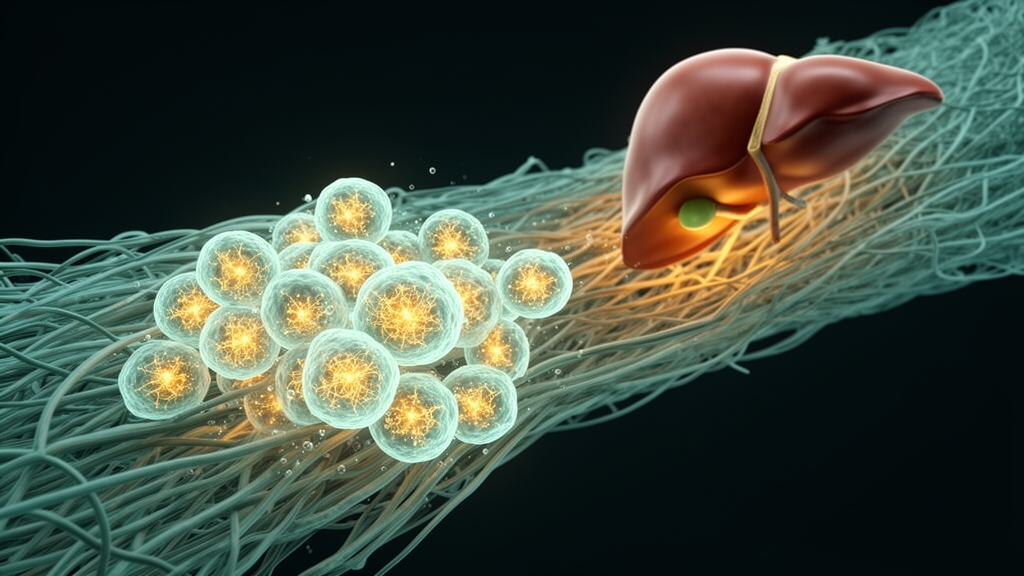
Colorectal cancer is one of the most common and deadliest malignancies worldwide, and its spread to the liver is the single greatest threat to patient survival. Once the disease metastasizes to distant organs, the five-year survival rate drops below twenty percent, a grim statistic that has remained stubbornly resistant to decades of therapeutic progress. Now, a research team led by Tianxue Yang and Ziran Xu has published a study in iScience that approaches this problem from an unexpected angle: the physics of the tumor microenvironment. By integrating genomics with mechanobiology, the researchers have identified a six-gene signature that responds to mechanical forces and predicts which colorectal cancer patients are most likely to develop liver metastasis. The findings suggest that the mechanical forces inherent to the colorectum are not passive bystanders but active drivers of a transcriptional program that favors metastatic spread.
The study begins from a deceptively simple observation. The colorectum is continuously subjected to diverse mechanical cues, including peristalsis, intraluminal pressure, and the stiffness of the surrounding extracellular matrix. In oncology, mechanical stimulation has emerged as a pivotal research direction, with accumulating evidence showing that physical forces within the cellular microenvironment profoundly influence tumor cell behavior. Matrix stiffness, shear stress, and compressive forces can activate multiple signaling pathways that affect proliferation, invasion, and metastasis across many solid malignancies. In breast cancer, for instance, mechanotransductive signaling through the POSTN-INTEGRIN and YAP pathways mediates matrix stiffness-induced invasion. In pancreatic cancer, targeting mechanical stress represents a promising strategy to enhance the efficacy of oxaliplatin. Yet the relationship between mechanosensitive genes and colorectal cancer prognosis remained largely unexplored until now.
To fill this gap, the researchers compiled a gene set from a published transcriptomic dataset of DLD-1 colorectal adenocarcinoma cells cultured on soft substrates of 2 and 55 kilopascals versus rigid collagen-coated glass coverslips. The comparison identified 1,655 and 1,432 differentially expressed genes on the two soft substrates respectively, with 323 genes consistently differentially expressed under both conditions. These 323 genes were defined as mechanosensitive genes for subsequent analysis. The team then obtained single-cell RNA sequencing data from three colorectal cancer patients with liver metastases, using the Harmony package to remove batch effects across samples. Clustering analysis classified sixteen distinct clusters into eight major cell types: tumor cells, T cells, NK cells, B cells, mast cells, myeloid cells, plasma cells, and cancer-associated fibroblasts. The activity of the mechanosensitive gene set was quantified in each cell type, revealing that T cells and tumor cells exhibited higher mechanosensitive scores while mast cells and myeloid cells showed relatively lower scores.
Differential expression analysis between cells with high and low mechanosensitive scores identified 284 significant genes, defined as the mechanosensitive gene signature in colorectal cancer tissue. In parallel, the researchers integrated single-cell and bulk transcriptomic data to identify liver metastasis-associated genes. Differential expression analysis was performed between liver metastasis samples and primary tumor samples from three independent datasets using the limma package, while weighted gene co-expression network analysis was applied to identify co-expressed gene modules correlated with the liver metastasis phenotype. The black module in one dataset, the yellow module in another, and the green module in a third each demonstrated highly significant correlations with liver metastasis. Combining genes from these significantly correlated modules with differentially expressed genes from both bulk and single-cell analyses yielded a final set of 1,708 genes associated with colorectal cancer liver metastasis.
The critical step came when the researchers intersected the mechanosensitive gene signature with the liver metastasis-associated gene set, yielding 178 candidate genes implicated in both mechanosensitive responses and metastatic spread. Univariate Cox regression analysis within the colorectal cancer cohort from The Cancer Genome Atlas identified twenty genes significantly associated with overall survival. The team then constructed prognostic models using the Mime package, which integrated ten machine learning algorithms and their combinations, totaling 117 models across three independent cohorts. Among all models, the Lasso plus generalized boosted regression model achieved the highest average concordance index of 0.69, but it incorporated ten feature genes. In contrast, the StepCox plus GBM combination model, which utilized only six genes, achieved a comparable performance with a concordance index of 0.68. Considering model simplicity and clinical practicality, the researchers selected the six-gene model as the optimal prognostic signature.
The six genes that comprise the final signature are SNX7, SDC1, CDCP1, PTGES, EMP2, and CALB2. Each plays a distinct role in cellular biology. SNX7 is a member of the sorting nexin protein family involved in protein sorting, endocytosis, and endosomal signaling. CDCP1 is a transmembrane glycoprotein overexpressed in various solid tumors that promotes cancer cell survival and metastasis through interactions with Src family kinases. PTGES regulates prostaglandin E2 synthesis and has been shown to influence chemotherapy resistance and immune escape in colorectal cancer. EMP2 is a cell surface protein that modulates integrin signaling pathways. CALB2 is an intracellular calcium-buffering protein involved in modulating calcium signaling, cell-cycle arrest, and apoptosis. SDC1, also known as CD138, is a transmembrane heparan sulfate proteoglycan that functions as a cell adhesion molecule and interacts with extracellular matrix components such as laminin.
Kaplan-Meier survival analysis demonstrated that patients with higher risk scores had significantly poorer outcomes across all cohorts. In the training set, the hazard ratio was 5.41 with a p value below 0.001, while in the validation sets the hazard ratios were 3.80 and 1.77, both statistically significant. Time-dependent receiver operating characteristic analysis confirmed the model’s robust discriminative ability, with area under the curve values of 0.794, 0.775, and 0.815 at one, three, and five years respectively in the training cohort. To benchmark the model against existing prognostic signatures, the researchers systematically retrieved seventy-four previously published colorectal cancer risk models from the literature. Their mechanosensitive signature achieved the highest concordance index in two of the three datasets and ranked second in the third, confirming its superior prognostic utility. Multivariate Cox regression analysis further established that the risk signature remained an independent prognostic factor after adjusting for other clinical variables, with a hazard ratio of 5.386.
To translate the signature into a clinically applicable tool, the researchers constructed a prognostic nomogram integrating the six-gene risk score with key clinical characteristics. The nomogram achieved high time-dependent area under the curve values of 0.843, 0.827, and 0.848 for predicting one-, three-, and five-year survival respectively. Calibration curves showed excellent agreement between predicted and observed survival probabilities, while decision curve analysis confirmed the clinical utility of the nomogram across a range of threshold probabilities. Functional enrichment analysis of genes differentially expressed between high-risk and low-risk groups revealed significant enrichment in extracellular matrix organization, collagen-containing ECM, integrin binding, and focal adhesion pathways in the high-risk group, suggesting that biological processes related to the extracellular matrix and cytoskeleton play key roles in driving the poor prognosis associated with high mechanosensitive risk.
The researchers then turned to experimental validation. Quantitative reverse transcription PCR confirmed that CDCP1, SDC1, and PTGES were elevated in most colorectal cancer cell lines compared with normal colonic epithelial cells. To test whether the six signature genes respond to mechanical stimulation, RKO and Caco-2 cells were cultured on standard tissue culture plastic as well as on soft and stiff hydrogel substrates of 1 and 60 kilopascals. The results revealed that substrate stiffness altered gene expression in a cell-line-dependent manner. In RKO cells cultured on the stiffer substrate, five of the six genes were downregulated while SDC1 was upregulated. In Caco-2 cells under high stiffness conditions, all six genes were upregulated. Among the six genes, SDC1 showed the most consistent stiffness-associated upregulation across the tested conditions, supporting its selection for further protein-level validation.
Western blot analysis confirmed that SDC1 protein expression was higher in several colorectal cancer cell lines than in normal epithelial cells, and that SDC1 expression increased under stiffness-modulated culture conditions in RKO, Caco-2, and DLD-1 cells. Immunohistochemical staining of a tissue microarray showed significantly elevated SDC1 protein in colorectal cancer tissues compared with adjacent normal tissues, a finding confirmed in thirty-three paired samples. The most striking functional result came from SDC1 knockdown experiments in DLD-1 cells. When SDC1 was silenced using shRNA, the cells displayed a more rounded and clustered morphology, and their migratory and invasive capacities were significantly reduced under both standard and stiff culture conditions. Western blot analysis showed that sixty kilopascal culture increased the expression of SDC1, paxillin, and vinculin, three proteins central to focal adhesion remodeling, whereas SDC1 knockdown reduced the expression of all three under both conditions. These data support a functional association between SDC1, stiffness-enhanced malignant behavior, and focal adhesion-associated remodeling in colorectal cancer cells.
Subject of Research: Integrative genomics and experimental validation identify a mechanosensitive gene signature associated with colorectal cancer liver metastasis
Article Title: Integrative genomics and experimental validation identify a mechanosensitive gene signature associated with colorectal cancer liver metastasis
Article References: Yang, T., Yuan, Y., Li, X., Wang, J., Li, C., & Xu, Z. (2026). Integrative genomics and experimental validation identify a mechanosensitive gene signature associated with colorectal cancer liver metastasis. iScience, 29(11), Article 117926. https://doi.org/10.1016/j.isci.2026.117926
Image Credits: AI Generated
DOI: 10.1016/j.isci.2026.117926
Keywords: Integrative, genomics, experimental, validation, identify, mechanosensitive, gene, signature, associated, colorectal, cancer, liver
News Source: Nathaniel Bowman. (October 17, 2026). Mechanosensitive Gene Signature Predicts Colorectal Cancer Liver Metastasis Risk. Scienmag.