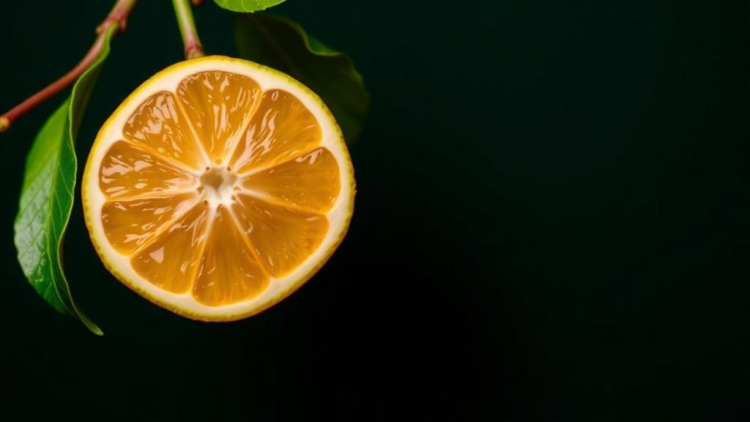
In a discovery that could reshape how scientists think about flavor and medicine hidden inside citrus fruit, researchers in China have identified the molecular switch that controls the production of naringin, the intensely bitter flavonoid that defines the medicinal pomelo cultivar Citrus grandis ‘Tomentosa’, known in China as Huajuhong. The study, published in Plant Cell Reports, shows that a transcription factor called CgMYC2 acts as a central activator, translating a hormonal alarm signal into the full assembly line of naringin biosynthesis. The finding closes a long-standing gap between what plants sense and what they actually make, and it opens a concrete path toward breeding or engineering citrus varieties with tailored levels of bitter, health-associated flavonoids.
Naringin has been studied for decades as a pharmaceutical treasure. It belongs to the flavanone glycosides, a family of plant secondary metabolites linked in the scientific literature to anti-inflammatory, antioxidant, and metabolic benefits, and it is the dominant bitter compound in the rind and flesh of Huajuhong fruit, a traditional Chinese medicine material. The enzymes that build naringin step by step were already well characterized: phenylalanine ammonia-lyase, chalcone synthase, flavone synthase, and two glycosyltransferases that decorate the flavanone backbone with sugars. What remained murky was the regulatory layer above those enzymes, the machinery that decides when the whole pathway should be switched on in response to environmental and hormonal cues.
The research team, led by Genlin Mao, Diyang Qiu, and Ruiyi Fan from the Guangdong Academy of Agricultural Sciences and Jingchu University of Technology, focused on jasmonate, a plant hormone best known for coordinating defense responses against herbivores and pathogens. When they treated pomelo seedlings with methyl jasmonate, a cell-permeable jasmonate analog widely used as an elicitor, naringin levels surged 3.45-fold. Crucially, the gene encoding CgMYC2, a member of the basic helix-loop-helix transcription factor family, responded even faster, rising 6.6-fold before the peak expression of the five core biosynthetic genes. That timing mattered: the putative regulator switched on before its presumed targets, exactly the sequence expected of a genuine upstream controller rather than a downstream passenger.
To place CgMYC2 within the canonical jasmonate signaling cascade, the researchers turned to protein interaction assays. In the standard model of jasmonate perception, the hormone is sensed by a receptor complex that then degrades members of the JAZ family of repressor proteins. Those JAZ proteins, when present, physically clamp down on MYC transcription factors and prevent them from activating genes. Using pull-down and co-immunoprecipitation experiments, the team confirmed that CgMYC2 directly interacts with CgJAZ3, a JAZ repressor from pomelo. This interaction anchors CgMYC2 firmly in the jasmonate pathway: when jasmonate levels rise, JAZ proteins are destroyed, CgMYC2 is released, and the biosynthetic genes can be transcribed.
The next question was whether released CgMYC2 actually touches the DNA of the naringin pathway genes. The answer came from a battery of complementary techniques. Yeast one-hybrid assays confirmed binding to the promoter of Cg1,2RhaT, the rhamnosyltransferase that performs the final sugar-transfer step in naringin synthesis. Electrophoretic mobility shift assays went further, demonstrating that CgMYC2 binds directly, and in a G-box-dependent manner, to the promoters of all five core biosynthetic genes: CgPAL5, CgCHS, CgFNS, Cg7GlcT, and Cg1,2RhaT. The G-box is a short DNA motif, the canonical binding site for bHLH transcription factors, and mutating or masking it abolished the interaction, establishing the molecular grammar of the connection.
Binding alone does not prove activation, so the team ran dual-luciferase transactivation assays, a technique in which a promoter is wired to a light-producing reporter enzyme. CgMYC2 transactivated all five promoters, with the strongest effect on CgCHS, the chalcone synthase gene that catalyzes the first committed step of flavonoid biosynthesis. As chromatin-level support, a single-sample CUT&Tag profiling experiment revealed that CgMYC2-associated genomic regions were enriched for G-box motifs across jasmonate-responsive and secondary-metabolic loci, painting a genome-wide picture of the regulator in action. Together, these assays build a causal chain from hormone perception to promoter occupancy to transcriptional output.
Genetic loss-of-function evidence sealed the argument. Using virus-induced gene silencing, a technique that co-opts a plant viral mechanism to knock down endogenous gene expression, the researchers suppressed CgMYC2 in pomelo seedlings. Naringin content dropped by roughly 21 percent, and the expression of the biosynthetic genes fell in parallel. The partial rather than complete reduction suggests redundancy among MYC-family members or contributions from other regulatory pathways, but the direction and coherence of the effect confirm that CgMYC2 is a positive, load-bearing component of the naringin regulatory network.
Perhaps the most striking result came from moving the gene into a completely different species. When the team overexpressed CgMYC2 heterologously in tomato, the transgenic plants activated their own flavonoid pathway and accumulated elevated levels of sixteen different flavonoid compounds. This cross-species functionality indicates that the MYC2-to-G-box regulatory logic is evolutionarily conserved, consistent with earlier work in tomato where an SlMYC2-SlMYB12 module orchestrates fruit flavonoid metabolism, and with jasmonate-driven MYC2 regulation of anthocyanin accumulation in Arabidopsis. A regulatory principle discovered in a medicinal pomelo thus appears to be a general design feature of plant secondary metabolism.
The practical implications extend in several directions. For breeders of Huajuhong and other citrus, CgMYC2 offers a molecular marker and a potential editing target for tuning naringin content, whether the goal is maximizing medicinal quality or reducing bitterness in juice cultivars. The study also connects to a broader agricultural context: recent work has shown that stabilizing MYC2 in citrus can confer resistance to Huanglongbing, the devastating citrus greening disease, suggesting that a single regulatory node influences both defense chemistry and quality traits. More broadly, jasmonate elicitation is already used to boost secondary metabolite production in medicinal plants, and knowing the specific transcription factor that gates a target pathway makes such elicitation strategies far more predictable and engineerable.
Scientifically, the study exemplifies how modern plant biology dissects a regulatory question by triangulating across scales: hormone physiology, gene expression kinetics, protein-protein interaction, protein-DNA binding, chromatin profiling, and transgenic functional tests all converge on the same answer. CgMYC2 emerges as a bridge between jasmonate perception and naringin biosynthesis, a single point of control where an environmental signal becomes a chemical phenotype. For a compound with documented pharmacological relevance and a central role in the identity of one of China’s most valued medicinal fruits, that bridge is likely to attract intense attention from both basic researchers and the citrus industry in the years ahead.
Subject of Research: Jasmonate-regulated transcriptional control of naringin flavonoid biosynthesis in Citrus grandis ‘Tomentosa’
Article Title: CgMYC2 directly activates jasmonate-induced naringin biosynthesis in Citrus grandis ‘Tomentosa’
Article References: CgMYC2 directly activates jasmonate-induced naringin biosynthesis in Citrus grandis ‘Tomentosa’. (n.d.). https://doi.org/10.1007/s00299-026-03960-0
Image Credits: AI Generated
DOI: 10.1007/s00299-026-03960-0
Keywords: CgMYC2, naringin, jasmonate, Citrus grandis, flavonoid biosynthesis, bHLH transcription factor, JAZ repressor, G-box, methyl jasmonate, plant hormone signaling, secondary metabolism, virus-induced gene silencing
Cite Scienmag News
APA MLA Chicago
Juliet Wilcox. (October 4, 2026). Master Switch Found: How a Single Gene Triggers Bitter Compounds in Citrus. Scienmag. https://scienmag.com/master-switch-found-how-a-single-gene-triggers-bitter-compounds-in-citrus/
Juliet Wilcox. “Master Switch Found: How a Single Gene Triggers Bitter Compounds in Citrus.” Scienmag, 4 October 2026, https://scienmag.com/master-switch-found-how-a-single-gene-triggers-bitter-compounds-in-citrus/. Accessed 4 October 2026.
Juliet Wilcox. “Master Switch Found: How a Single Gene Triggers Bitter Compounds in Citrus.” Scienmag. October 4, 2026. https://scienmag.com/master-switch-found-how-a-single-gene-triggers-bitter-compounds-in-citrus/
Copy citation Download RIS
Tags: bHLH transcription factorbiosynthesis pathways of flavonoids in citrusCgMYC2CgMYC2 role in plant secondary metabolite productioncitrus breeding for health-beneficial flavonoidscitrus flavor biosynthesisCitrus grandisflavonoid biosynthesisG-boxgenetic engineering of citrus for flavor modificationhormonal regulation of secondary metabolites in plantsjasmonateJAZ repressormedicinal properties of naringin in citrusmethyl jasmonatemolecularmolecular mechanisms of bitter compound formation in fruitsnaringinnaringin bitterness regulation in citrus fruitsplant hormone signalingsecondary metabolismtraditional Chinese medicine components in citrustranscription factors in flavonoid biosynthesisvirus-induced gene silencing